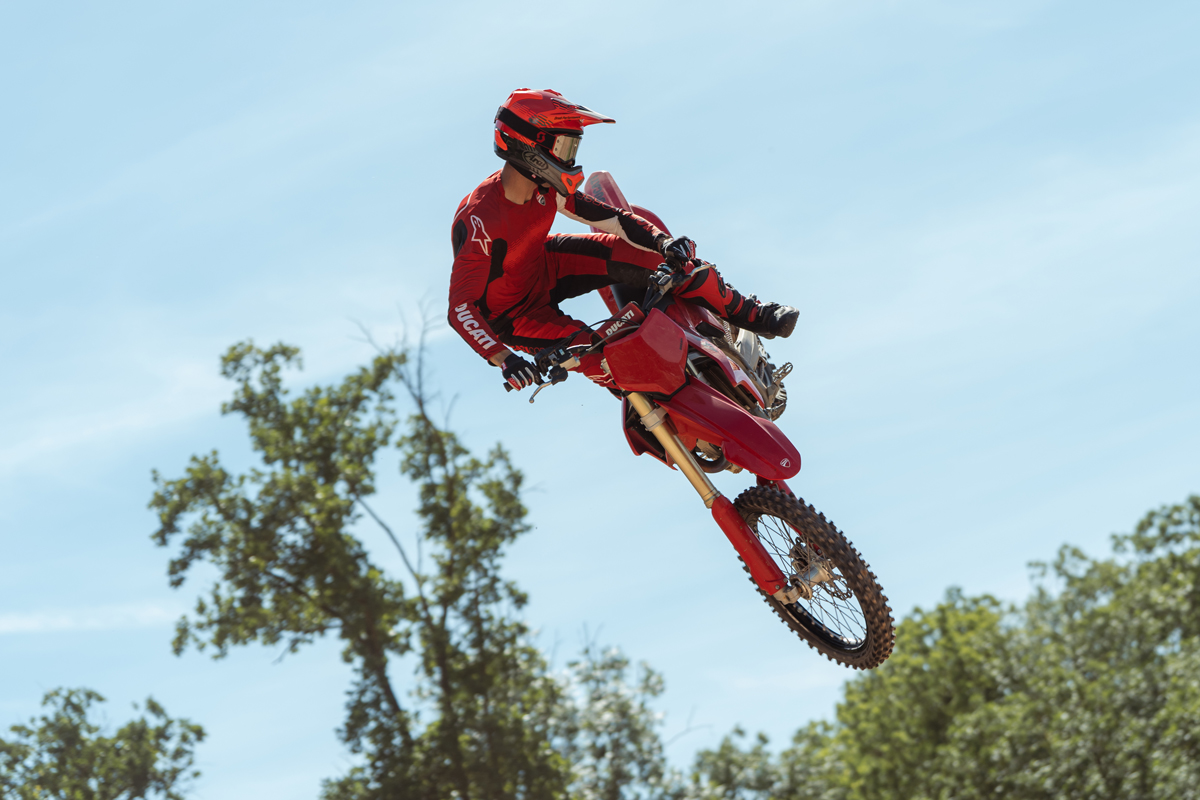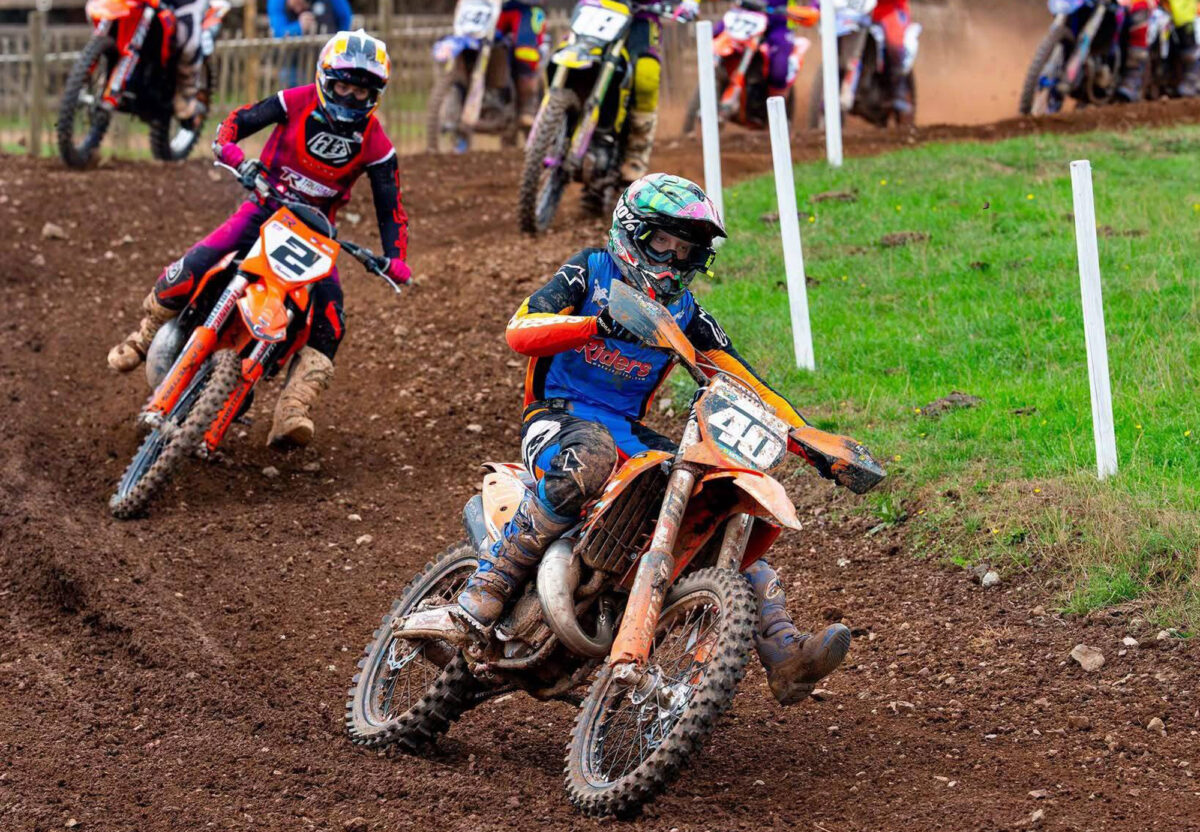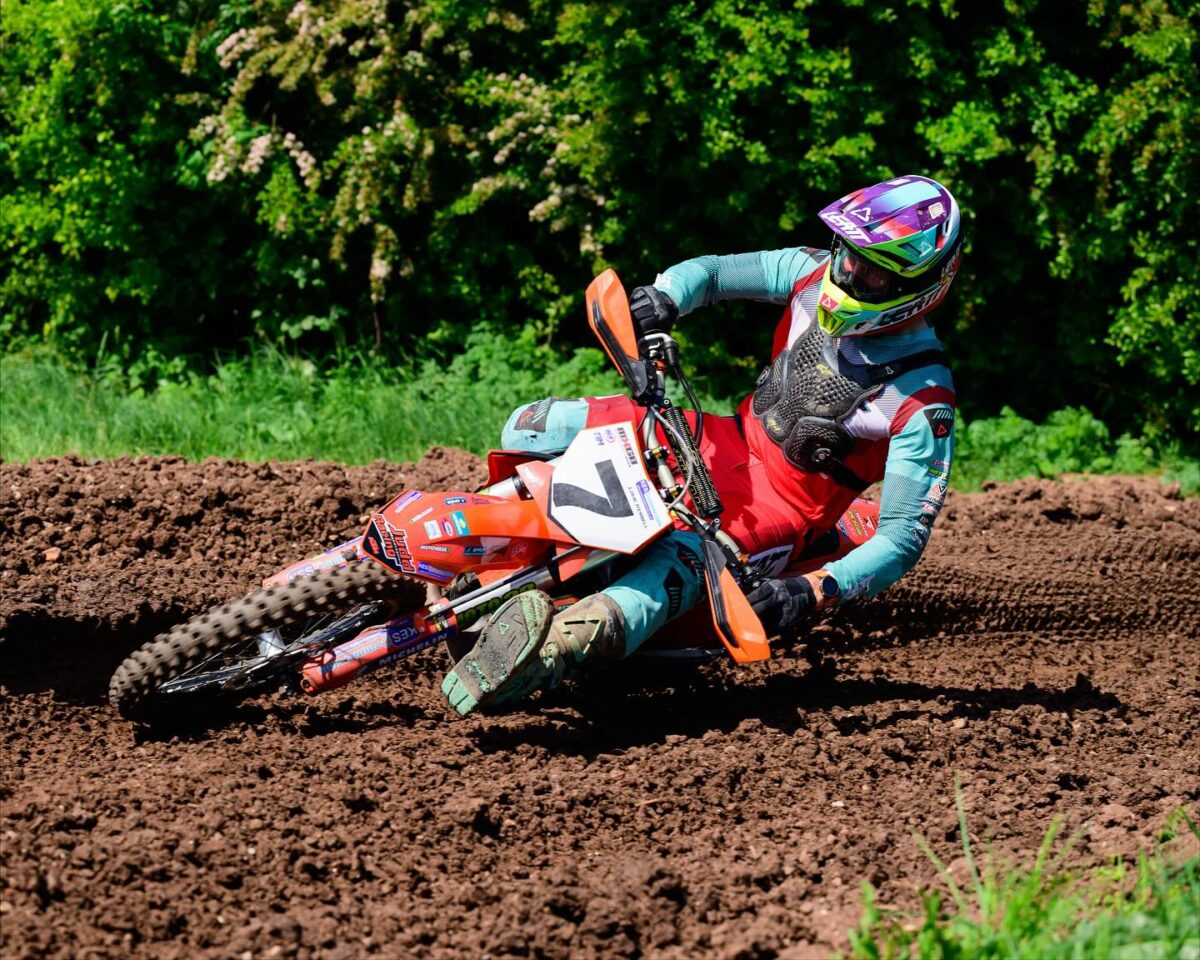




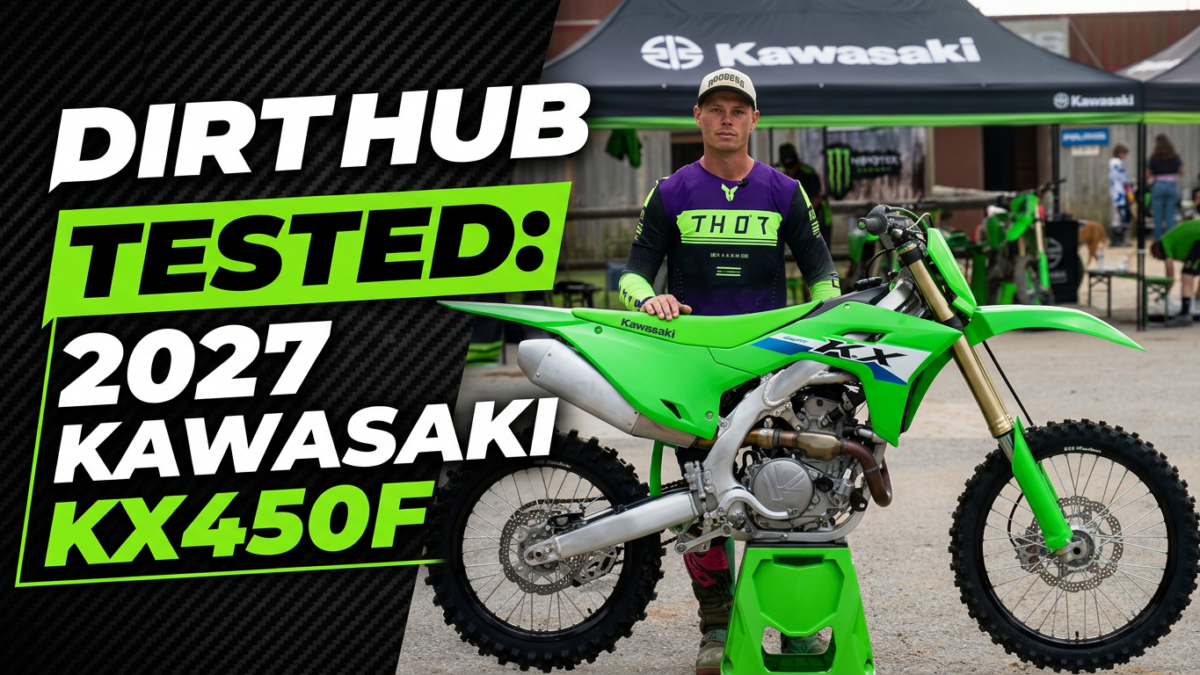
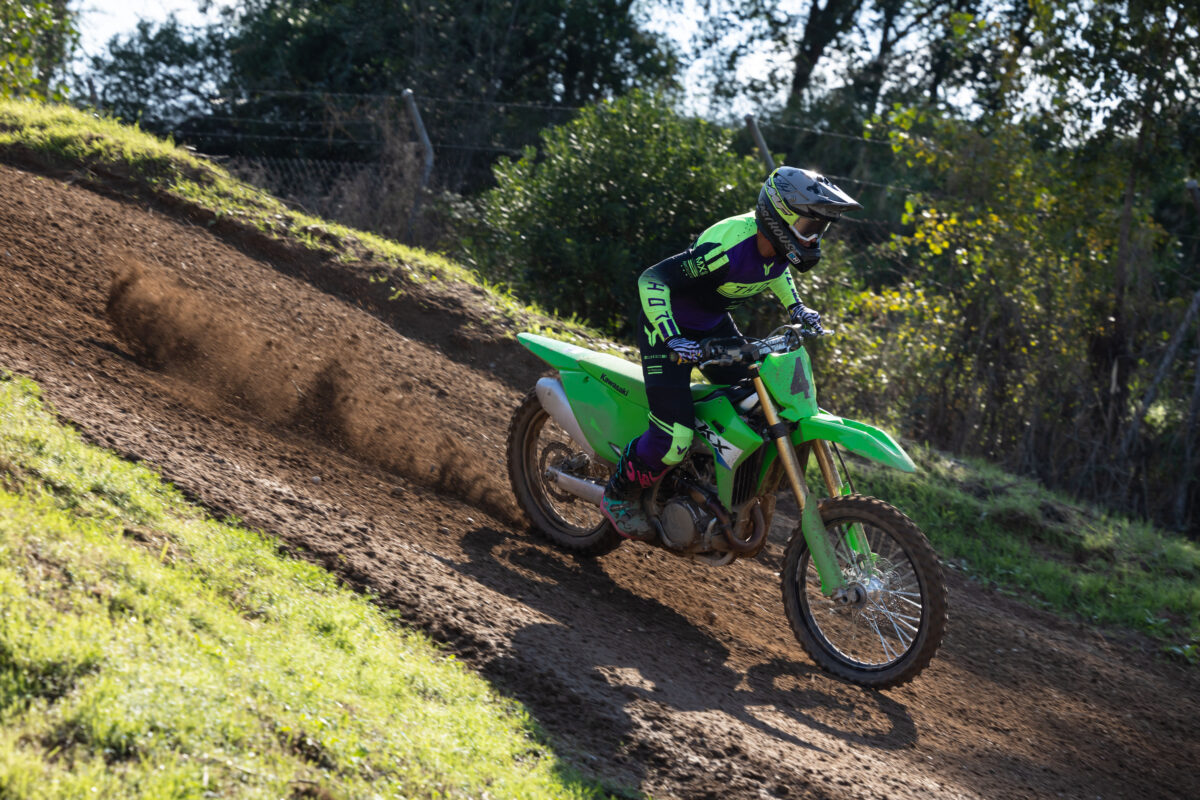
Kawasaki has made some significant changes to its KX450 for 2027, with a particular focus on delivering more power and traction to the rear wheel, improving chassis performance and giving riders greater control over the bike’s characteristics.
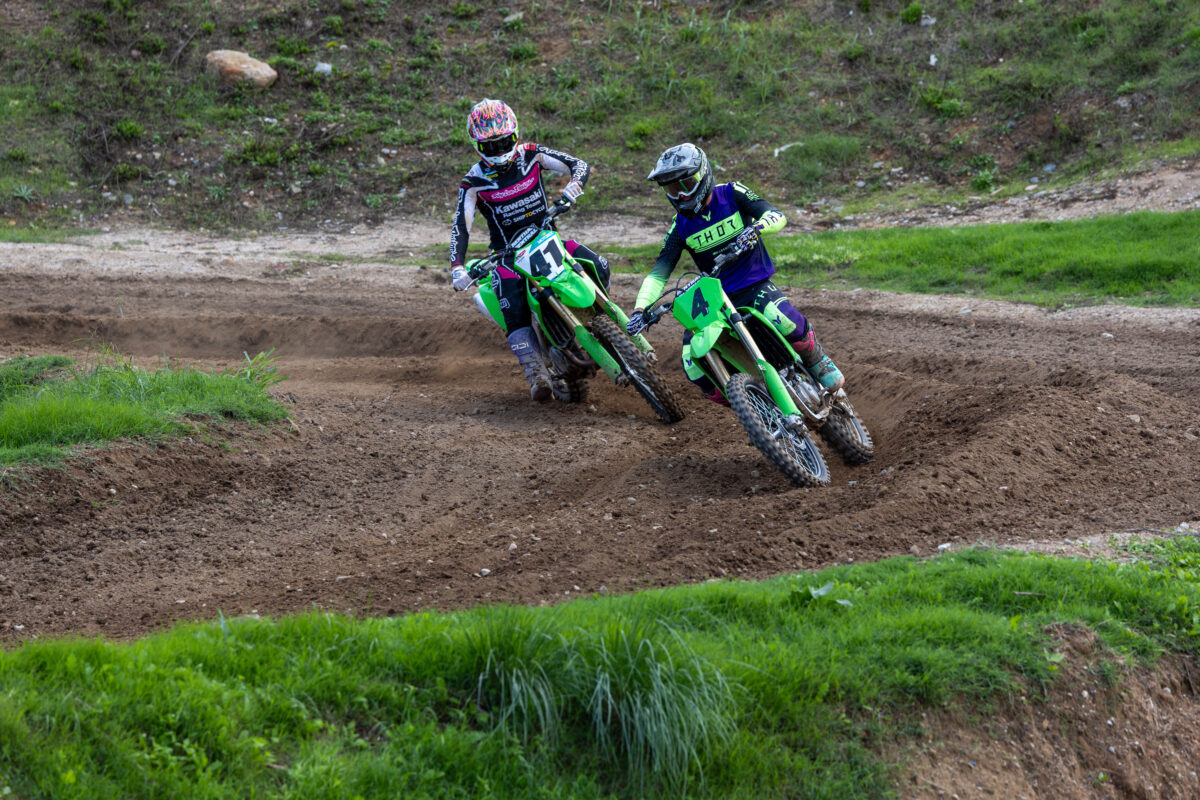
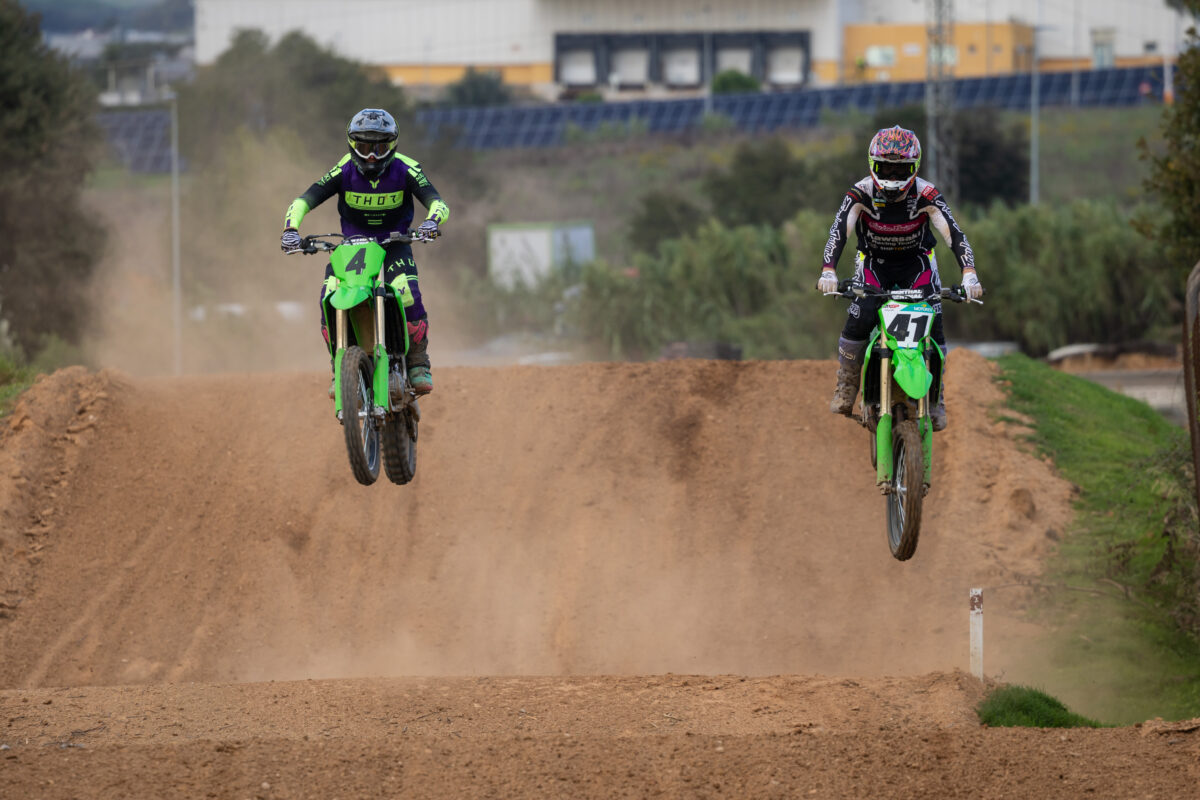
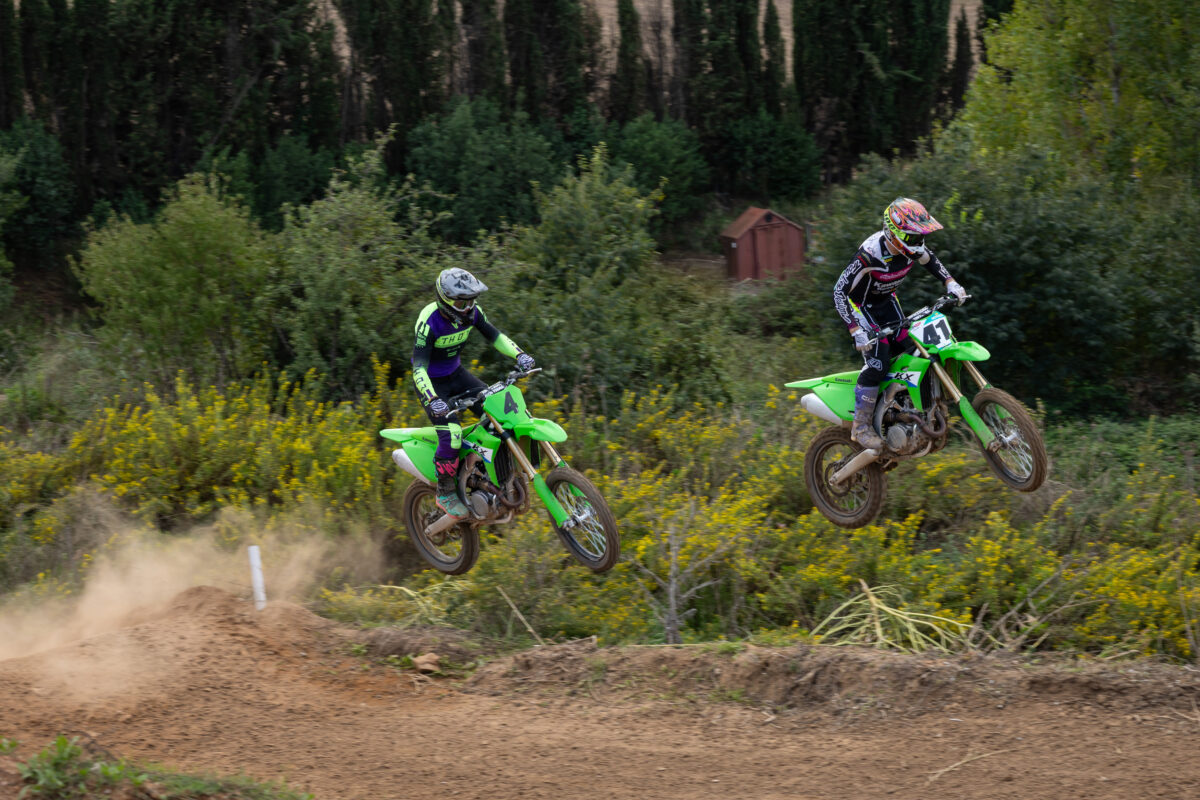
Dirt Hub test rider Callum Gordon travelled to Roccos Ranch in Spain, spent a full day putting the latest KX450 through its paces, and got to spin some laps with Kawasaki MXGP star and former MX2 World Champion Pauls Jonass.
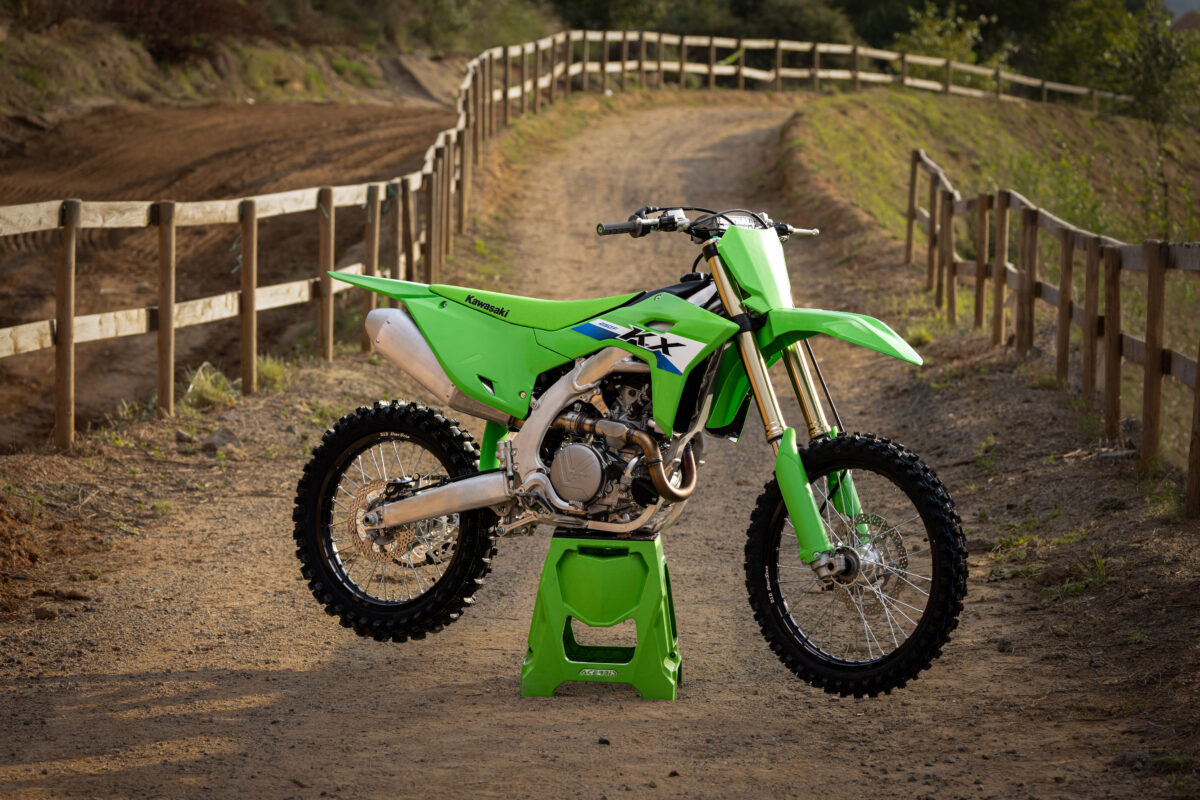
With a revised fuel-injection system, a longer swingarm, updated suspension, Brembo brakes and enhanced electronic adjustability, there was plenty for Callum to get to grips with.
And while the Kawasaki’s impressive engine performance was immediately apparent, finding the ideal suspension balance and getting comfortable in the tighter corners took a little more work.
Bike: 2027 Kawasaki KX450
Test Rider: Callum Gordon
Test Location: Roccos Ranch, Spain
Test Duration: One full day
First Impressions
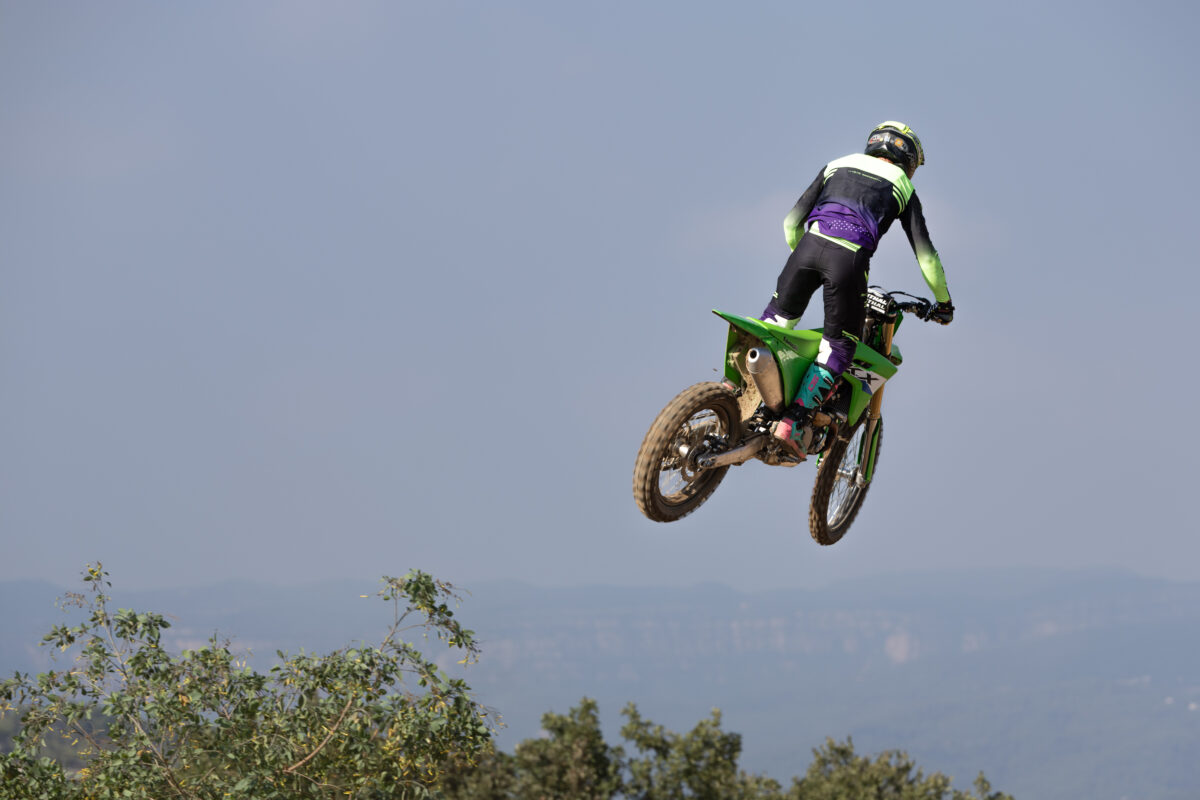
Roccos Ranch provided a spectacular setting for the test, with its American-inspired facilities, palm trees and an impressive motocross circuit. With temperatures reaching around 26 degrees, conditions couldn’t have been much better.
The circuit itself began deep and loamy before gradually drying out throughout the day, giving Callum the opportunity to experience the KX450 in a variety of conditions. Before heading out on track, though, it was the bike’s appearance that first caught his attention.
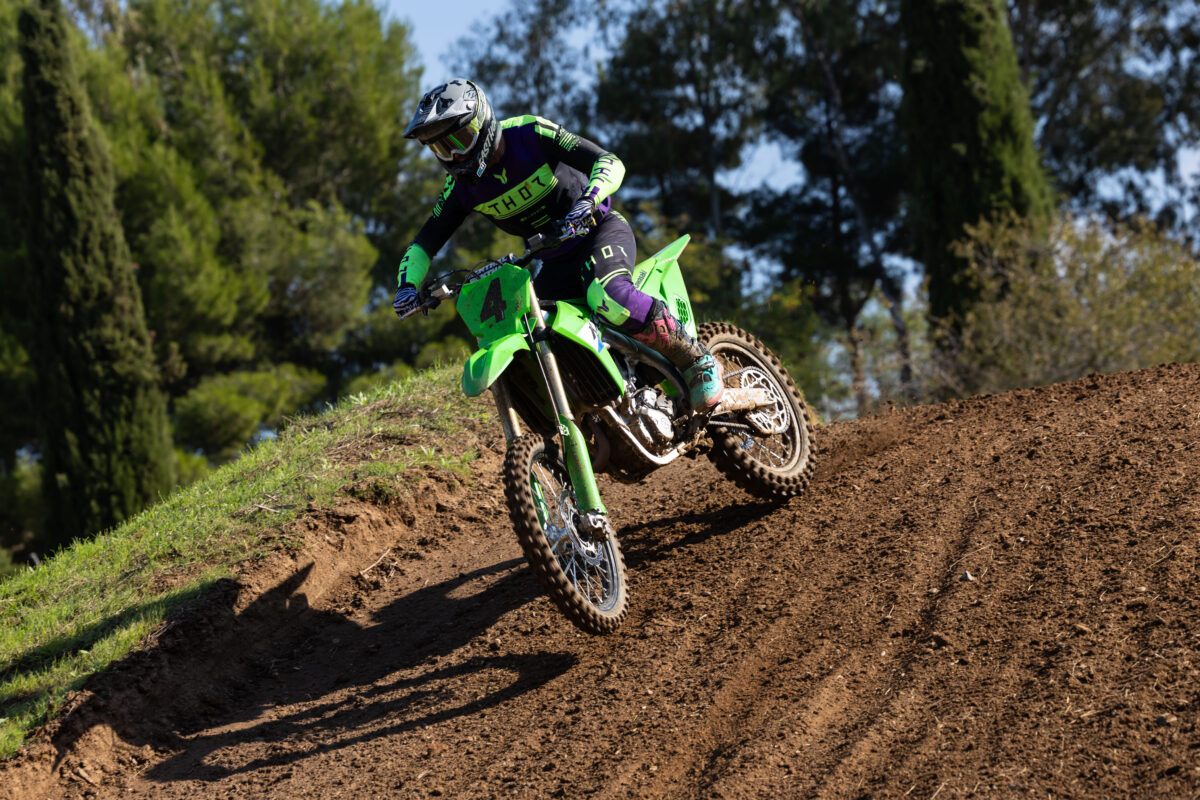
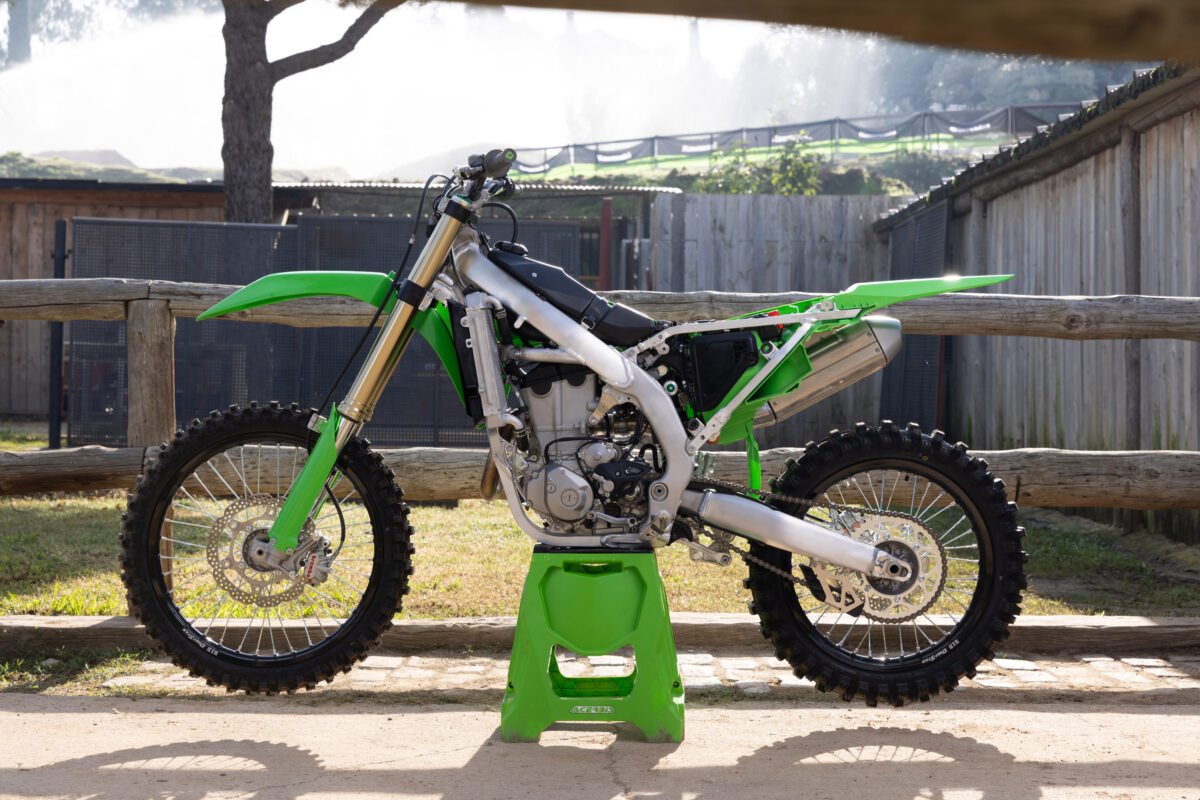
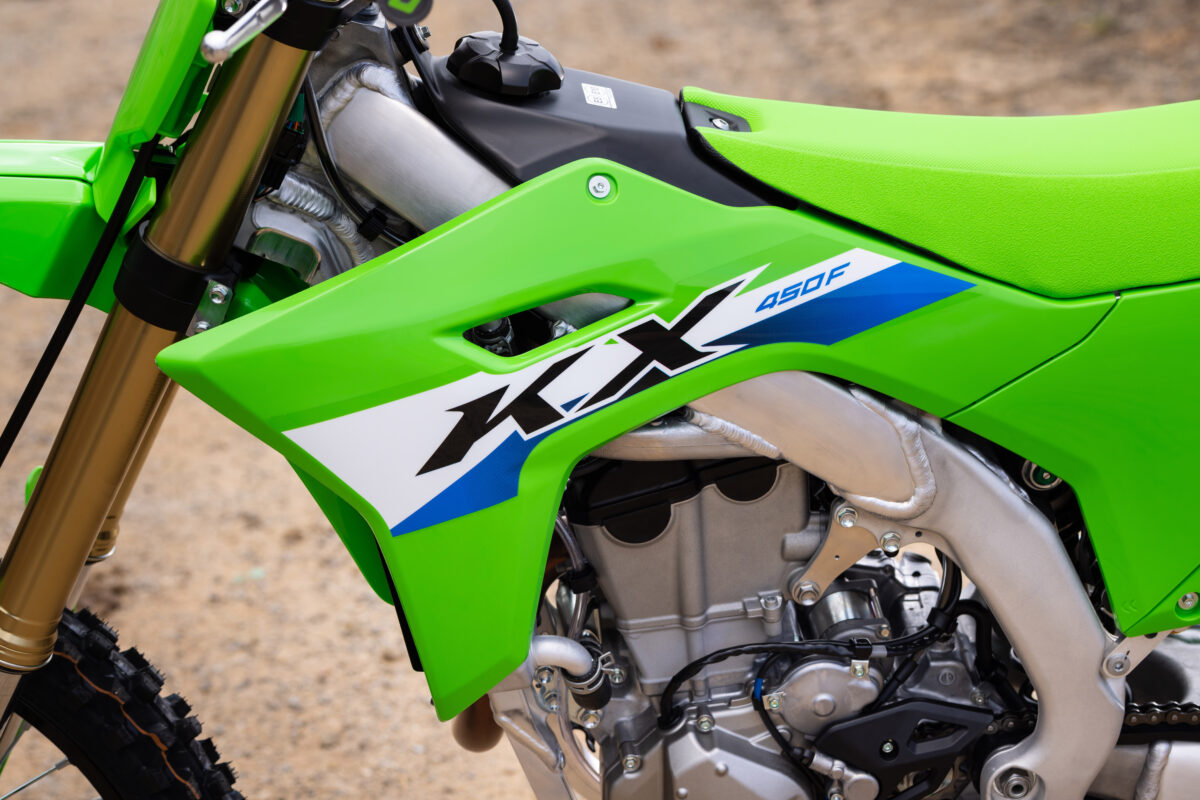
“I’ve always thought Kawasakis look quite sleek, and this one looked really smart. The graphics and plastics are quite subtle, nothing too over the top, and the engine looks pretty compact. They’ve made quite a few changes around the airbox, so the rear of the bike is a little wider, but overall it looks really good.
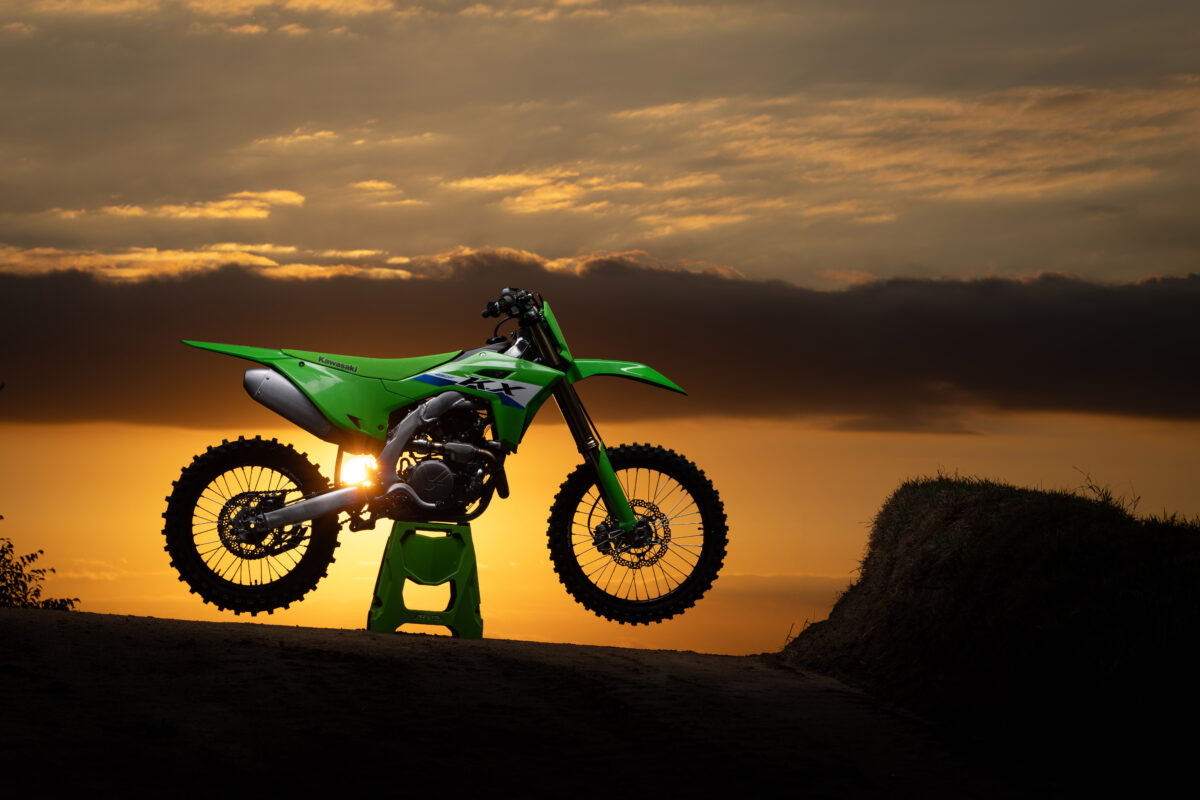
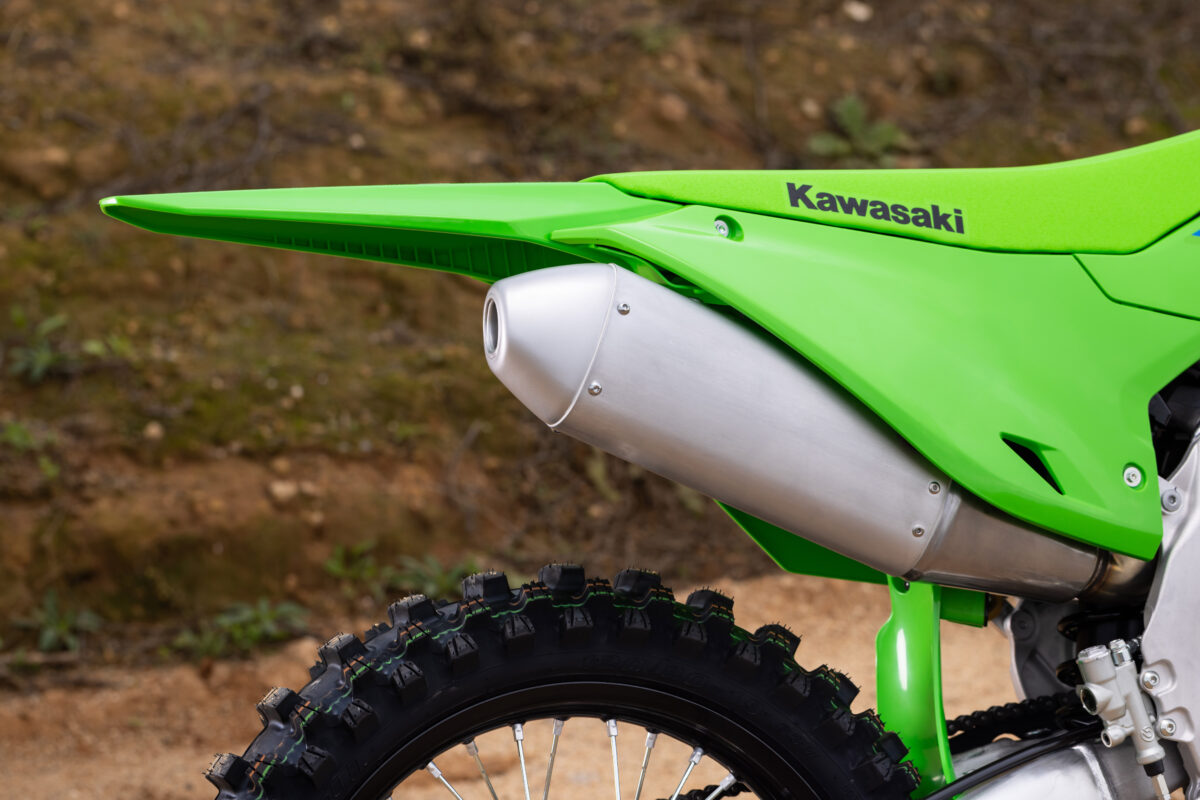
“One thing I noticed straight away was the silencer. I remember the older Kawasaki ones looking quite big and bulky, but they’ve slimmed this one right down while still meeting the noise regulations. It’s a really smart-looking bike, and the ergonomics feel good as well. The bodywork is slim, and you can move around on it easily.”
Kawasaki has also worked on reducing weight within its aluminium perimeter frame, while the revised bodywork and adjustable rider-position components have been designed to improve control and freedom of movement.
Engine & Power Delivery
One of Kawasaki’s main development objectives for 2027 was to improve the amount of usable power and drive reaching the rear wheel.
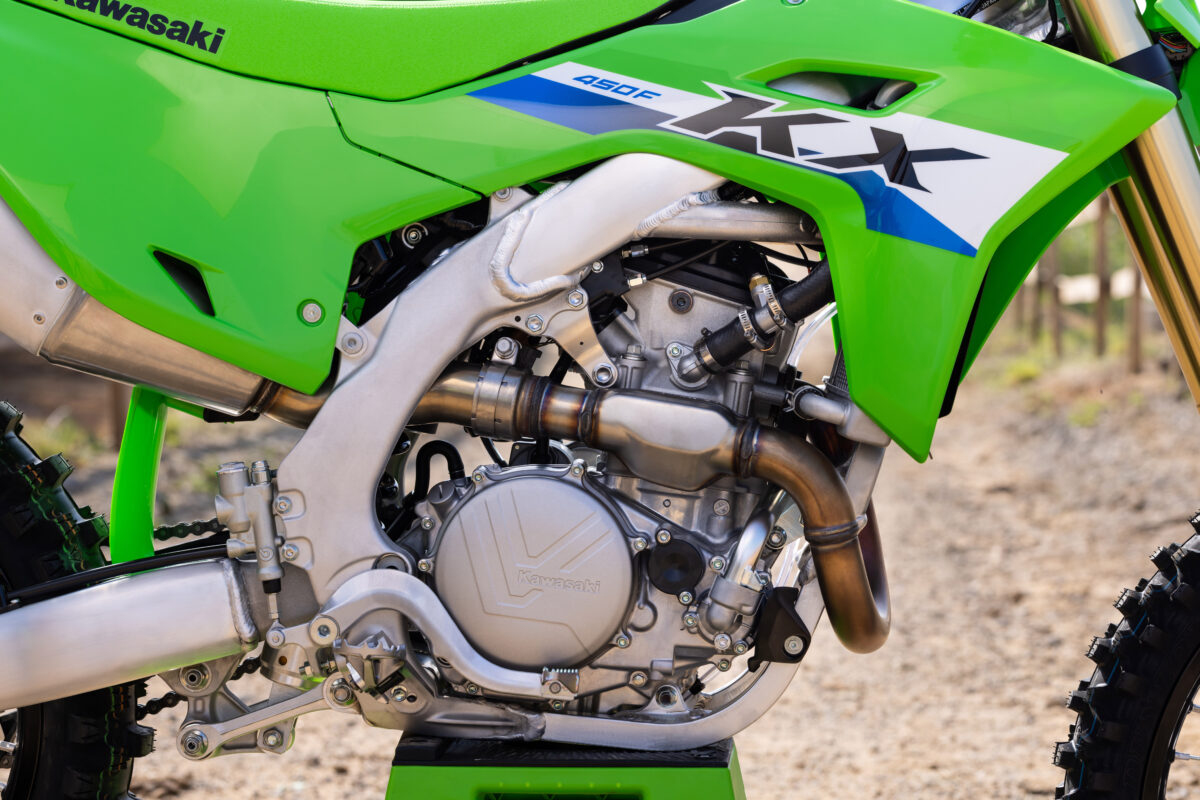
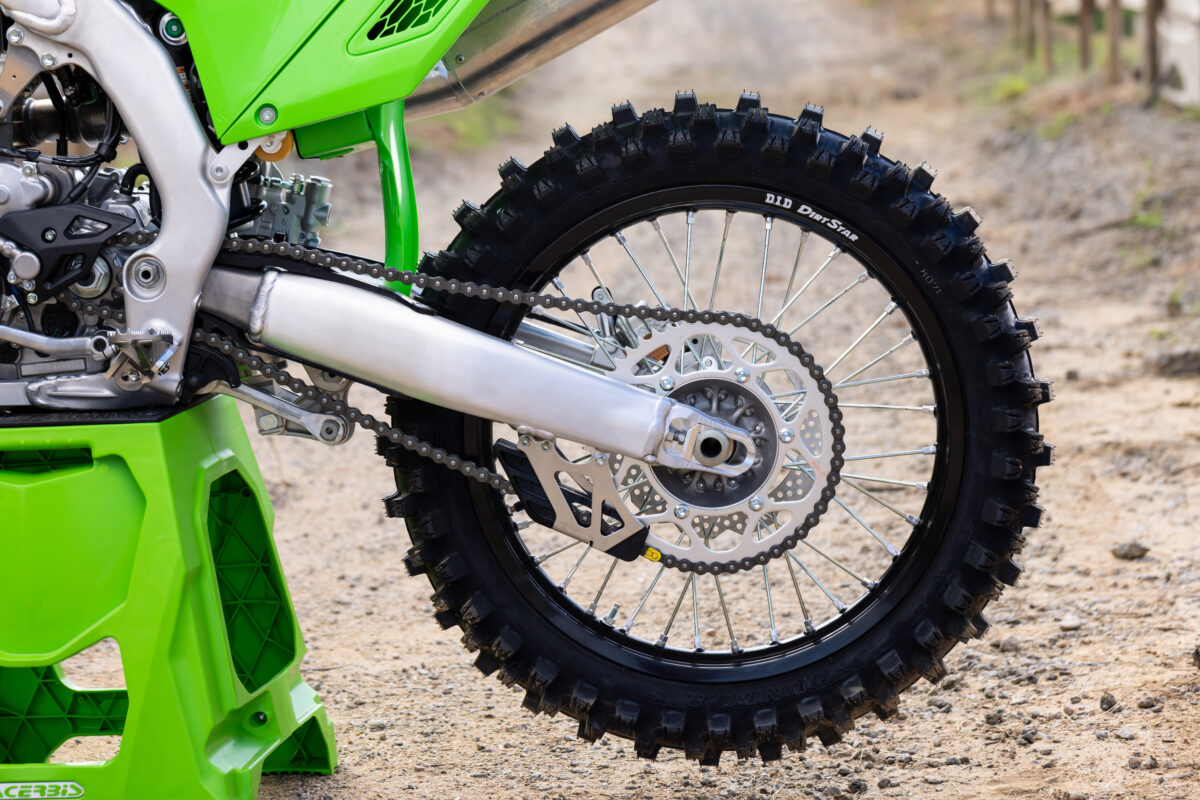
To achieve this, the manufacturer has revised the intake and fuel-injection systems, including changing the injector position from approximately 40 degrees to 90 degrees. The swingarm has also been extended by 5mm, increasing the wheelbase and helping improve traction under acceleration.
It’s fair to say Callum noticed the difference.
“Flipping rocket! That’s probably the best way to describe it.
“Before we rode, Kawasaki explained that their main aim with the new bike was to get as much power and drive to the rear wheel as possible. They’ve changed the injector position and made the swingarm 5mm longer to help achieve that. When someone says 5mm, you might think that’s nothing, but when you think about moving your rear wheel back by that amount, it’s actually quite a significant change. Once I got out on track, you could definitely feel what they’d been trying to achieve. The bottom-end power was really strong, and the bike had some serious grunt.
“There were some really tight left and right-hand corners with deep, loamy ruts, and even coming out of those, the front wheel was lifting under acceleration. The bottom-to-midrange power was rapid. There were a few decent straights leading into jumps, and it pulled really hard through the gears.”
That strong initial response was certainly impressive, although Callum found it a little more aggressive than he personally preferred.
“For me, the power was quite aggressive straight off the bottom. It wasn’t that I didn’t like the engine or thought it was bad, because it’s clearly got loads of performance, but it was just a bit too much for my riding style initially. I’ve been riding a 250 quite a bit recently, so that probably made the difference feel even bigger.
“Some riders are going to absolutely love that instant power. If you want a really lively 450 that’s going to pull hard out of corners, then it’s definitely got that. But for me, especially in the tighter, more technical sections, I wanted to try and make it a little smoother and easier to control.”
Fortunately, Kawasaki has given riders several ways to do exactly that.
Power Modes & RIDEOLOGY App
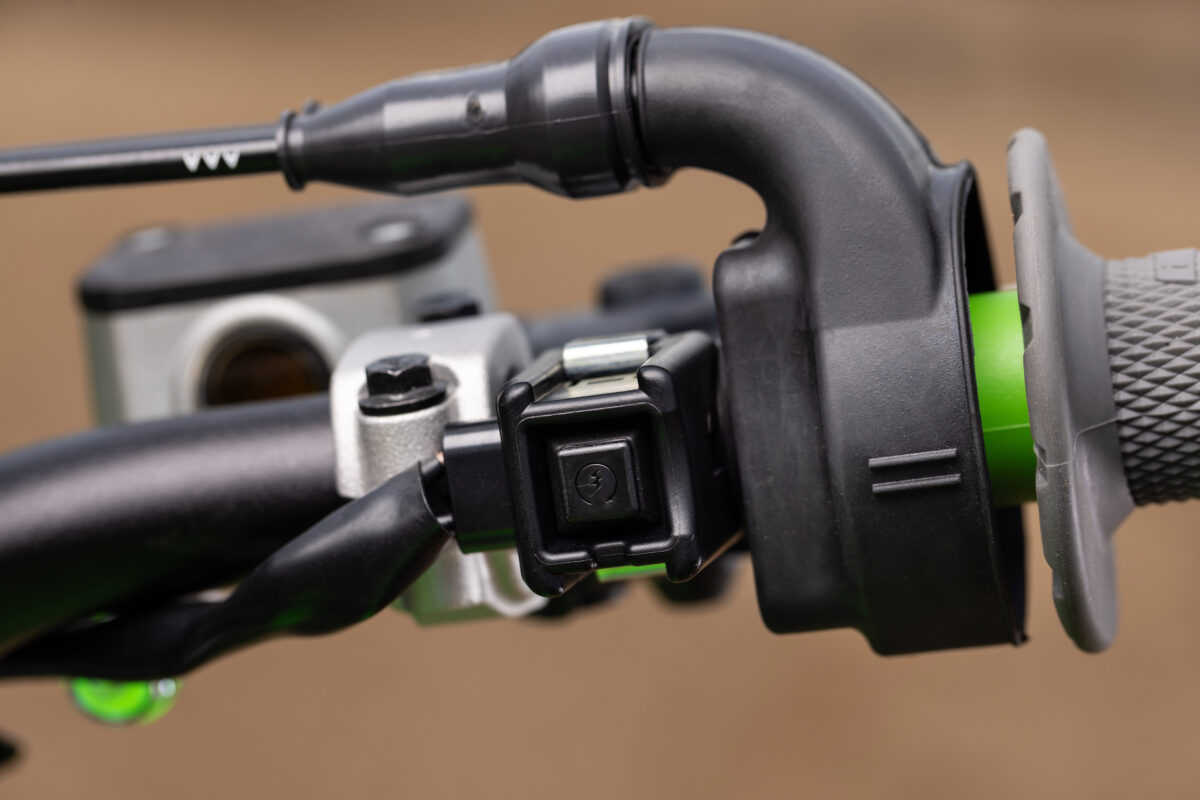
The 2027 KX450 features two selectable power modes, Kawasaki Traction Control and an updated Launch Control system. The bike also benefits from enhanced smartphone connectivity through Kawasaki’s RIDEOLOGY THE APP KX2, allowing riders to make more detailed adjustments to the engine characteristics.
After completing his first session on the standard settings, Callum began experimenting with the available options.
“We went out for the first session with the bike completely standard, just to get a proper feel for it. After that, I tried the smoother map, which definitely made a difference. It took some of that initial aggression away and made the bike a bit easier to ride.
“We then started using the Kawasaki app to make some more adjustments. You can change things like the engine braking and traction control settings, and tailor the maps to suit different tracks and conditions. That was really useful because the track changed quite a lot throughout the day. It started off really deep and loamy, but as it dried out and became harder, I wanted the power delivery to be smoother.
“With the changes we made through the app, it definitely became more manageable, and I started feeling more comfortable with the bike.”
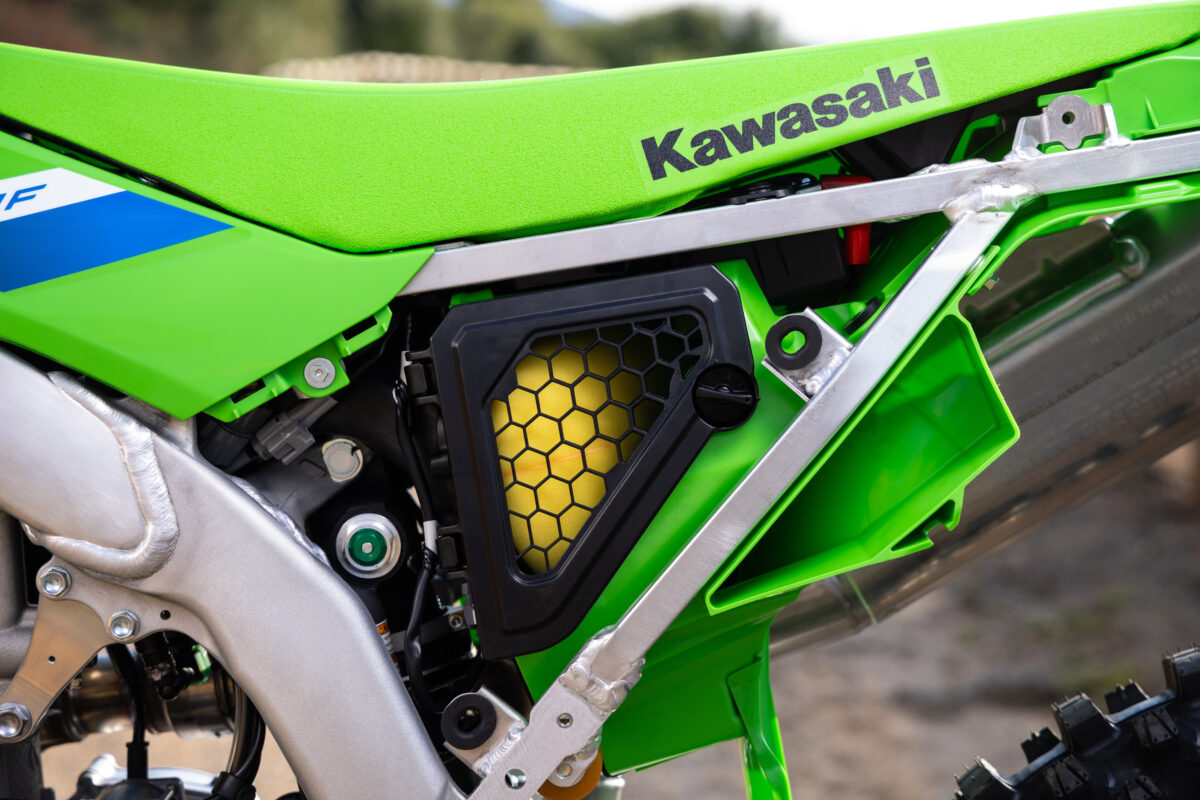
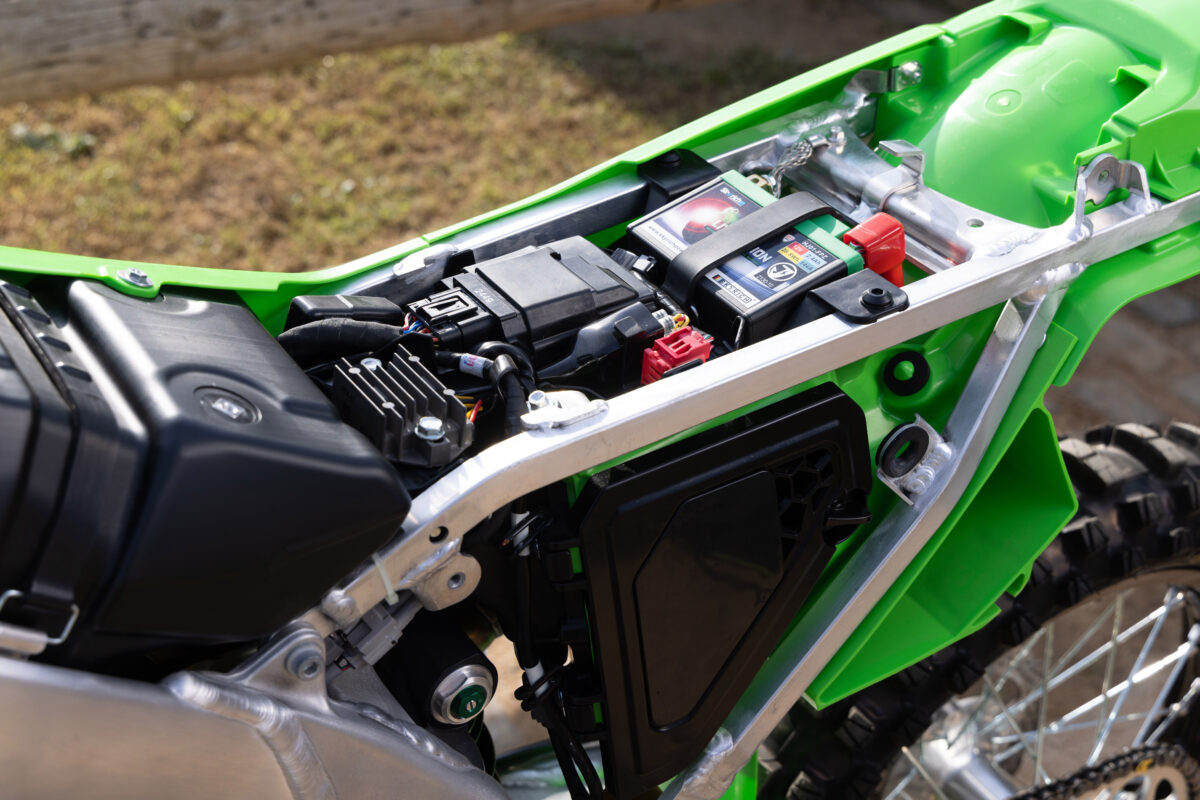
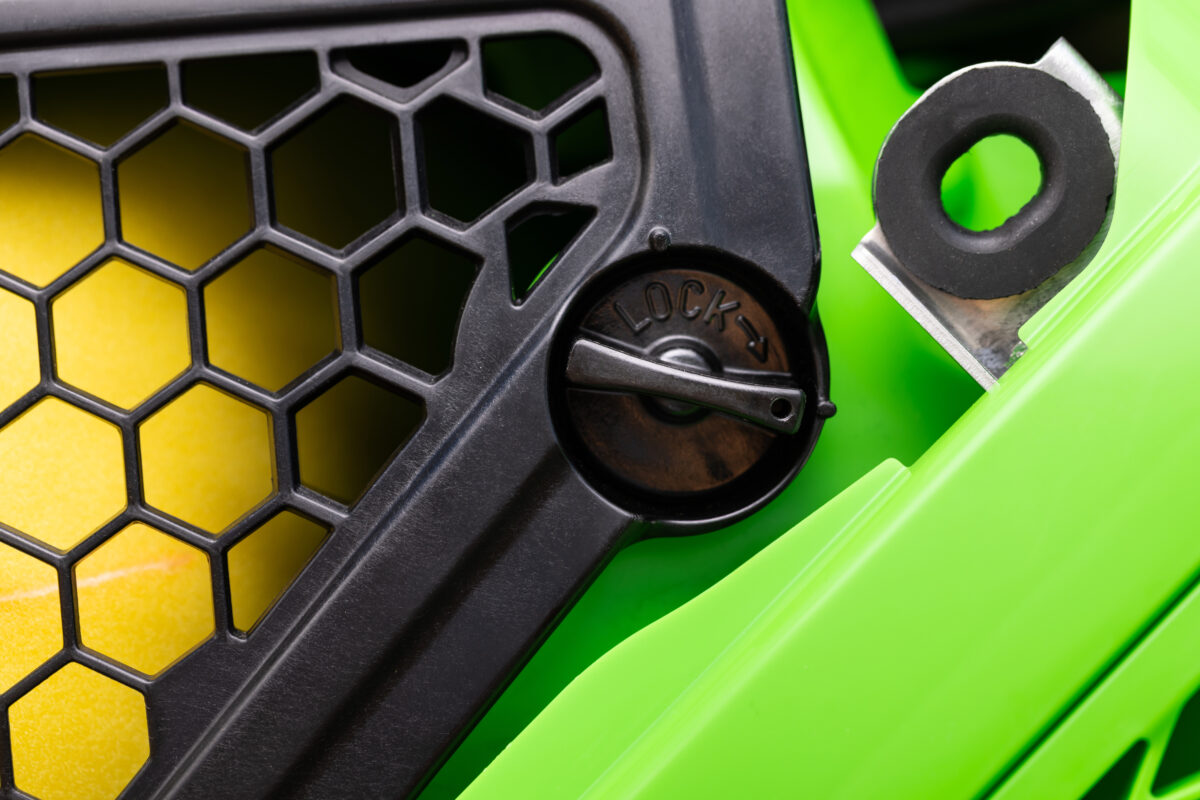
One of the more surprising features was the adjustable airbox arrangement, which incorporates a removable insert designed to influence the engine’s initial response. With the insert removed, the bike delivers a sharper response, while fitting it helps soften the power delivery.
Callum hadn’t experienced this particular feature before and was surprised by just how effective it proved.
“That was one of the things that really stood out for me. There’s basically another cover inside the airbox, over the air filter, with a little removable section that you can put in or take out. Having it out makes the bike more aggressive, while putting it in helps tame the initial power down.
“I wasn’t really expecting it to make much difference, if I’m honest. Normally, you’re trying to get more air into a bike, so you’re taking things out rather than putting them in. But when I put the insert in, it made a really noticeable difference. It was much easier to handle, especially as the track was drying out.
“Combined with the smoother map and the changes we’d made on the app, it helped massively.”
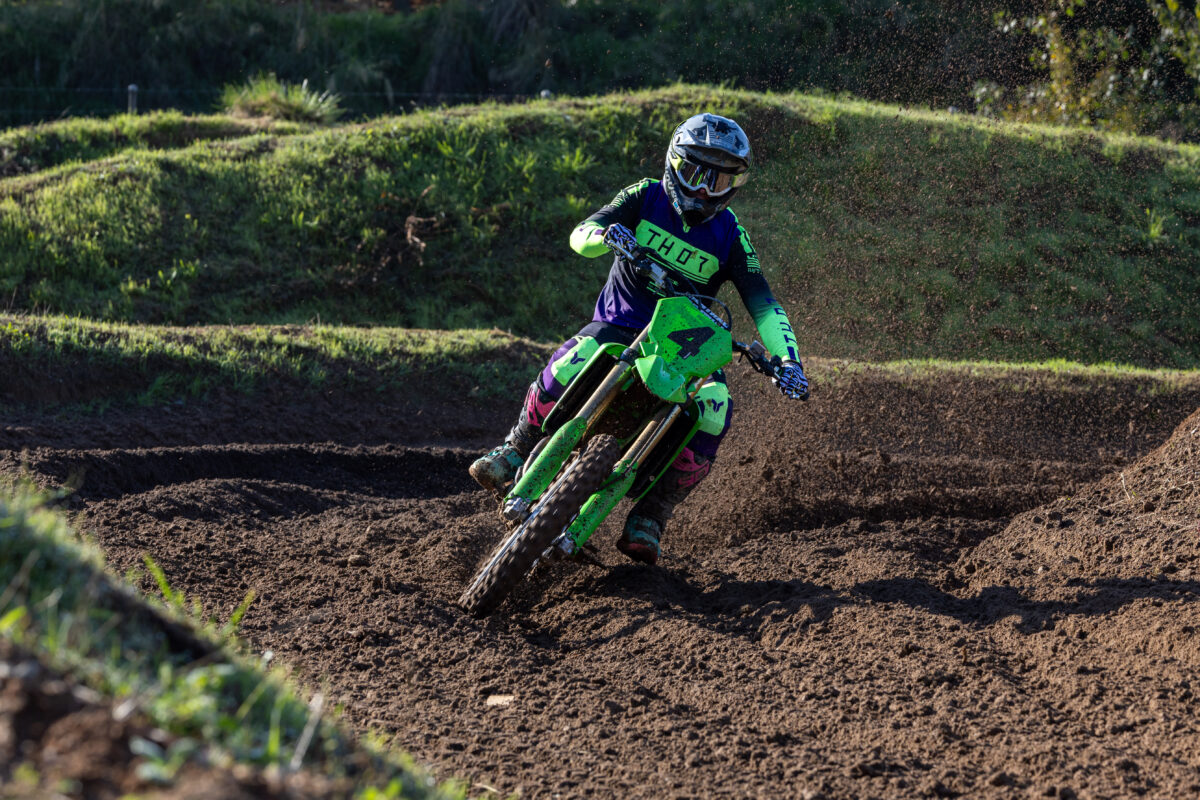
Importantly, the adjustments didn’t take away the engine’s impressive torque.
“Even when you’ve tamed it down, you’ve still got all that bottom-end power there. It’s just delivered in a smoother way, which, for me, makes it easier to ride. I think that’s a really good thing about this Kawasaki. If you want all that aggressive power, it’s there, but if you don’t, you’ve got plenty of ways to change it.
“You’re not having to spend money on engine parts to make it faster. You’ve already got the performance there, and you can adjust how you use it.”
Chassis & Handling
Kawasaki has revised its aluminium perimeter frame for 2027 and increased the wheelbase through the longer swingarm, with the aim of improving rear-wheel traction and stability.
Out on track, Callum found the KX450 particularly impressive through the faster, flowing sections of the circuit. However, the tighter corners took a little more getting used to.
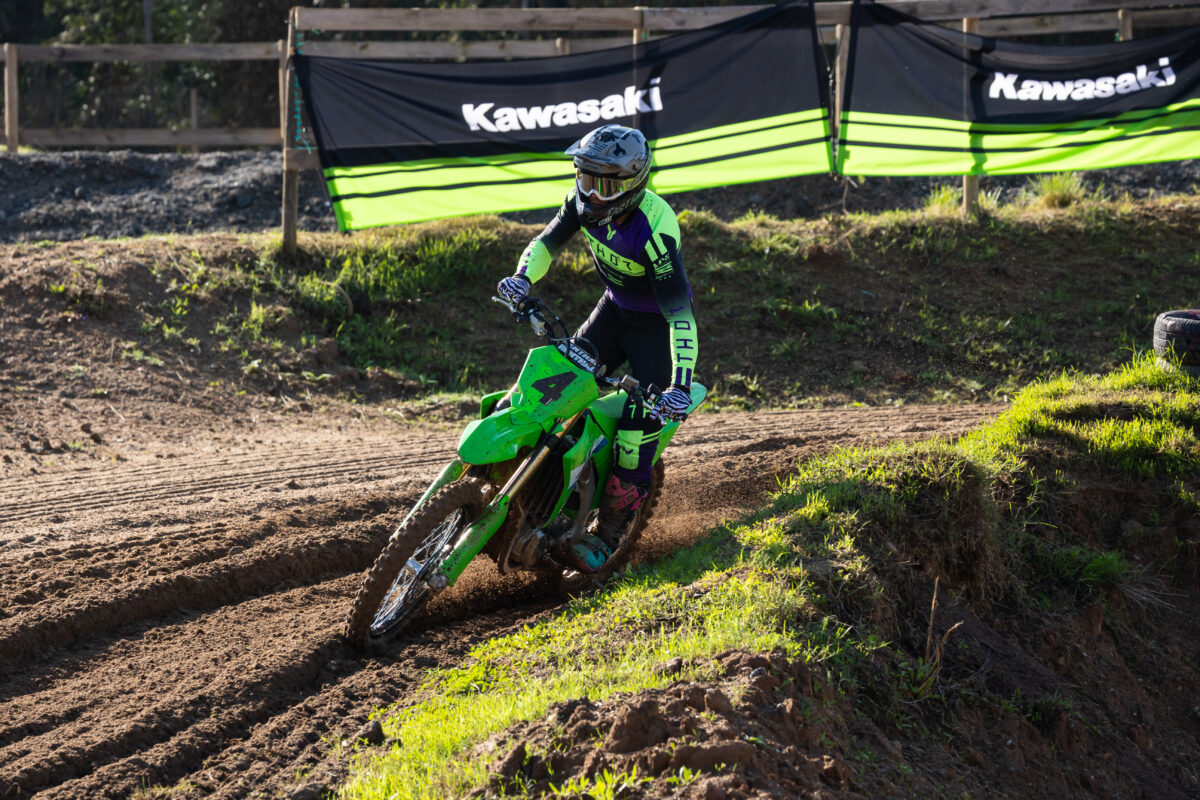
“The handling was probably the area where it took me the longest to feel comfortable. I don’t know whether it was partly because of the longer wheelbase, but I found it harder to get the bike around some of the really tight corners.
“It felt really good through the faster, sweeping turns. Once you were flowing around the track, it was nice and stable, and I think on a big, fast circuit it would be mega. But in the really tight, deep-rutted corners, I struggled a little bit more.
“The front end felt quite heavy initially, although that could have been partly down to how deep and loamy the track was at the start of the day. It was just a different feeling from what I’m used to, and it took me a bit longer to adapt.”
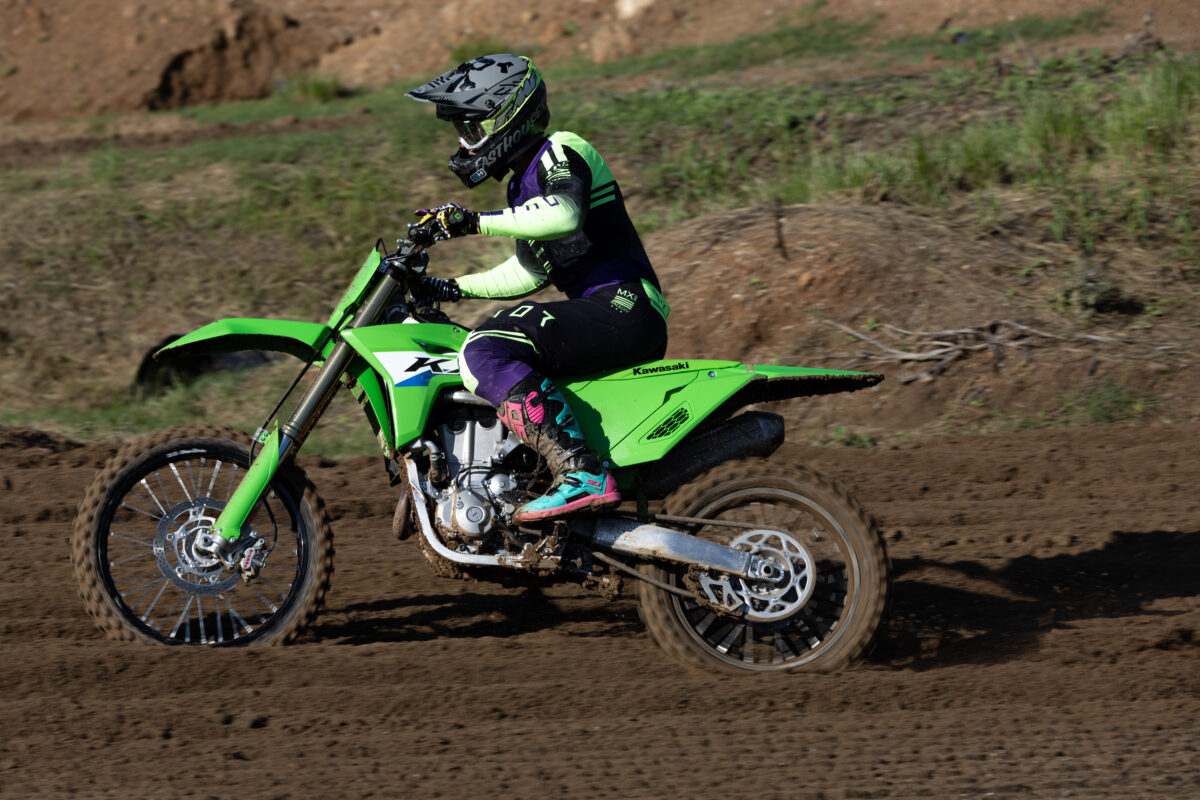
Having spent several years riding Austrian machinery, Callum was also conscious that some of the differences came down to familiarity rather than necessarily being a weakness of the Kawasaki.
“I’ve been riding an Austrian bike for quite a few years now, so when you jump onto something completely different, it can feel a bit alien at first. Every bike has its own characteristics, and sometimes you just need more time on it. By the end of the day, after we’d made some changes, I was definitely more comfortable. I just think it would have been interesting to have another few days on it and really get it dialled in.”
The KX450 also performed well over the circuit’s jumps, even while Callum was still learning the track.
“There were some pretty big jumps there, and when you’re on a new bike and a new track, you’re not always going to get everything perfect straight away. Sometimes you’d come up a little short or go a bit long, but the bike felt fine doing that. It was more when I was trying to push the pace through the tighter corners that I wanted to improve the feeling.”
Suspension
The 2027 Kawasaki KX450 comes equipped with 49mm Showa coil-spring forks and a New Uni-Trak rear suspension system featuring a Showa shock. Kawasaki has introduced revised race-ready suspension settings, but the standard setup didn’t initially provide the balance Callum was looking for.
“For me, the front forks felt really soft to start with, while the rear felt quite stiff. It was almost like the bike was sitting high at the back and low at the front. When I was coming into corners, the front felt like it was diving quite a bit, and I just didn’t feel properly balanced on it. After the first session, we stiffened the front up and made some changes to the fork position, which definitely helped.
“We then adjusted the rear sag after the second session because the back still felt quite hard. Once we’d made those changes, the bike started to feel better, and I was getting more comfortable on it.”
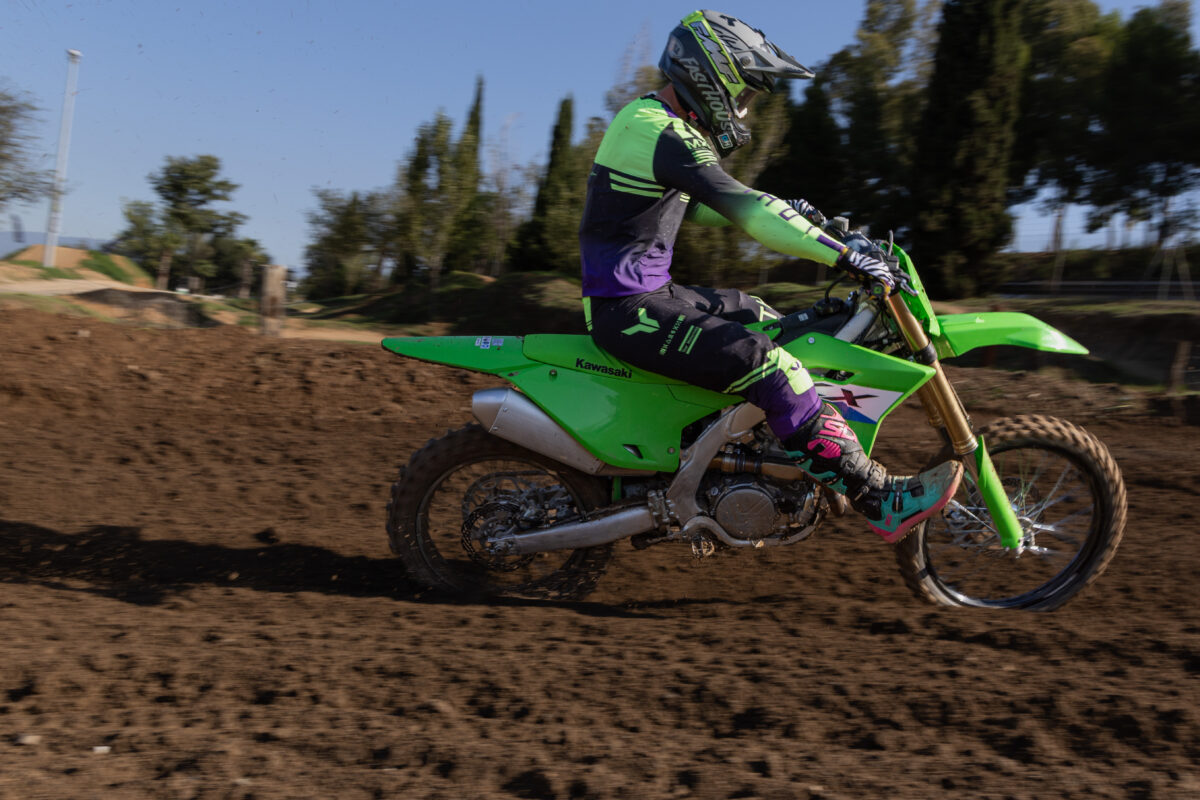
Callum was particularly keen to emphasise that the suspension feedback was based on his own size and riding preferences. At around 70kg, he’s lighter than many riders who might choose a 450, and the standard suspension settings inevitably have to accommodate a wide range of rider weights and abilities.
“I’ve used Showa forks on other bikes before and really liked them, so I know how good they can be. I think some of the feeling I was getting from the front was probably connected to how the rear was set up, because the whole bike just felt a little unbalanced initially.
“With a 450, I’d probably expect to change the suspension to suit myself anyway, whether that’s different springs or getting it revalved. Manufacturers have to cater for riders of all different sizes. You could have someone who’s 70kg like me, or someone who’s considerably heavier, and they’re both riding the same bike.
“So I don’t think it’s necessarily a criticism of the suspension itself. It’s just that the standard setup wasn’t quite right for me.”
Compared with some of the other bikes he’s tested, the Kawasaki required more adjustments before he felt comfortable.
“On some of the other tests I’ve done, I’ve been pretty happy with the suspension almost straight away, with maybe just a couple of clicks or a small sag adjustment. With the Kawasaki, we had to do a little bit more work to get it feeling how I wanted. But by the end of the day, I wouldn’t say I was uncomfortable on it. We’d definitely improved things, and with more time to play around with the settings, I’m sure we could have got it even better.”
Brakes, Clutch & Gearbox
Another notable update for 2027 is Kawasaki’s move to Brembo braking components at both ends of the KX450. The front features a 270mm disc with a Brembo dual-piston caliper, while the rear uses a 240mm disc and single-piston caliper.
Having spent plenty of time riding bikes equipped with Brembo brakes, Callum was interested to see how they performed on the Kawasaki.
“They’ve got Brembo brakes front and rear now, which is obviously a good thing because they’re quality components. Strangely enough, the front didn’t feel quite the same as the Brembos I’m used to on an Austrian bike. That could be something as simple as the lever or the setup, but the feeling was just a little different. It wasn’t a problem, though. They’re Brembo brakes, and you know they’re going to be good.”
The hydraulic clutch was one area that immediately impressed him.
“The clutch was really nice. Sometimes you get clutches that feel too light, and I’m not a massive fan of that. But the weight of the Kawasaki clutch was spot on. It had a really nice feel to it.”
Callum was equally happy with the standard gearing and five-speed gearbox.
“The gearing was pretty much perfect for that track. There’s always going to be the odd section where you think another tooth here or there might help, but overall, as a standard bike, it was really good. I wouldn’t say there was anything about the gearbox or clutch that I particularly wanted to change.”
Ergonomics & Standard Equipment
The KX450 comes with a number of practical features designed to help riders tailor the bike to their individual needs. These include ODI lock-on grips, adjustable handlebar positioning, two footpeg height settings and a quick-release side cover for tool-free air filter access. Callum was particularly impressed by the ease of working around the redesigned bodywork.
“The plastics are completely new, but they’re still really simple to take on and off, which is a good thing. The airbox is easy to get to, and I really liked that little removable insert because it actually makes a difference to how the bike rides. The ergonomics are really good as well. It feels nice when you’re standing up and moving around on the bike.”
The adjustable footpeg positions were another welcome addition, although Callum didn’t get the opportunity to experiment with them during the test.
“You’ve got two different positions for the footpegs, which is a nice feature. We didn’t try changing them because there wasn’t really enough time between sessions, but I think it’s particularly useful for taller riders who might want to lower them. It’s another way of making the bike fit you rather than having to adapt yourself to it.”
Who Is the Kawasaki KX450 For?
With its strong engine performance and competitive standard specification, Callum believes the 2027 KX450 has plenty to offer experienced amateur, expert and professional riders. However, the range of available adjustments also makes it a realistic option for less experienced riders who want a 450 they can tailor to their abilities. I’d definitely say it’s a competitive bike straight out of the crate. If you’re an expert or a professional rider and you want something that’s got loads of power, the Kawasaki is going to give you that.
“The bottom end is really strong, and if you wanted to go out and race it, it’s got all the performance you need. I reckon it would be really impressive off the start as well, although we didn’t actually get the chance to do any proper starts during the test.
“But I also think it could suit a lot of amateur riders because you’ve got so many ways to change the power delivery. If you’re a novice or someone who doesn’t want that really aggressive response, you can put it into the smoother map, use the app and change the airbox insert. That makes it a much more manageable bike, and as you get more comfortable, you can start making it more lively again.
“It’s a proper all-rounder in that sense. It can be really aggressive if that’s what you want, but it can also be made much smoother.”
Verdict
For Callum, the standout feature of the 2027 Kawasaki KX450 was undoubtedly its engine. Kawasaki set out to improve the bike’s power delivery and rear-wheel drive, and after a full day riding in Spain, he believes the manufacturer has achieved that objective.
“The biggest strength for me was definitely the bottom-end power. Kawasaki said before we rode that they’d been concentrating on getting more drive and traction to the rear wheel, and you can really feel that they’ve achieved it.
“It’s got so much grunt, and even when you’re coming out of really deep corners, it just wants to pull. Some riders are going to absolutely love how aggressive it feels straight out of the crate.”
For Callum personally, the smoother mapping and airbox adjustments made the bike more enjoyable to ride.
“The standard power delivery was a little bit too aggressive for me, but that doesn’t mean it’s a bad thing. It’s just not exactly how I like a bike to feel. What impressed me was how much we could change it. Once we’d tried the smoother map, made some adjustments with the app and put the airbox insert in, it was much easier to ride. And the best thing is that all that power is still there. You’ve just changed how it gets delivered.”
The suspension and handling required more work, particularly through the tighter corners, but Callum believes additional setup time would help unlock more of the bike’s potential.
“The suspension was probably the biggest thing I’d want to spend more time on. It took me longer to get comfortable than some of the other bikes I’ve tested, and I struggled a little bit in the tight corners. But by the end of the day, we’d made some good improvements, and I was definitely feeling better on it. I think with a 450, most riders are going to want to get the suspension set up for their weight and riding style anyway. You’re never going to get a standard bike that’s perfect for absolutely everyone.”
Ultimately, Callum believes the Kawasaki’s biggest advantage is that it gives riders a highly competitive starting point, with the ability to adjust its characteristics rather than having to chase more performance.
“Every rider is different, and what one person loves about a bike, someone else might not like. I think pretty much every modern motocross bike has the potential to be set up to suit you if you spend the time getting it right.
“With the Kawasaki, you’ve already got a really powerful engine and loads of performance there. I’d much rather have a bike that’s got plenty of power and be able to tame it down than have something that’s too slow and need to spend a load of money trying to make it faster.
“That’s what I really like about this bike. Kawasaki has given you all that performance, but also the tools to make it work for you. I’d definitely like to spend more time on one and see just how good we could get it with the right setup.”
For riders looking for a powerful, competitive 450 with plenty of scope for personalisation, the latest KX450 certainly deserves consideration.
And with its impressive bottom-end performance, enhanced electronics and adaptable engine characteristics, Kawasaki has delivered a machine that offers plenty of potential both straight out of the crate and with further fine-tuning.
2027 Kawasaki KX450 – Technical Specifications
| Item | Specification |
|---|---|
| Engine | 449cc liquid-cooled, four-stroke single-cylinder |
| Valve system | DOHC, four valves |
| Bore x stroke | 96.0 x 62.1mm |
| Compression ratio | 12.7:1 |
| Fuel system | 44mm fuel injection |
| Starting | Electric |
| Gearbox | Five-speed |
| Clutch | Wet multi-disc, hydraulic |
| Frame | Aluminium perimeter |
| Front suspension | 49mm Showa coil-spring forks, fully adjustable |
| Rear suspension | New Uni-Trak with Showa shock |
| Front brakes | 270mm disc, Brembo dual-piston caliper |
| Rear brakes | 240mm disc, Brembo single-piston caliper |
| Front tyre | 80/100-21 |
| Rear tyre | 120/80-19 |
| Fuel capacity | 6.2 litres |
| Electronics | Power modes, Kawasaki Traction Control, Launch Control, RIDEOLOGY THE APP KX2 |
| Additional features | Adjustable footpegs, ODI lock-on grips, tool-free air filter access |