

Motocross boots get a pretty hard life, so rather than give the Sidi Crossfire 3 SRS a couple of rides and call it a test, we’ve put some proper time into them.
Dirt Hub test rider Callum Gordon has been riding in the Crossfire 3 SRS since the beginning of May, giving him five months in the boots across everything from hard, dry summer tracks in the UK to torrential rain and deep mud in Italy. At the Ducati tests and launch in Faenza, Callum had previously been riding in Alpinestars Tech 10s, giving him a useful comparison for the Sidis.
So, five months in, how have they performed?
SIDI CROSSFIRE 3 SRS – TECH SPEC
RRP: £499
Construction: Technomicro microfibre
Sole: SRS replaceable sole system
Protection: Dual Flex System with Hyper Extension Block
Fit: Adjustable calf system
Buckles: Micro-adjustable and replaceable buckle system
Replaceable parts: Shin plate, buckles, metatarsus inserts and SRS sole
Heel: Anatomically shaped heel cup
Test period: Five months
Test rider: Callum Gordon
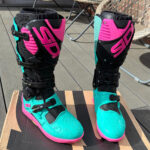
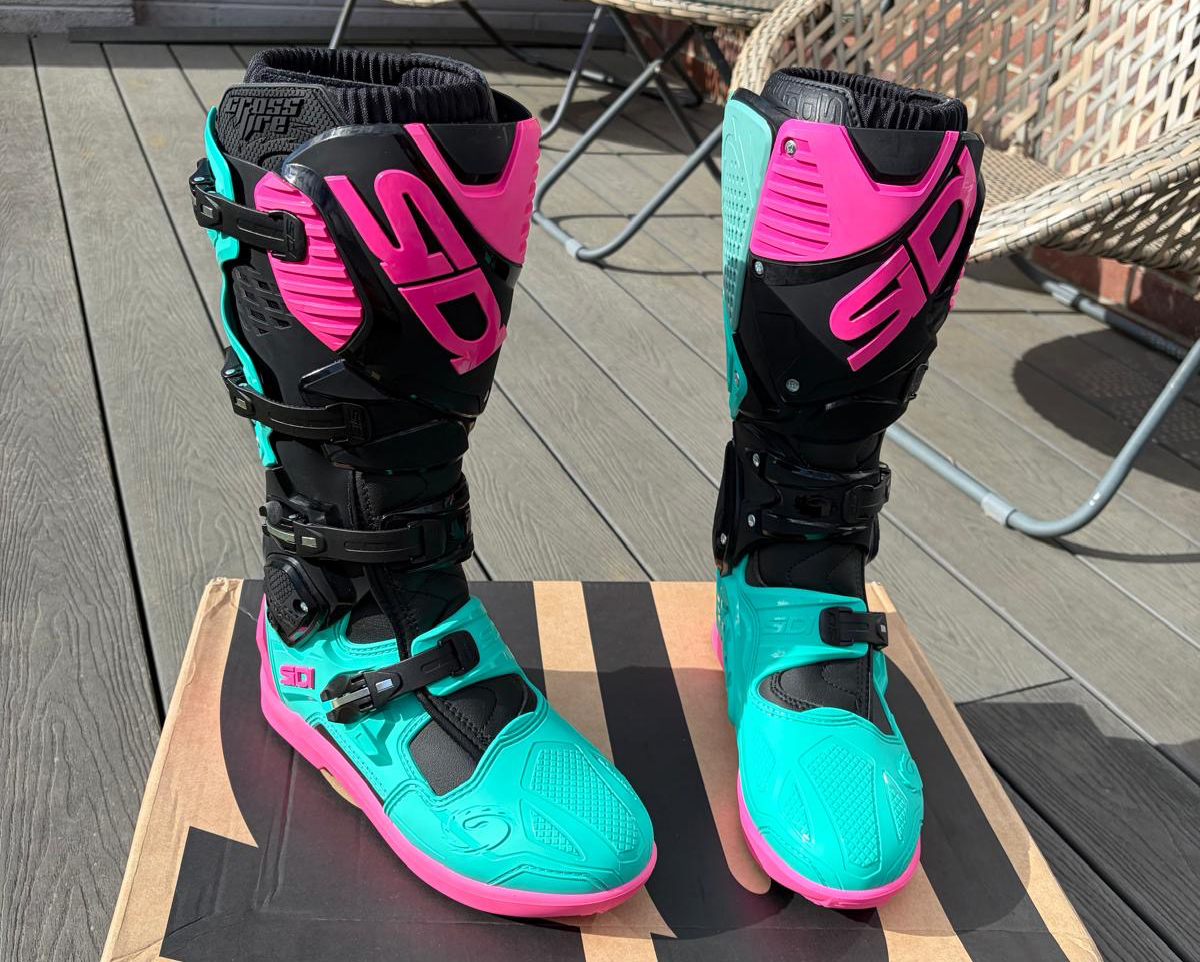
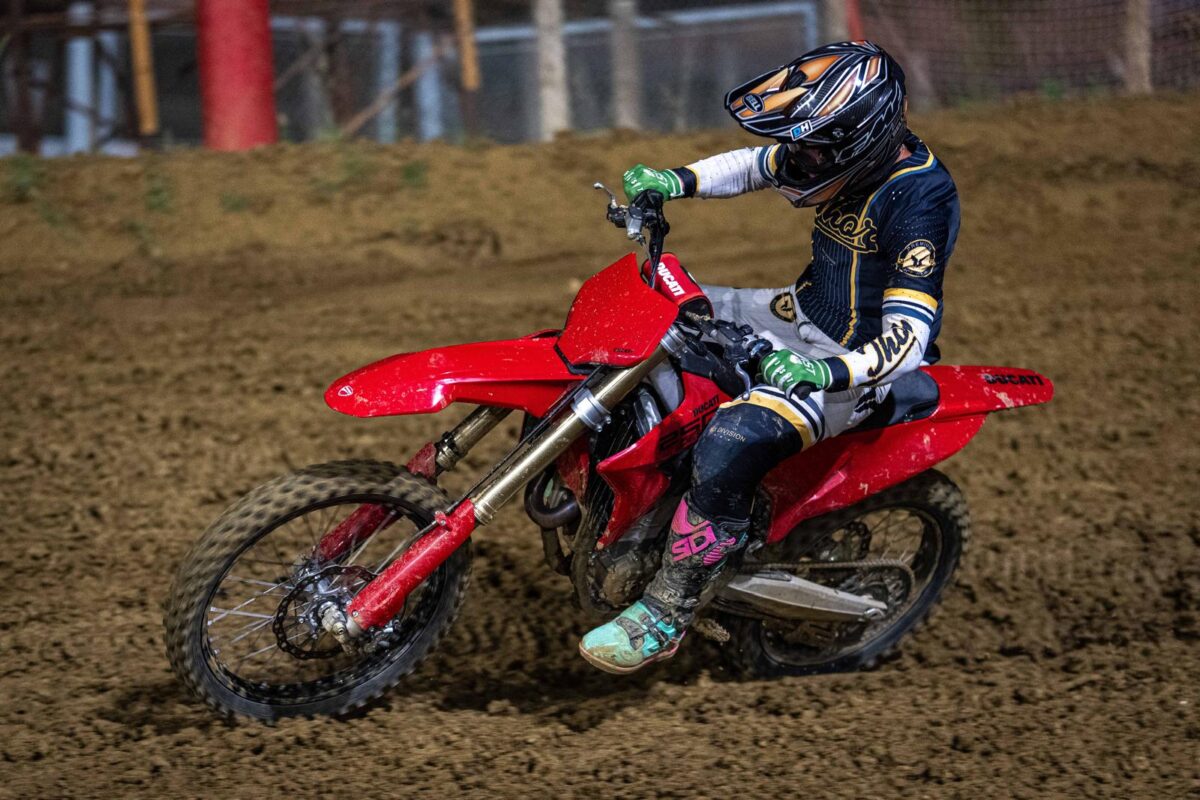
Test colourway: Black / Mint / Pink
More information: Find out more and see more Sidi boots here >> https://sidiuk.com/collections/motocross-boots
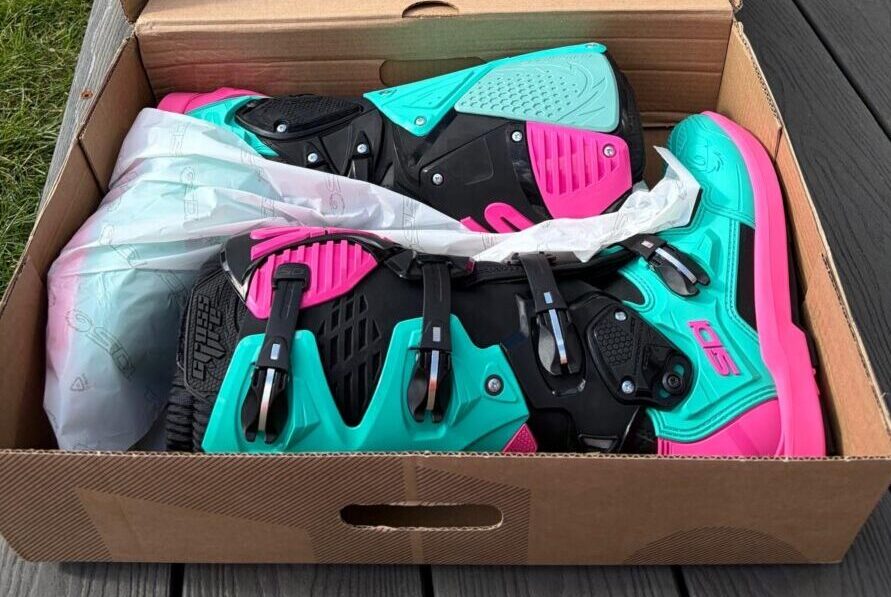
First impressions and comfort
One of the first differences Callum noticed when moving from the Tech 10 to the Crossfire 3 SRS was the weight and the considerably slimmer feel of the boot.
“I was surprised by how different they felt compared with the Tech 10s, but in a positive way. The Sidis feel a lot lighter and a lot less bulky. In motocross, the lighter the boot the better, especially when you’re cornering and you’ve got to bring your foot up out of the ruts. A lighter boot is going to tire you out less as well.”
“They were comfortable straight away. A lot of boots take a few rides, or sometimes even a few weeks, before they properly break in, but for me these were comfortable from the first ride. They’re not quite as stiff as the Tech 10, but I’d say the stiffness was pretty much spot-on. I like a stiff boot, but from the get-go nothing felt alien or uncomfortable.”
“I think going from a bulky boot to a slimmer boot is easier than doing it the other way around. You haven’t suddenly got to get your head around where everything is because you’ve got this bigger boot on your foot. I got used to the Sidis really quickly.”
Sizing and fit
One thing Callum would change next time is the size he chooses.
Having traditionally gone one size larger with motocross boots, he did the same with the Sidis, choosing a UK size eight despite normally wearing a UK seven shoe.
“I’ve always used a size up in motocross boots, so I went for an eight when I’m normally a seven. Having ridden in them, I think I’d definitely get away with a seven. I’ve got a little bit of movement in the eights, so I wear two pairs of socks, although I’d always rather have a boot slightly too big than too tight. I’d say they’re pretty true to your normal shoe size. When I get another set, I’ll probably just go for my normal size seven.”
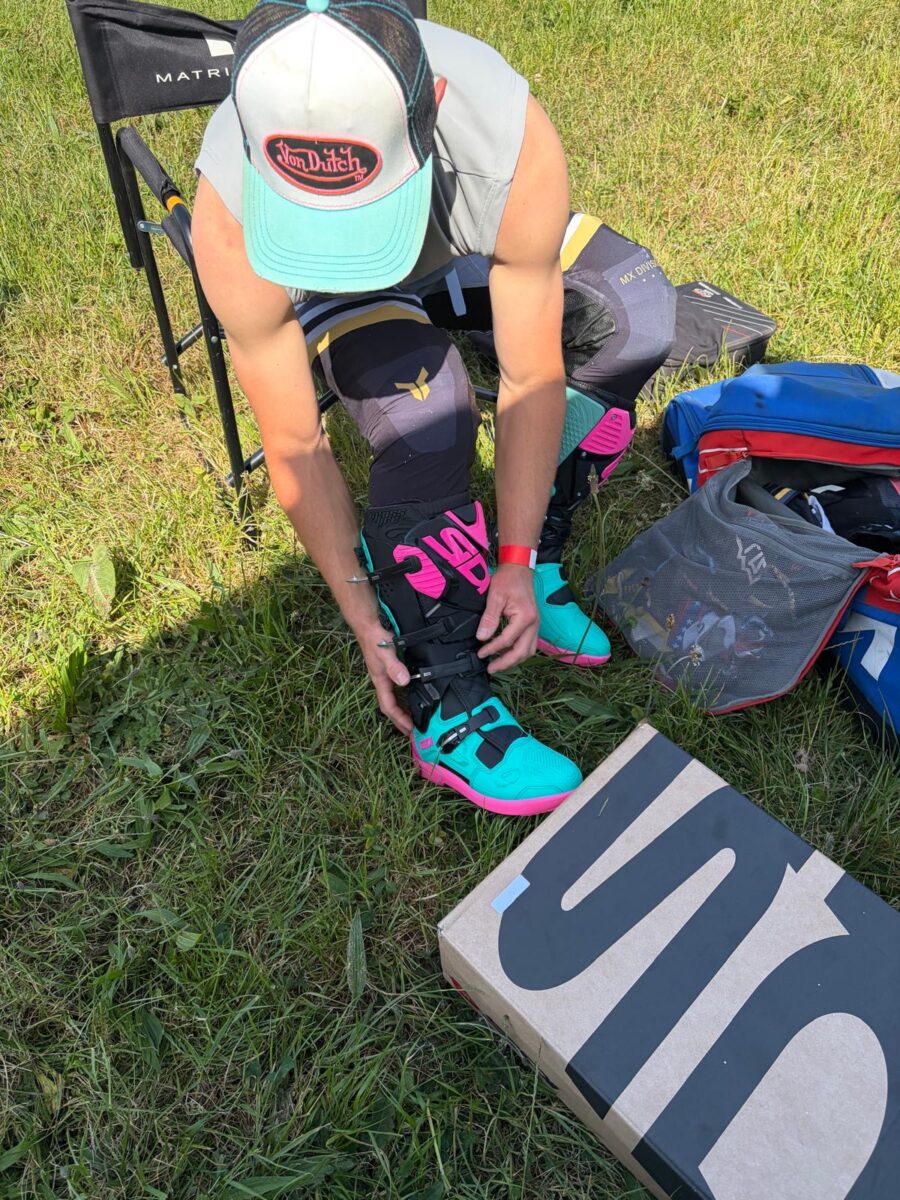
Lighter, Slimmer and more feel
The slimmer construction hasn’t just made the Crossfire 3 SRS feel more comfortable. For Callum, it’s actually changed how connected he feels to the motorcycle.
“The fact they’re less bulky is really noticeable, especially for me after using Tech 10s for so long. I feel like they’ve improved my riding in a way because I can feel a lot more of the bike. That makes it easier to control and gives you a smoother ride. Coming into corners, if you can grip the bike more with your legs and feet, you’ve got more control. More control gives you more trust in the bike and that gives you more confidence.”
“It’s the same with changing gear and braking. I’ve got more feel through the rear brake, so you’re not over-braking or under-braking. Since I’ve been using these boots, I actually feel like I can brake better.”
“With the lightness and slimness of the boot, I find it easier to get my leg higher when I’m going into rutted corners. You want to get your leg up as high as possible so you don’t snag or drag it. There are so many injuries from riders catching their leg because it’s too low.
“Getting my leg higher has always been something I felt I could improve, and since I’ve been using these boots I’ve found it easier to do. Maybe it was simply the weight of my previous boots holding my leg down a little bit. It can help your position as well. If your leg is higher it can bring you slightly further forward on the bike, so for me that’s been a real positive.”
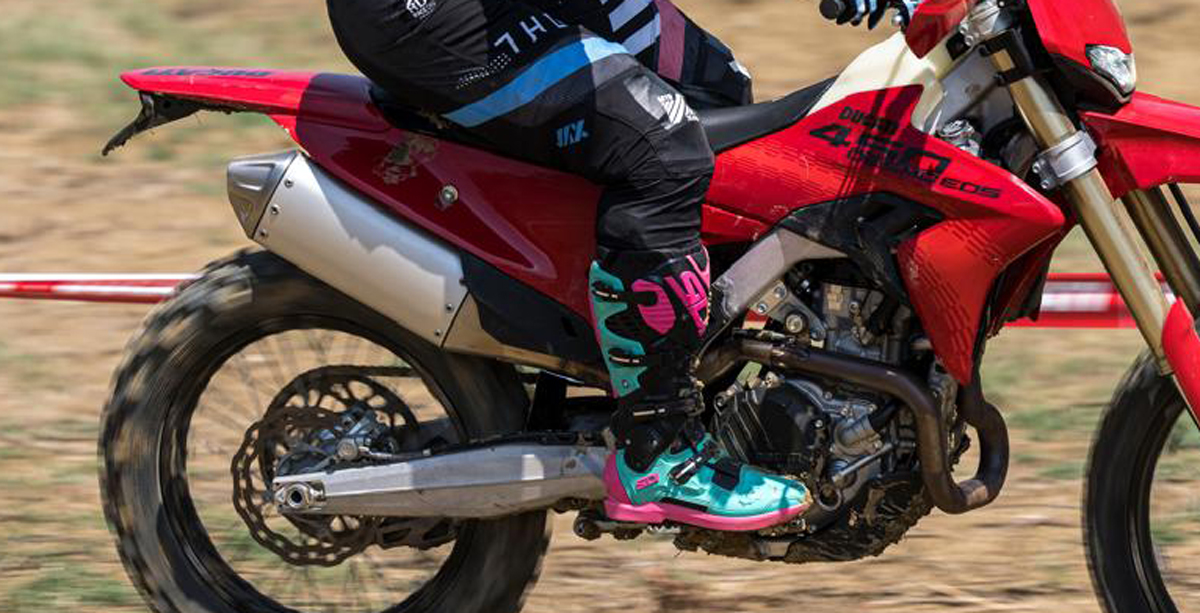
Flex versus protection
Finding the right balance between movement and protection is obviously one of the big challenges with any motocross boot. The Crossfire 3 SRS uses Sidi’s dual flex system together with anti-hyperextension protection, and Callum feels Sidi has got that balance about right.
“There’s a fine line with motocross boots between being too stiff and too flexible, and then you’ve got the protection to think about as well. I think what Sidi has come up with is pretty much spot-on. There’s loads of protection, but rather than everything being one solid piece, there are different protective sections around the boot. That gives you the protection where you need it but also makes the boot more agile and comfortable. There’s definitely more movement and flex in them than I’ve been used to. Protection-wise, there’s plenty around the ankle and there’s loads running from the heel right up towards the calf. For me, the protection is spot-on.”
What would Callum change?
Coming from the considerably stiffer Tech 10 and personally preferring a stiff boot, there have been occasions where he’s noticed the additional movement of the Sidi.
“The only thing I’d maybe change is making them a little stiffer. I like a stiff boot and the Tech 10 is definitely stiffer. In sand, for example, it’s quite nice to have that extra stiffness when things get really rough because you feel a little more supported.”
That thought also crossed his mind recently while racing the new GP layout at Foxhills.
“The jumps there are huge and I had a couple of cases where afterwards I wondered whether I’d felt it a little more through my ankle or heel because the boots flex more. But my feet, ankles and heels were absolutely fine. I think some of that thought was simply because I knew the boots weren’t as stiff as what I’d been used to. Those jumps are massive as well and you’re not riding jumps like that every week. Suspension set-up can come into it too.
“But if there was one thing I’d change, personally I’d probably have them slightly stiffer.”
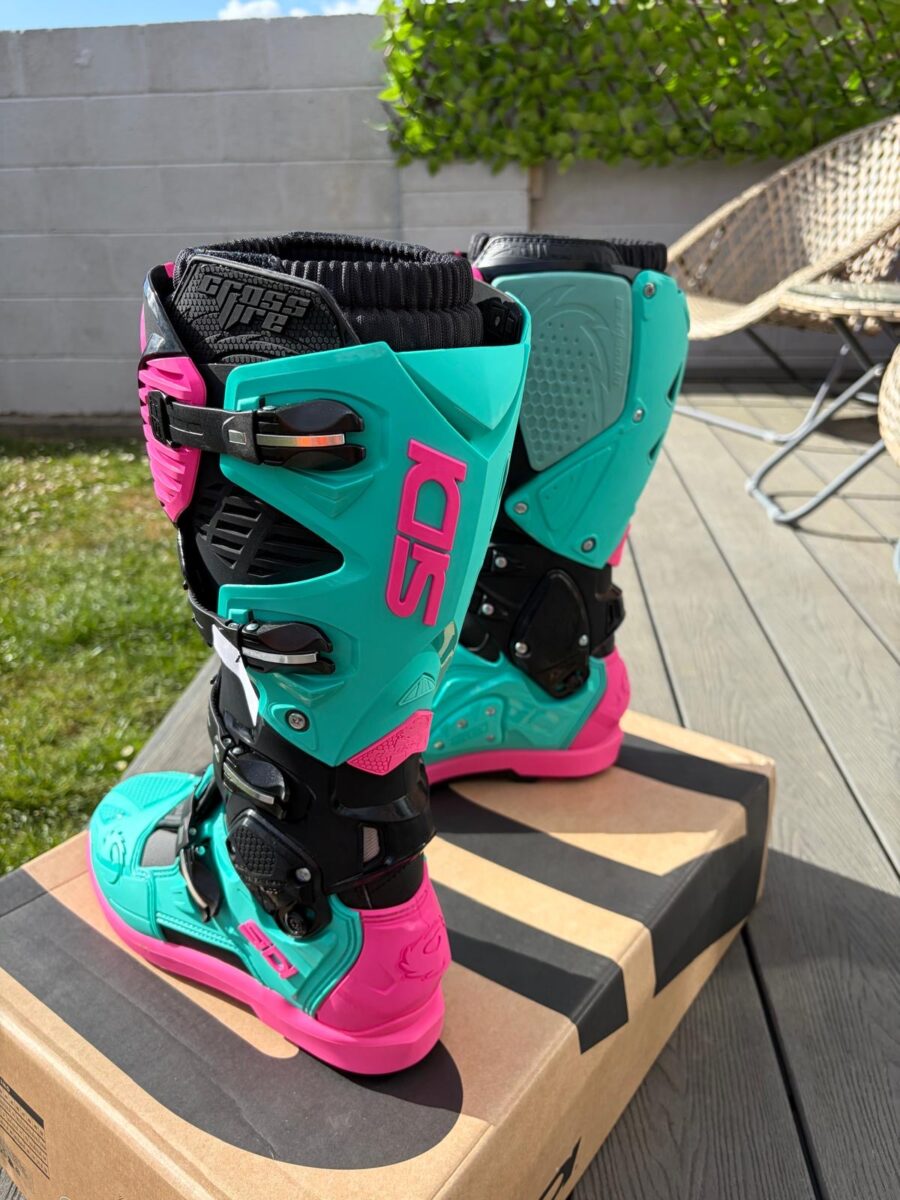
Buckles and adjustment
The Crossfire 3 SRS uses replaceable, adjustable buckles, although Callum admits it took him a little while to work out exactly how the adjustment worked.
“I was really impressed with the buckles. At first I was actually a little confused about how they worked because there’s a clip that you pull the buckle out of to adjust it. Once I’d worked that out, they’re really easy to adjust and they’re strong. I’ve been really happy with them.”
The amount of adjustment has also proved useful when wearing knee braces.
Callum rides with Mobius braces, which he describes as being towards the bulkier end of the spectrum, but has had no compatibility problems with the Sidis.
“They fit spot-on with my Mobius knee braces. Because you can adjust the boots so much, you can make them suit you, which is ideal.”
How do they perform in the mud?
Some of the toughest conditions of the five-month test came during a trip to Italy where Callum encountered torrential rain and seriously muddy conditions. It was actually here that the Crossfire 3 SRS particularly impressed him.
“They’re probably the best boots I’ve used in muddy conditions. Normally the mud clogs everything up, you’ve got no grip on the bike and it becomes a nightmare. With the Sidis, I don’t know whether it’s because of the patterns and indentations around the grip areas on the inside of the boot, but the mud didn’t seem to stick to them as much as it did to my Tech 10s.
“They’re also slimmer, so there’s less surface area for the mud to stick to in the first place. The grip on the inside of the boot is really good too, so even when they’re muddy, if some of that area is still showing you’ve got plenty of grip against the bike.”
The lighter and slimmer construction also meant less weight was being added as the mud accumulated.
Cleaning them
Callum likes his boots looking clean, so five months of testing has also involved plenty of time with the pressure washer.
“I’m quite particular with my boots – I want them spotless every time – and the Sidis clean up really well. A lot of the boot moves or comes apart, so you can get into pretty much every area to clean it properly. You can move the pivot areas around and get the jet wash right in there, and the buckles are easy to clean too. They actually don’t take that long to clean because you can move everything around and get into it.”
Five months of wear
After five months, there is one area showing more wear than Callum expected – the soles.
“The soles have probably worn a little more than my Tech 10s would have. That could partly be because I’m gripping the bike more because I’ve got more feel through these boots, so I’m potentially putting more weight and pressure through the footpegs. My footpegs are really sharp as well, so that’s obviously not helping.”
Elsewhere, however, the boots have stood up extremely well.
“The actual boot, other than the sole, is pretty much like new. Obviously there are a few scuffs and marks from being used, but they clean up perfectly every time. The wear on the main boot is next to nothing. The sole is the main area I’ve noticed, but on the Sidis that’s replaceable, so it’s not the end of the world.”
The SRS system – a game changer?
SRS stands for Sole Replacement System, allowing a worn sole to be removed and replaced, while several other high-wear components can also be changed individually.
“Honestly, I think the replaceable parts are a game changer. With other boots, if something goes wrong or you wear through a sole, it can be replaced, but it can cost quite a bit and you’ve often got to send the boots away. That’s more money and more time. With the Sidis, most of the parts that are actually in contact with things every time you’re riding are interchangeable. You can buy the parts and do a lot of it yourself.
“The sole is a big one because depending on how much you ride, you can go through soles fairly quickly. Instead of spending three or four hundred pounds on another set of boots, you can replace the sole and put a whole new bit of life into them. I’m surprised more companies haven’t done it, to be honest.”
“You can buy different colours as well, so if you want to change things around after a while you can make the boots your own, which is pretty cool.”
The verdict – would Callum race in them?
After five months, Callum’s three biggest positives are simple: weight, slimness and looks.
And when it comes to the more important question of whether he’d choose to race in them, there’s no hesitation.
“100%. I’d definitely race in these boots – and I have been.
“I actually think they’ve helped the technical side of my riding. I’m not saying they’ve suddenly made me faster, but I feel like I can corner better because I can feel the bike more. I can feel the bike more when I’m jumping as well. I feel really comfortable racing in them and I’d definitely look at getting another pair.”
The huge range of Sidi colour options also gets Callum’s vote, but after five months it’s the function of the Crossfire 3 SRS that has ultimately won him over.
“Overall, they’re an unreal bit of kit. The function, the protection and the way they feel on the bike have really impressed me. They look really good, there are loads of cool colours and, most importantly, they do the job. I’m really impressed with them.”