


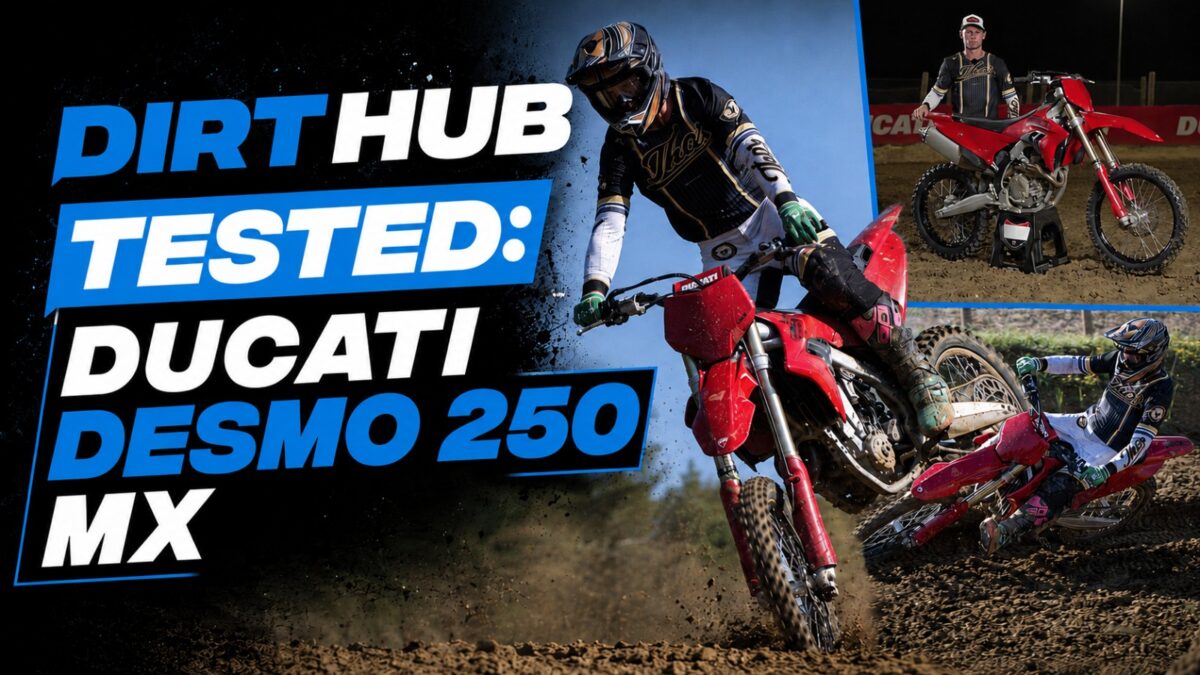
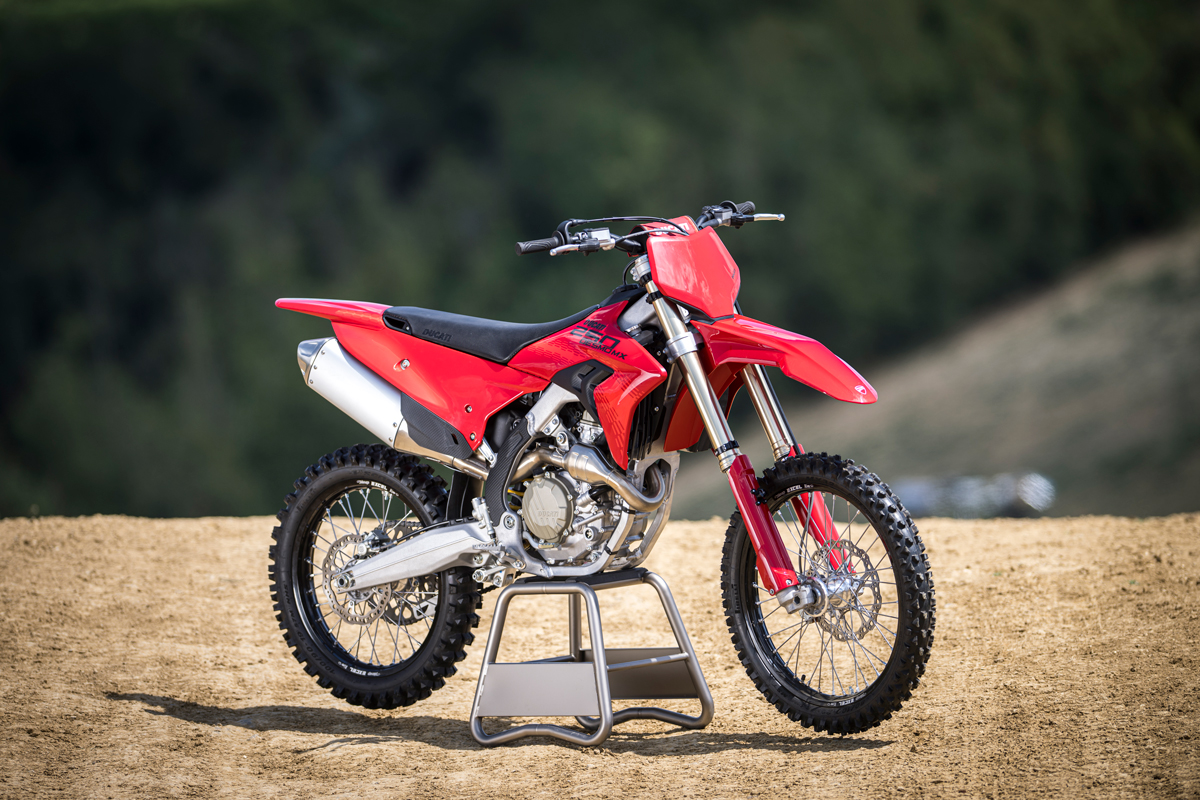
Ducati’s move into motocross continues with the launch of the all-new Desmo250 MX MY2027, the Italian manufacturer’s first production 250cc four-stroke motocross bike.
At its heart is a new 249.7cc desmodromic single-cylinder engine producing a claimed 44.5hp at 12,500rpm and capable of revving to 15,000rpm. The bike also features Showa suspension, Brembo brakes and an electronics package developed from the Desmo450 MX.
Dirt Hub travelled to Ducati’s motocross track in Faenza, Italy, where our test rider and British motocross racer Callum Gordon got the chance to put the Desmo250 MX through its paces.
Bike: Ducati Desmo250 MX MY2027
Test Rider: Callum Gordon
Test Location: Faenza, Italy
Watch Callum Gordon’s full Dirt Hub Tested first ride of the Ducati Desmo250 MX below:
First impressions
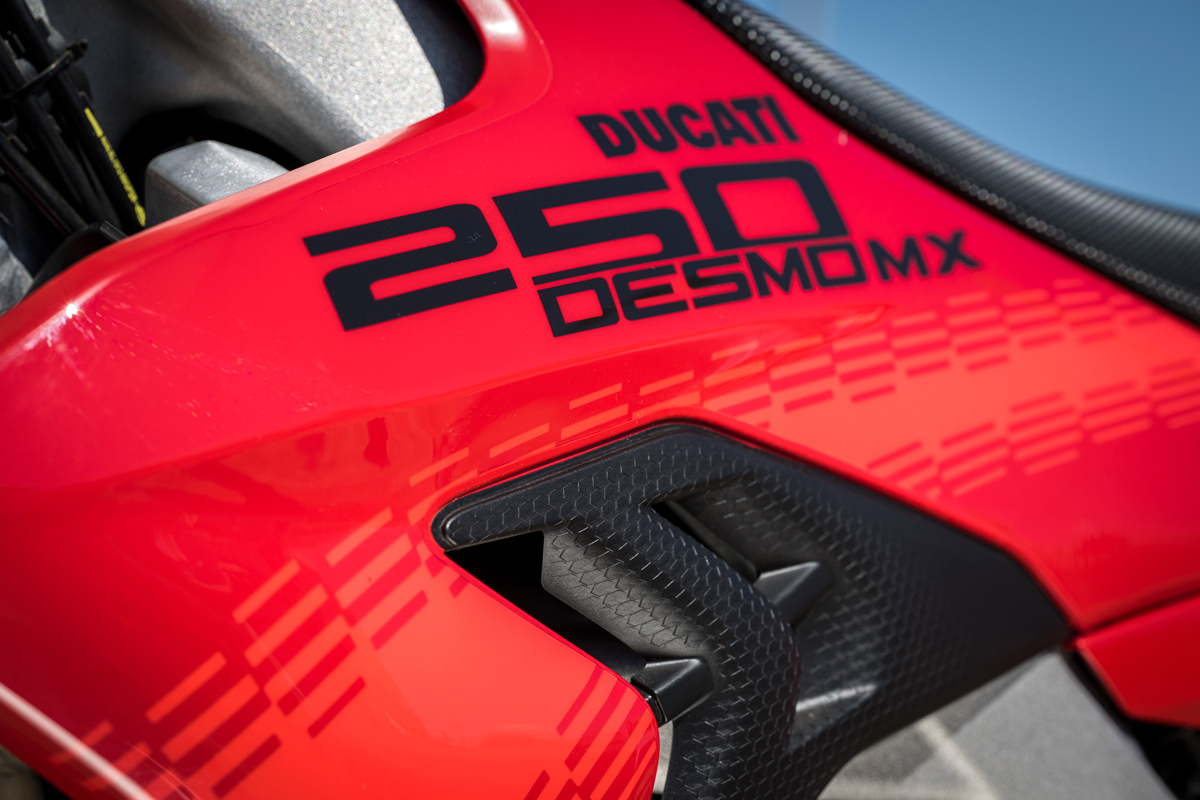
The quality and understated factory appearance of the Desmo250 MX immediately caught Callum’s attention.
“My first impression when I saw it was just how smart it looked. Nothing on it is trying too hard or looks overly flashy, but all the components look really well thought through and designed. It has that factory-bike look about it. It’s sleek, it looks light and even things like the plastics and the graphics are quite understated. Sometimes when something is underplayed like that it actually says more. It’s almost like turning up at the traffic lights in a nice sports car. If you rolled this out of the van at a practice track, people are going to look at it.”
Ducati had heavily watered the Faenza circuit, making conditions slippery for the opening session.
“The first 15 minutes were pretty slippery and you couldn’t really push the bike hard. You were just trying to be smooth, learn the track and get a feel for the bike. But even riding a bike straight out of the crate in those conditions, I felt comfortable on it. Sometimes you get on a new bike in conditions like that and you’re thinking it’s going to be a nightmare, whereas this wasn’t like that at all. Once the track came around for the second session it was perfect and you could really push. We had deep ruts, technical jumps, slick sections – a bit of everything – and the bike just didn’t seem to get out of shape anywhere. Straight off the bat it felt pretty dialled in.”
Chassis and handling
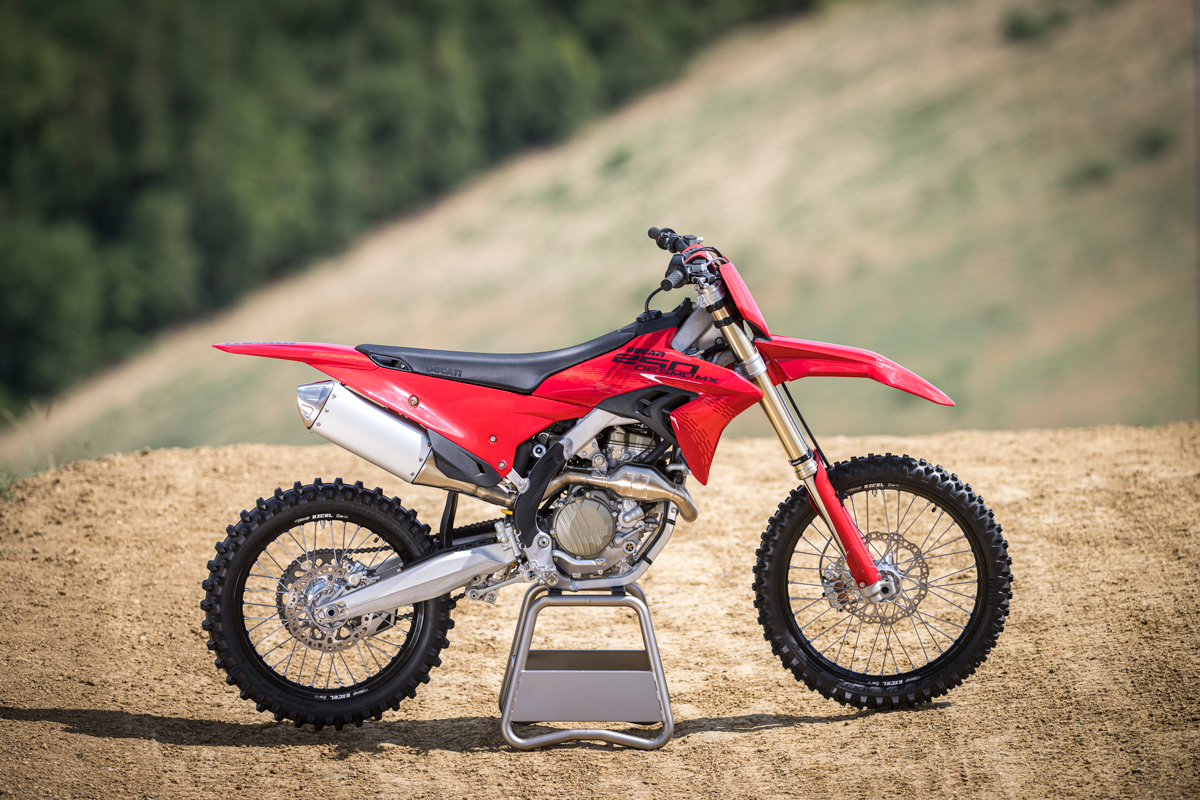
The Desmo250 MX uses a twin-spar aluminium frame and cast aluminium swingarm, with a wet weight without fuel of 103kg.
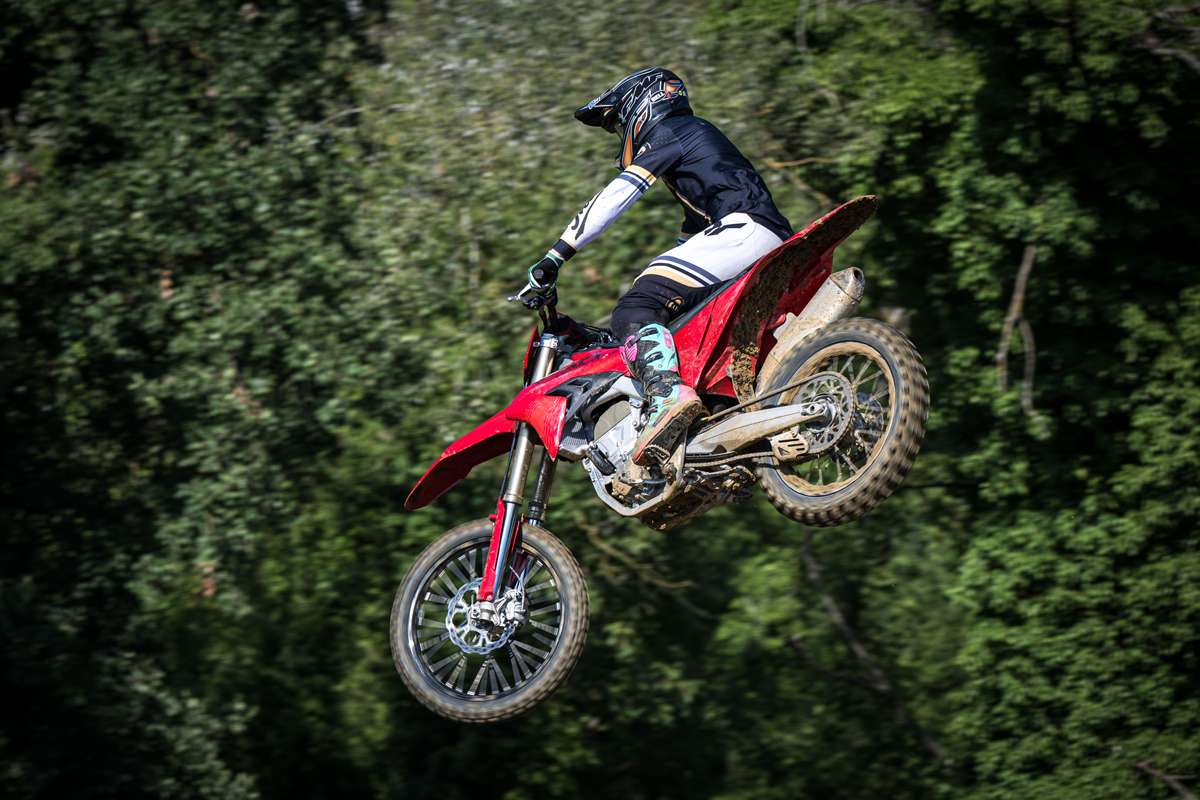
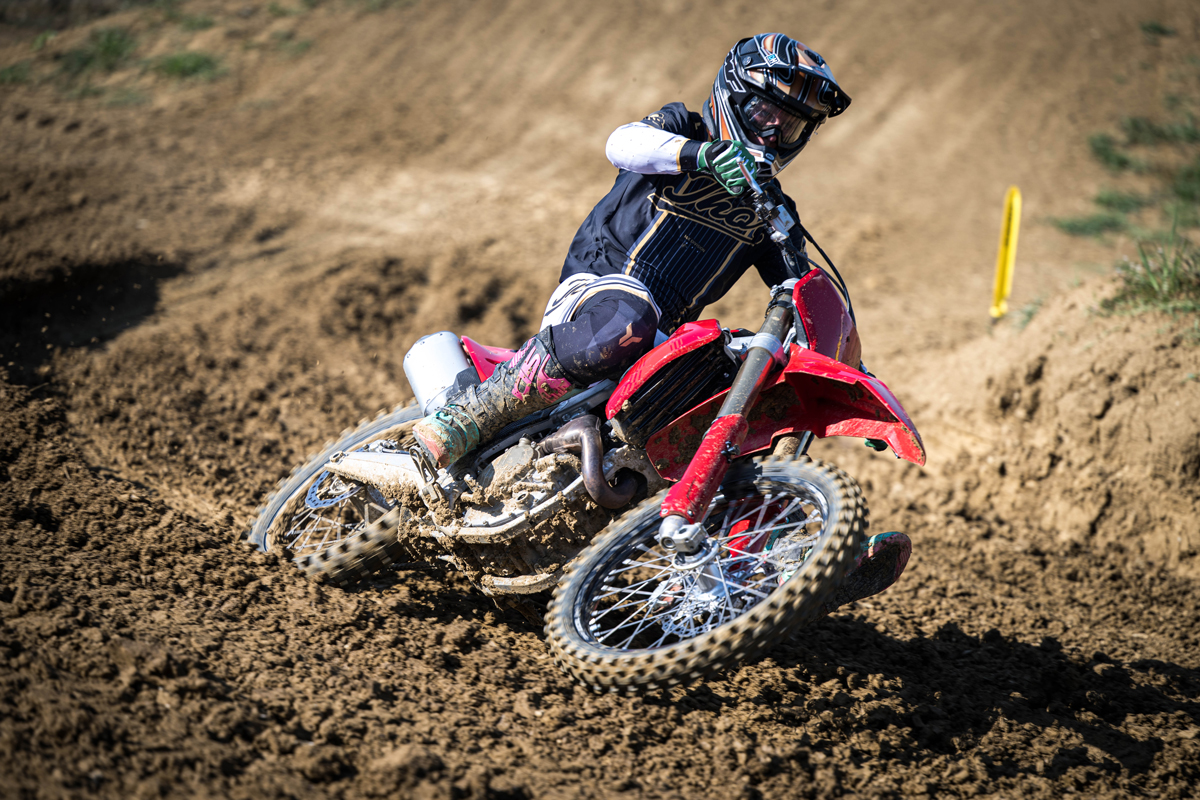
“Cornering was probably one of the most impressive things for me because I’ve never felt that comfortable cornering on a bike straight out of the crate – especially one that isn’t mine. The track was prepped so well that we had these deep ruts and big berms that you could really lean the bike into, and I was surprised by how comfortable I felt attacking them. It was almost like going practising on your own bike, with your suspension set up for you, and doing sprint laps. It’s definitely one of the best-handling standard bikes I’ve ridden.”
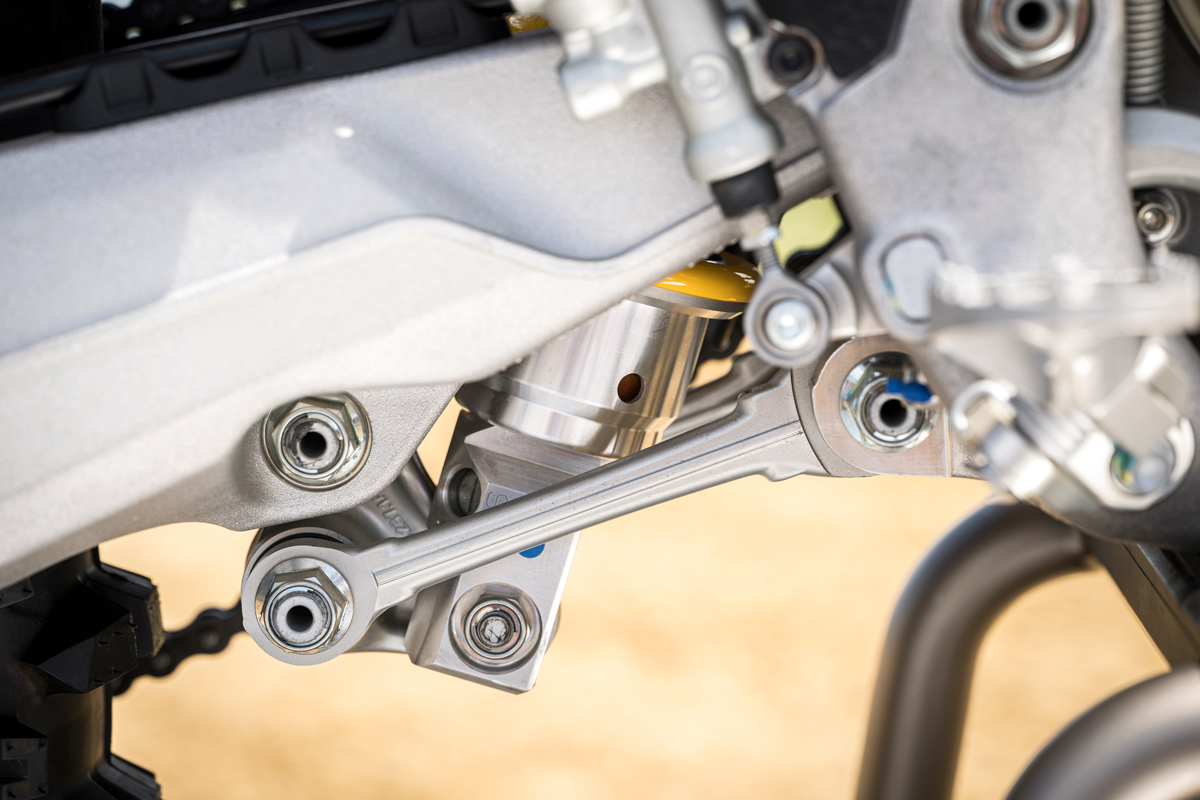
Suspension
The Desmo250 MX runs fully adjustable Showa suspension, with a 49mm upside-down fork at the front.
“The forks felt unreal. They were really plush and I didn’t feel like I needed to touch them. Having that confidence in the front is so important because you can attack the braking bumps and the entrance to the corner knowing the bike is actually going to turn and go where you put it.
The rear initially sat slightly high, something Alessandro Lupino also spotted from trackside, so Ducati adjusted the sag and rebound to suit Callum.
“Lupino watched me in the first session and said the back looked like it was riding a little high, which was exactly what I’d felt.”
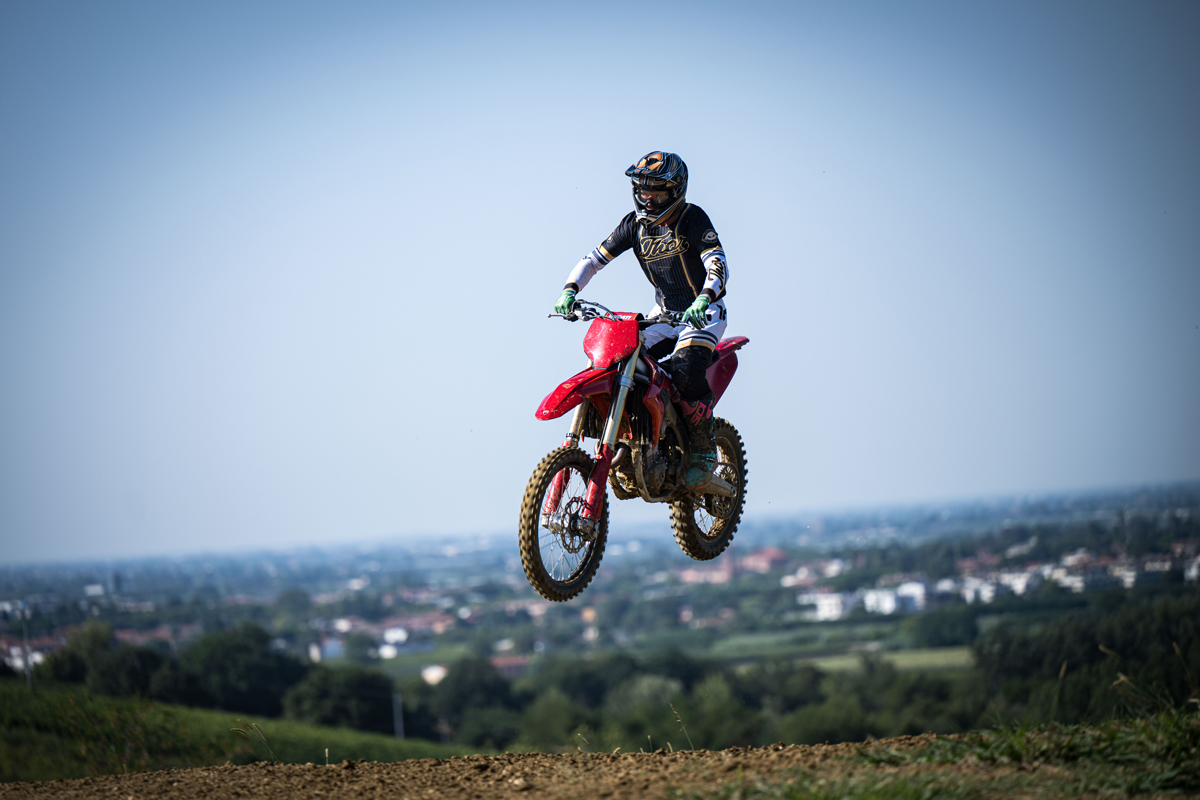
“They set the sag for my weight and height and played with the rebound slightly. When I went back out it honestly felt like a different bike. I genuinely believe that if I bought a Ducati 250, I wouldn’t need to send the suspension away. I’ve never jumped on a standard bike and thought that before.”
“There was a little step-up near the end of the lap that was almost like a spine at a skatepark – really steep up and straight back down. The take-off was polished, almost like concrete, and you were pretty much seat-bouncing it. You don’t want to seat-bounce something like that if you’ve got a rear shock that’s going to kick you. With the suspension on the Ducati I felt completely confident doing it.”
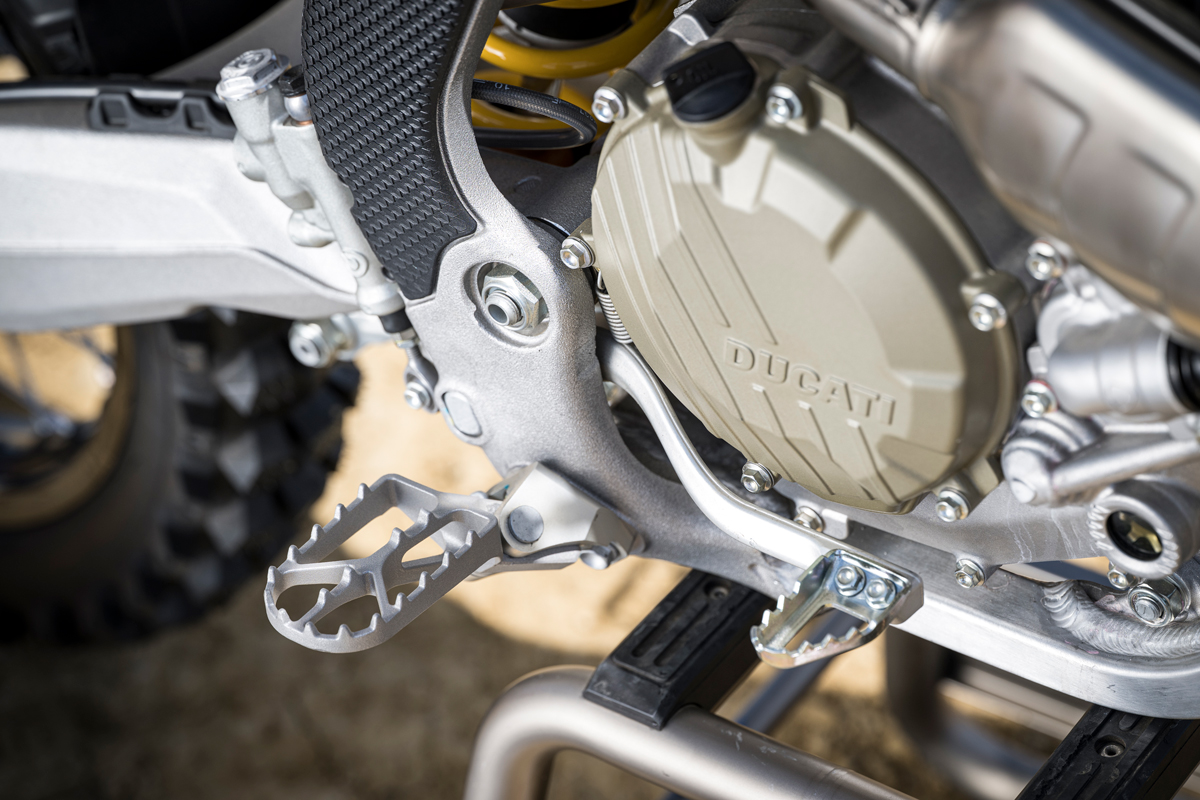
At around 70–72kg, Callum was within the intended range of the standard spring fitted to the test bike.
“A few clicks here and there, set your rebound and your sag, and I think you could make that suspension race-ready pretty easily.”
Engine
The 249.7cc single-cylinder produces a claimed 44.5hp at 12,500rpm, but it’s the 15,000rpm ceiling and resulting length of each gear that really stood out. Ducati’s advice at Faenza was simple: when you think it’s time to change up, keep going.
“They were basically saying to us, when you think you need to change up, don’t. Keep it going. You’re riding at really high revs but there’s still more there. There was a big hill on the track and I was third gear flat-out all the way to the top of it, then you could just hook fourth for the jump. It honestly just kept pulling. I’ve ridden a 450 for quite a while, so I probably don’t rev a 250 as much as I should. I was definitely revving the Ducati, but even then none of us really thought we’d actually hit the limiter. That was almost a challenge between everyone there – who could hit it first? I don’t think anyone did, or at least nobody thought they did.”
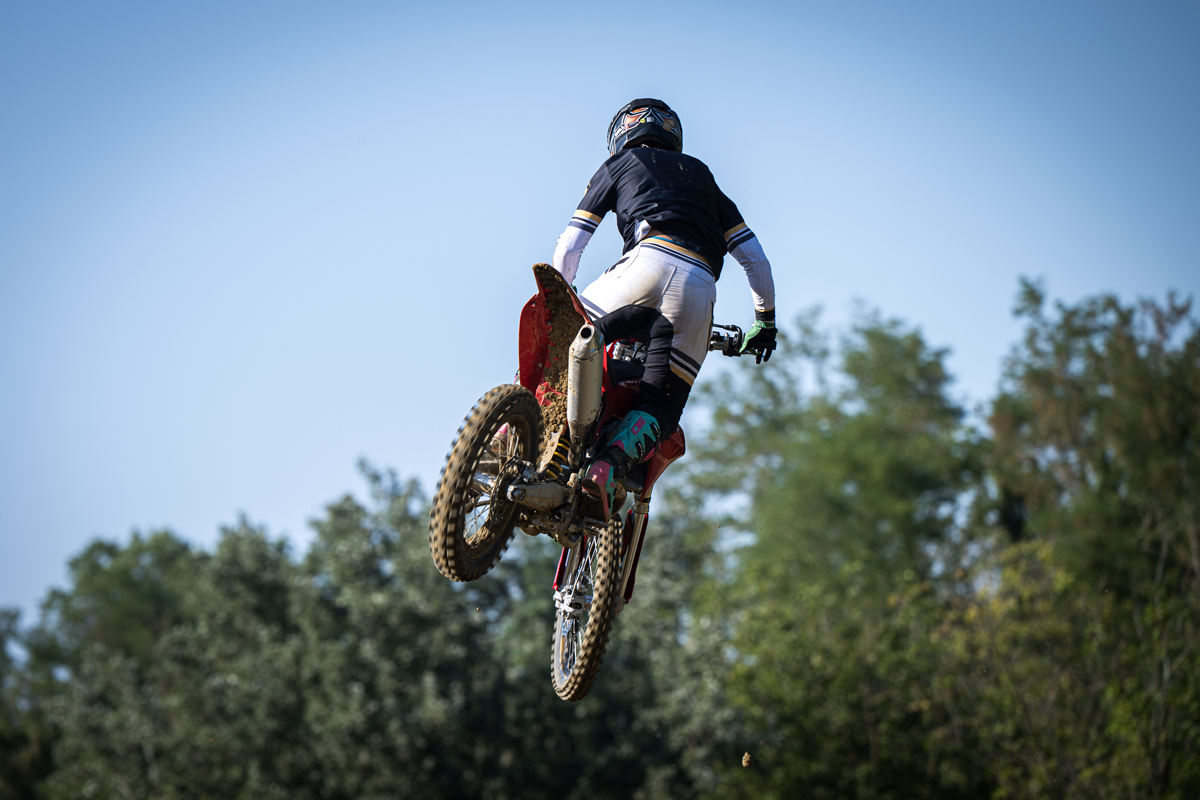
That huge rev range means Callum found himself holding gears in places where he’d normally be looking for another.
“On my bike, say you came out of a corner and had a 20-metre straight, you might come out in second and you’re almost immediately looking for third. On the Ducati you could come out in second and just leave it in second. It just keeps going and going. There were sections where we’d come back in and talk to the other riders about what gear we’d used over a jump. Someone would say fourth and I’d say I’d done it in third. You can do that because it just keeps pulling. You can almost ride it a bit like a 450 in that sense. With this you can hold a gear for so much longer than you normally would on a 250.”
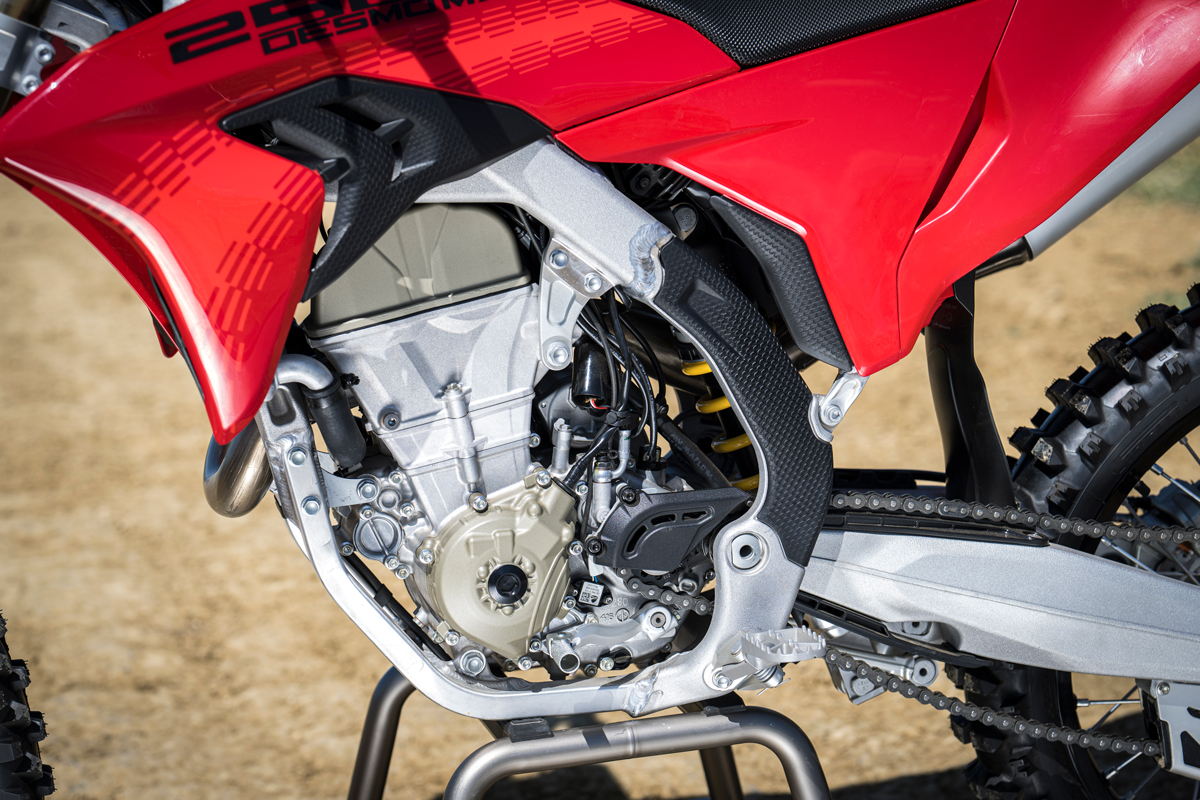
Callum could see that becoming particularly useful in race situations where a gear change falls awkwardly between a corner and a jump.
“I think there are pros and cons. For some riders it could potentially make them a little lazy because you’ve got such a big range in the gear, but for others I think it could be golden. There are so many tracks where you come out of a corner and you’re immediately into a jump. Normally you might be thinking, ‘I need to hook third quickly here’, whereas with this you’ve got that extra bit of time. It’s quite comforting knowing you’ve got that leeway. You’re not searching for another gear because you’ve still got more left.”
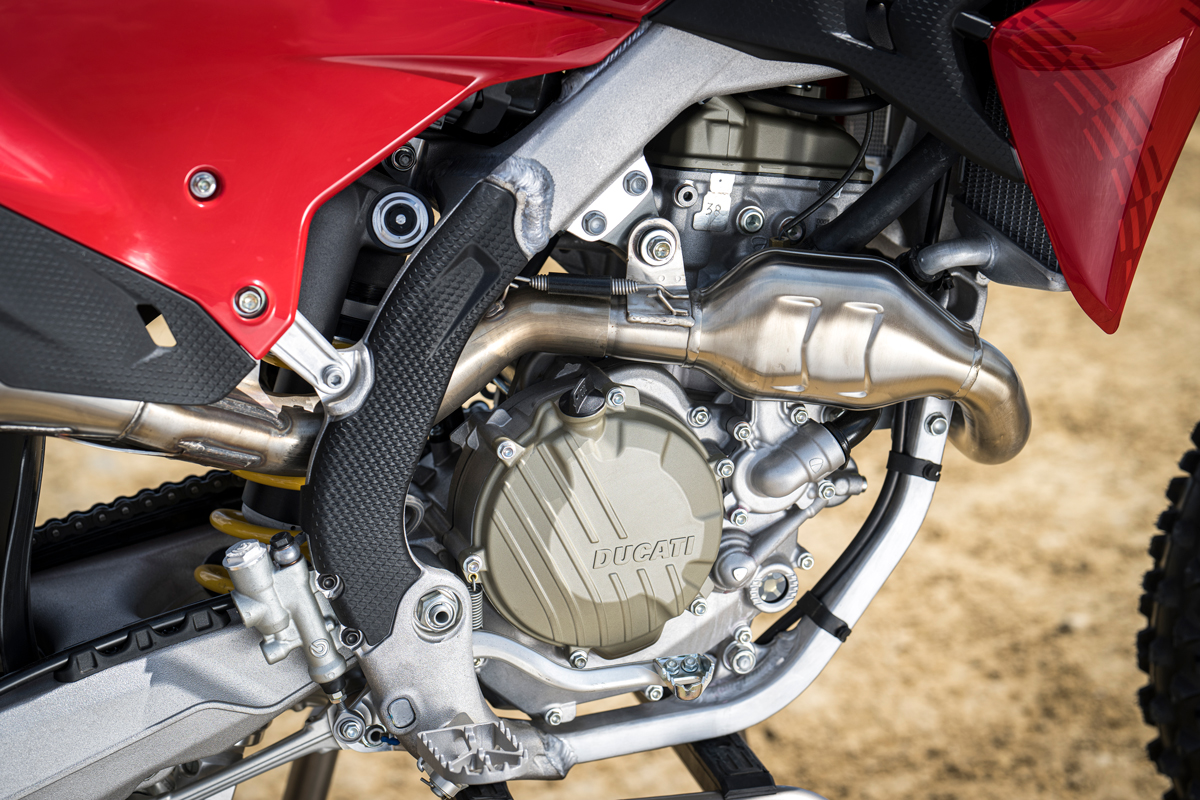
Despite its ability to rev, Callum didn’t find the Desmo250 MX lacking lower down.
“It’s got grunt at the bottom but it’s smooth. I’d probably say the strongest part is bottom to mid, but it’s difficult to describe because the gears are so long that you’re getting drive right the way through them. You’ve got the bottom-end torque, then the midrange, and because it’ll rev so far you’ve got that top end as well.
“It’s just like no 250 I’ve ridden before.”
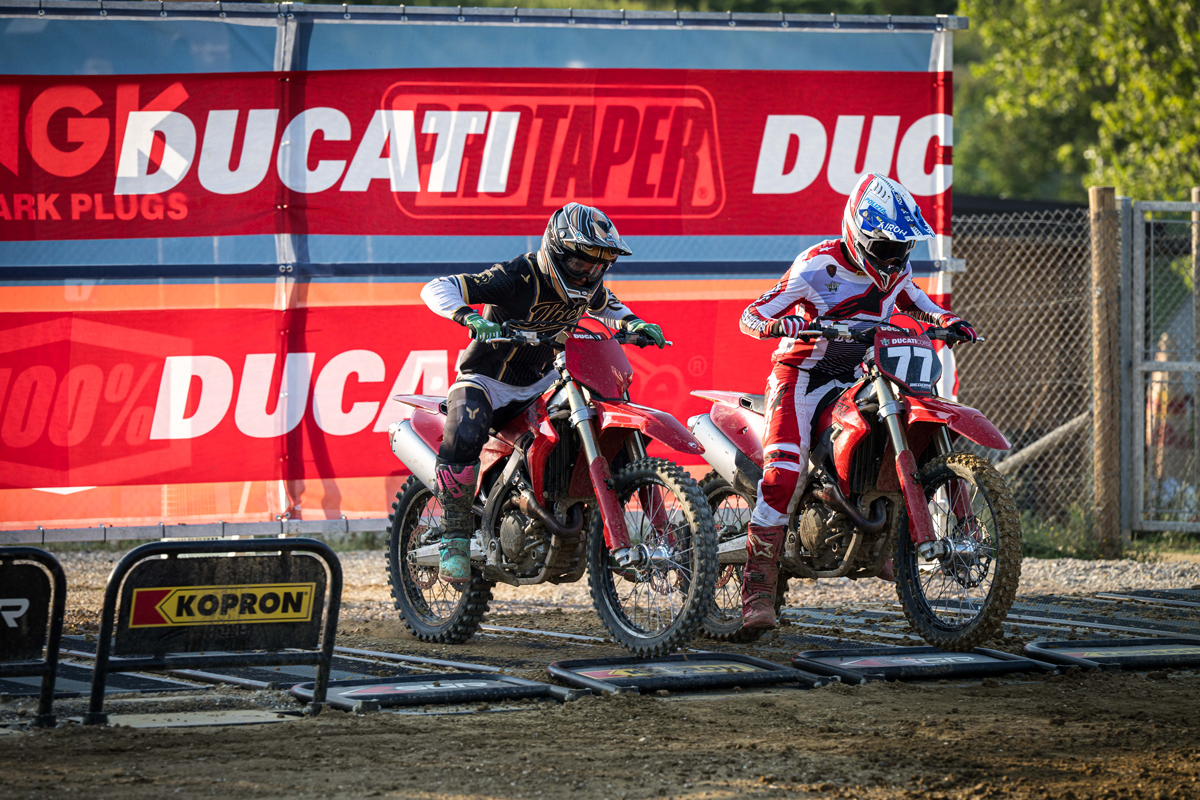
Traction control – not just for slippery tracks
Callum had already experienced Ducati’s traction control on the Desmo450 MX, but at Faenza he discovered how useful the system could be even when grip was plentiful.
“If I was riding my own bike in those conditions, I wouldn’t normally even think about putting traction control on because the track was so good. But there were places where you’d come out of a really tacky, deep rut and immediately hit a dry, polished section. With the traction control on, it would just drive. Normally you might hit that slick bit and get some wheelspin or the rear could move slightly. On this the front wheel would almost just pick up and it would keep driving. It was really impressive.”
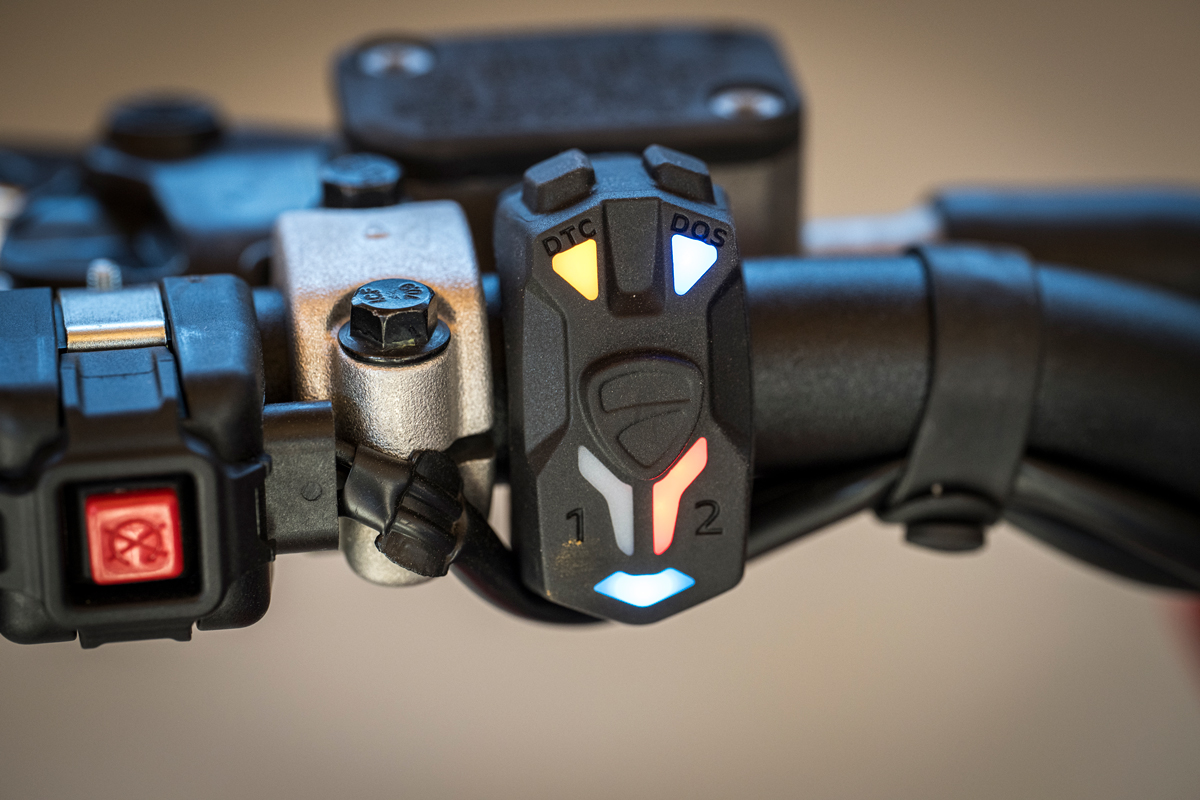
Callum and fellow tester David Knight then found another use for it. A deep right-hander could be ridden in third, but second gave them the response they wanted while also causing the front to lift. A Ducati mechanic suggested combining the aggressive map with level-two traction control.
“We tried the corner in second and without the traction control it almost had too much. The front wanted to lift. The mechanic overheard us talking and said, ‘What you need to do is use the traction control.’ He put us onto the aggressive map with traction control on level two and told us to try it again. Suddenly we could hit the corner in second and it would control it by just the right amount so the front wasn’t lifting. I’d never really thought about using traction control like that before. You automatically think it’s something for slippery conditions, whereas we were using it on pretty much the best track conditions you could ask for.”
Electronics and the X-Link app
The Desmo250 MX has two Power Modes and two Riding Modes, with its electronic settings configurable through Ducati’s X-Link app.
“The new 250 comes with an adjustable throttle-response setting which you’re able to change through the Ducati X-Link app on your phone. It also comes with traction control and launch control, and there are three settings for the traction control which you can alter through the app.
“The traction control can also be deactivated while you’re riding on certain parts of the track where you might not need it. You just use the clutch and that turns the traction control off until the next corner.
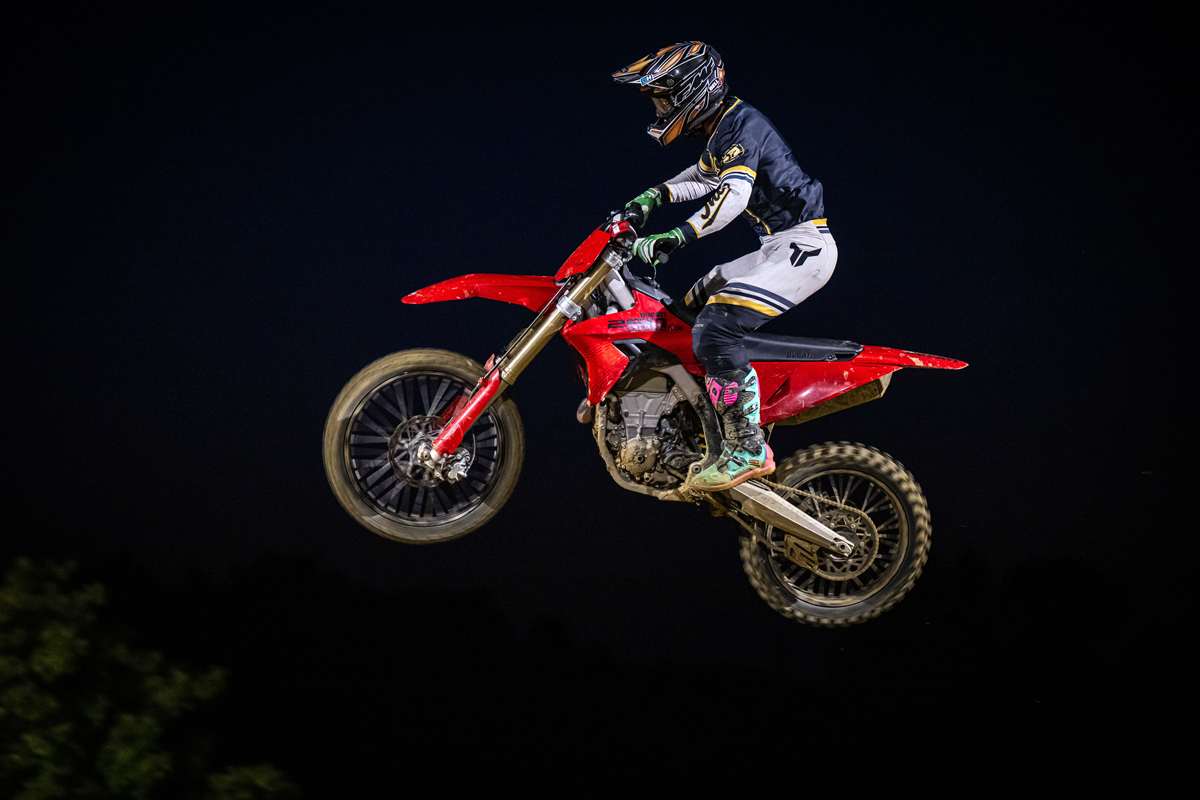
“On the app you’re able to choose what level of traction control you want to use and on which riding map, whether that’s the smoother or more aggressive one. You can also increase or decrease the engine braking and make other small alterations to the engine.
“The app is really impressive because you can log all your maintenance details as well, and it can give you pointers, tips and recommendations on suspension and engine settings for the track you’re riding.”
Ducati says its traction-control system uses actual rear-wheel spin to determine the level of power reduction required, allowing it to provide a more precise and linear intervention.
Maintenance
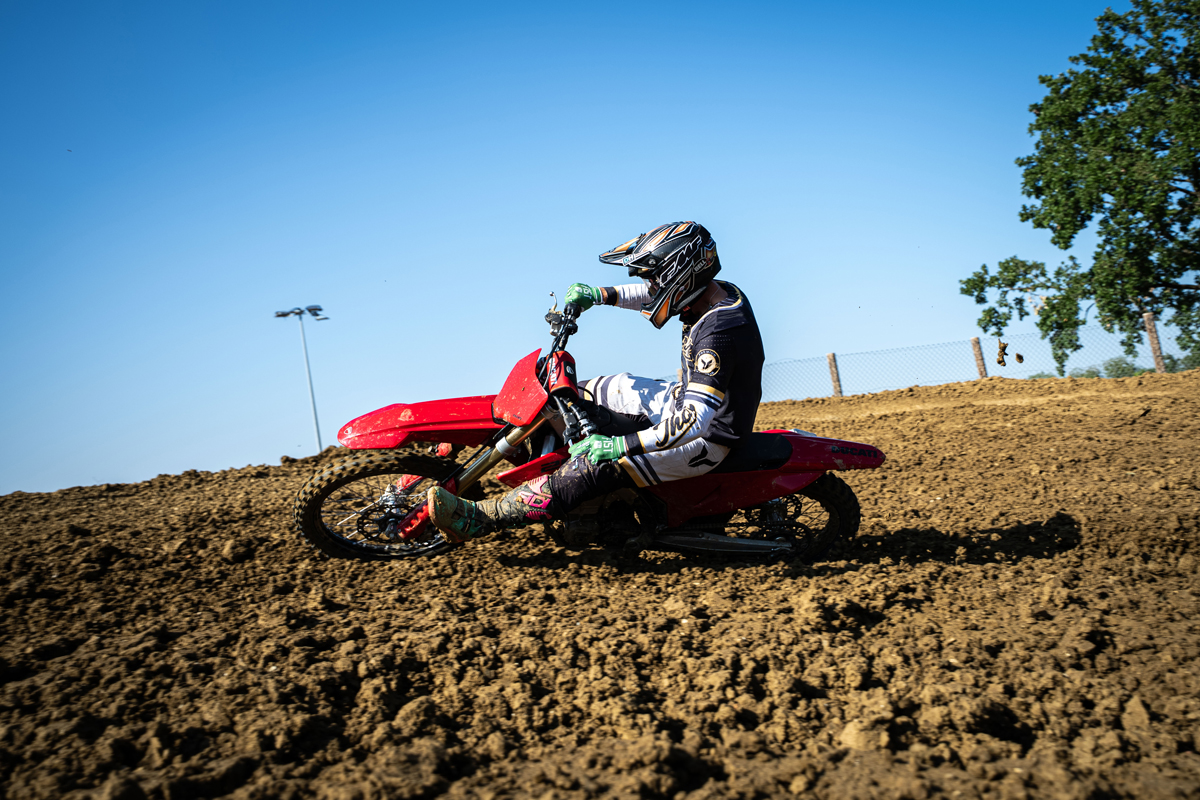
Ducati’s Predictive Maintenance system calculates engine stress based on how the bike is being used, allowing servicing requirements to reflect the level of use rather than relying solely on fixed intervals.
“Ducati have aimed to make their bikes as reliable and long-lasting as possible, with very low maintenance.
“The engine oil change is at 15 hours, the piston is between 45 and 60 hours depending on the level of rider, and the bigger service is between 90 and 120 hours, again depending on the rider and how the bike is being used.”
Changes from the Desmo450 MX
Callum also picked up on a couple of practical updates Ducati has made from the Desmo450 MX to the new 250.
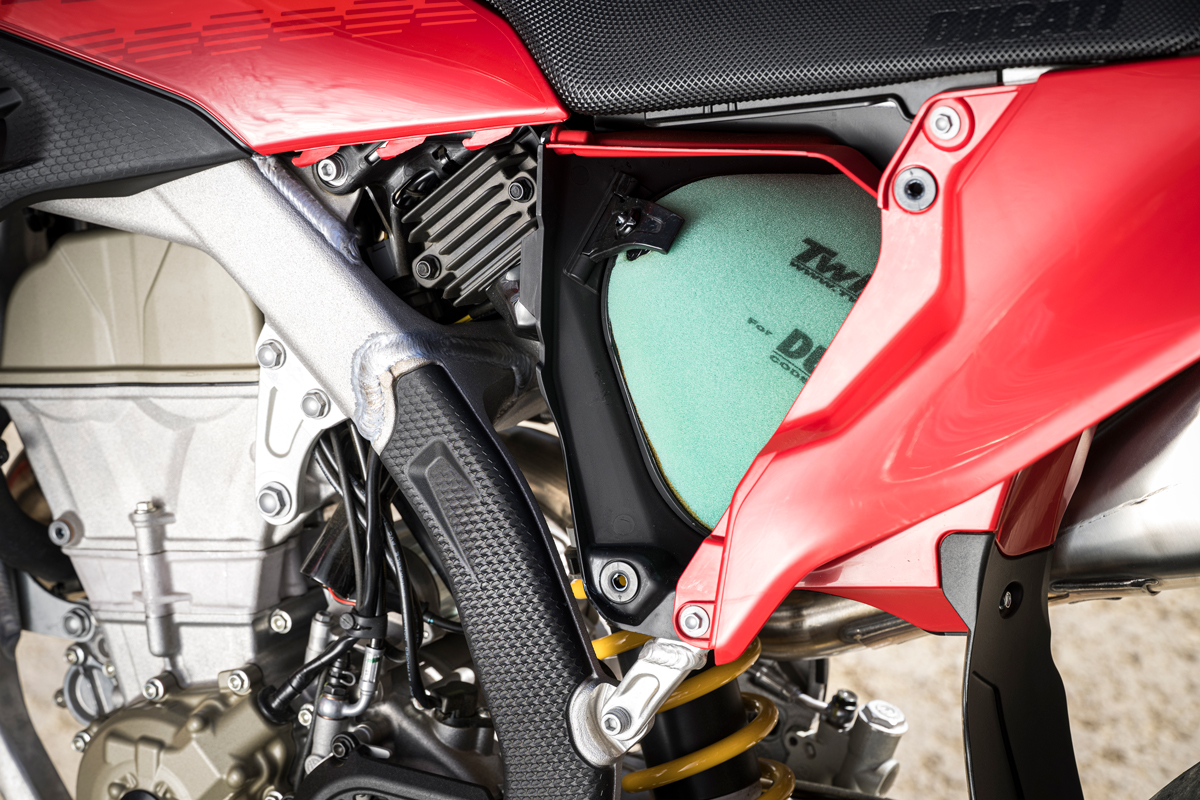
“There are a couple of functional updates they’ve made from the Desmo450 to the 250. They’ve updated the chain-guide material to make the chain guide stronger and help it last longer.
“The other update is the size of the pedal tips on the rear brake pedal and gear shifter. They’re bigger to make changing gear and braking easier and to give you a better feel when braking.
“The only negative I could see with that is because they’re bigger, there’s potentially more chance of them getting snagged or caught up when you’re cornering or riding in deep ruts.”
Brakes
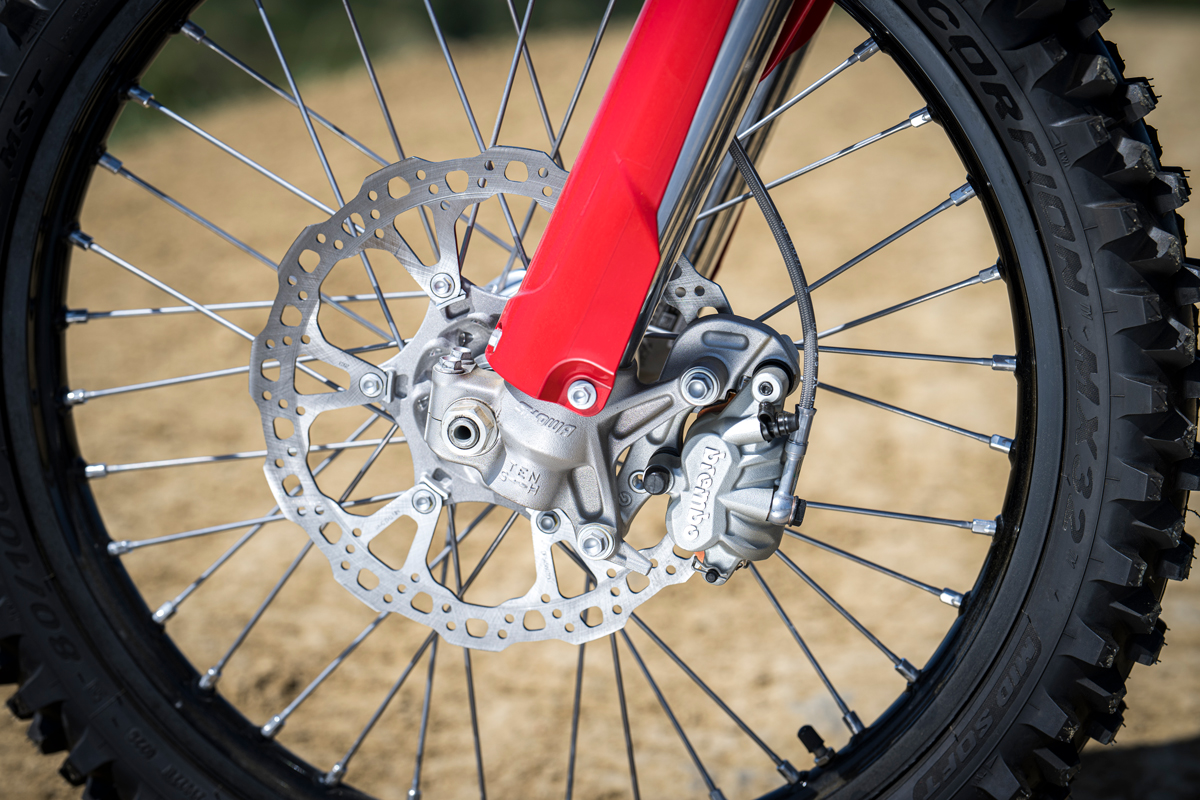
Brembo brakes work with Galfer discs, using a 260mm front and 240mm rear rotor.
The verdict
Perhaps the best indication of what Callum thought of the Desmo250 MX came at the end of the test. With riding due to finish at 10pm and most of the other riders already off the track, he headed back out at around 9:30pm – and stayed out almost until the end.
“I was literally just loving it. I wasn’t thinking about the heat, fitness or anything – I was just putting laps in. I came back in at about five to ten and everyone was like, ‘Have you seriously just done a 25-minute moto?’ I was the only person left out there. All the mechanics were basically stood there watching because they’d already cleaned everyone else’s bikes! It was just so much fun to ride and it was handling like a dream.”
So, after an afternoon on Ducati’s first production 250cc motocross bike, what surprised him most?
“The whole bike surprised me. I’ve never ridden a bike and felt that comfortable that quickly. The engine, how high it’ll rev, how long and hard you can ride each gear, then the chassis and the geometry and the way it handles – especially considering this is Ducati’s first 250, it really surprised me.”
Would he be happy to line up behind a start gate on one tomorrow?
“One hundred per cent.”
And when we asked where the Desmo250 MX ranked among the Ducati off-road bikes he’s tested so far, Callum didn’t need much time to think about it.
“Out of all the Ducati bikes I’ve ridden, the 250 impressed me the most. Hands down. I’d take both my bikes in and trade them for one. One hundred per cent. It’s probably the best bike I’ve ridden. I only rode it for that one afternoon. None of the components were mine and it wasn’t initially set to my sag, but I honestly feel like I could pick that bike up today, set the sag and race it tomorrow.”
“I don’t think I’ve ever ridden a new bike and thought I could race it the next day and ride it almost at the level I’d want to straight away.”
2027 Ducati Desmo250 MX Technical Specifications
| Specification | Details |
|---|---|
| Engine | Desmodromic single-cylinder, 4-stroke |
| Displacement | 249.7cc |
| Maximum Power | 44.5 hp @ 12,500 rpm |
| Maximum Torque | 28.3 Nm @ 8,800 rpm |
| Maximum RPM | 15,000 rpm |
| Bore x Stroke | 81 x 48.4 mm |
| Throttle Body | 44 mm Mikuni |
| Transmission | 5-speed |
| Quickshifter | Upshift quickshifter |
| Clutch | Hydraulically operated Brembo, 7-plate with disc spring |
| Frame | Twin-spar aluminium perimeter frame |
| Swingarm | Cast aluminium |
| Front Suspension | 49 mm Showa upside-down fork, fully adjustable with Kashima coating |
| Front Suspension Travel | 310 mm |
| Rear Suspension | Fully adjustable Showa monoshock |
| Rear Wheel Travel | 301 mm |
| Front Brake | Brembo with 260 mm Galfer disc |
| Rear Brake | Brembo with 240 mm Galfer disc |
| Front Tyre | Pirelli Scorpion MX32 Mid-Soft, 80/100-21 |
| Rear Tyre | Pirelli Scorpion MX32 Mid-Soft, 100/90-19 |
| Front Wheel | Takasago Excel aluminium, Alpina spokes, 21 x 1.60 in |
| Rear Wheel | Takasago Excel aluminium, Alpina spokes, 19 x 2.15 in |
| Final Drive | DID chain |
| Fuel Tank Capacity | 2 litres |
| Weight | 103 kg wet, without fuel |
| Power Modes | 2 |
| Riding Modes | 2, configurable through the X-Link app |
| Traction Control | Ducati Traction Control (DTC), 3 levels |
| Launch Control | Power Launch, 3 levels |
| Engine Brake Control | 2 levels |
| Connectivity | Ducati X-Link app |
| Engine Oil Change | Every 15 hours |
| Valve Clearance Check | From 45 hours |
| Piston Replacement | 45–60 hours depending on calculated engine stress |
| Full Engine Service | 90–120 hours depending on use and calculated engine stress |