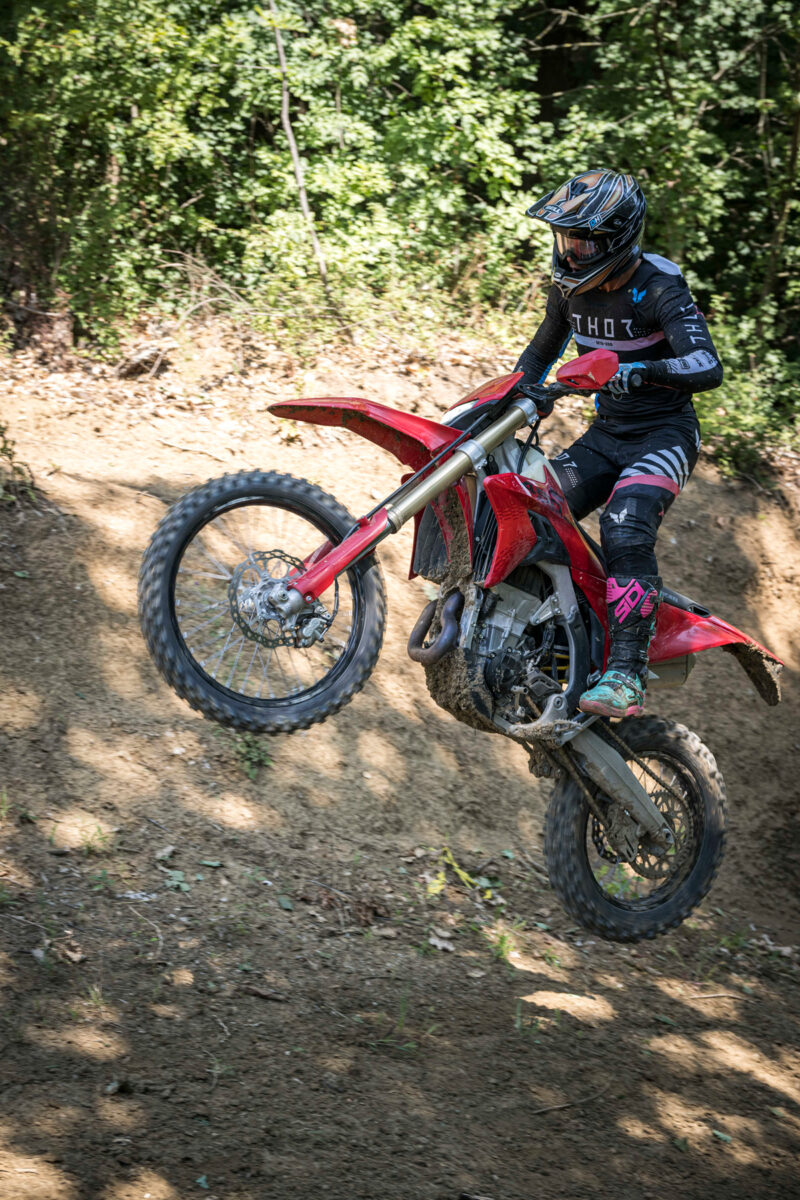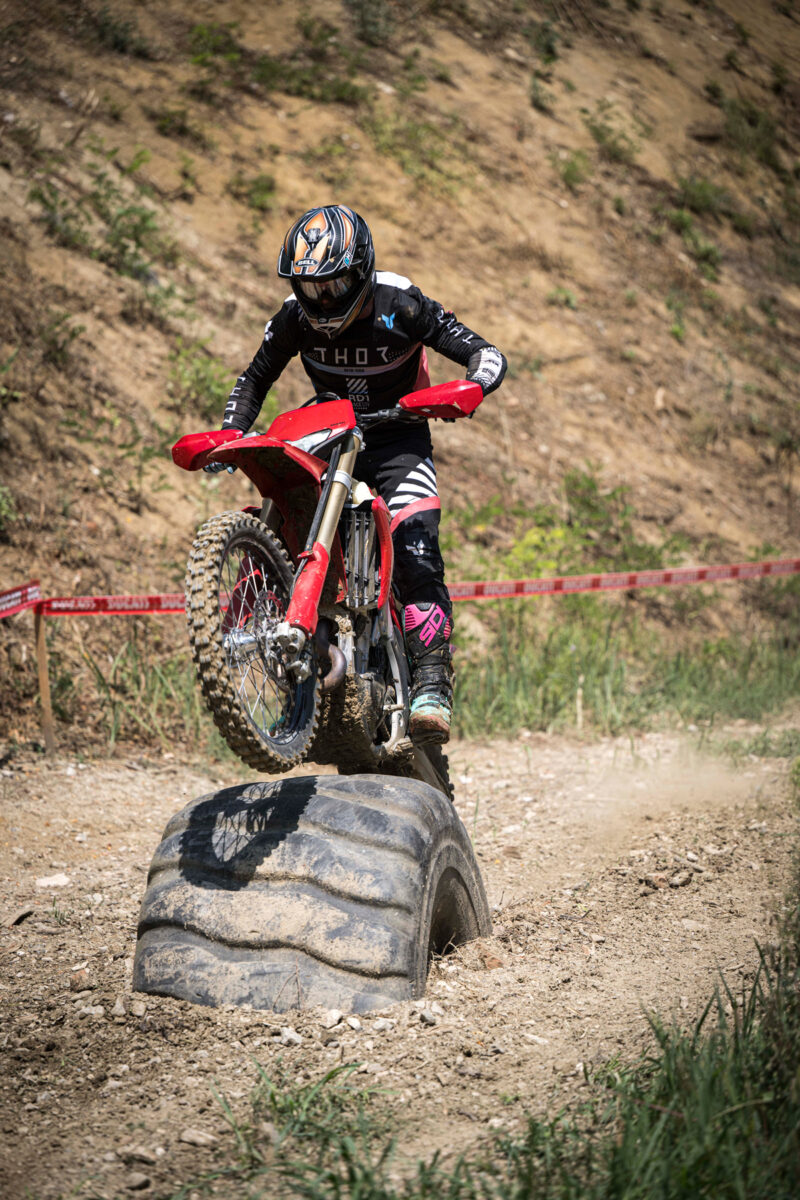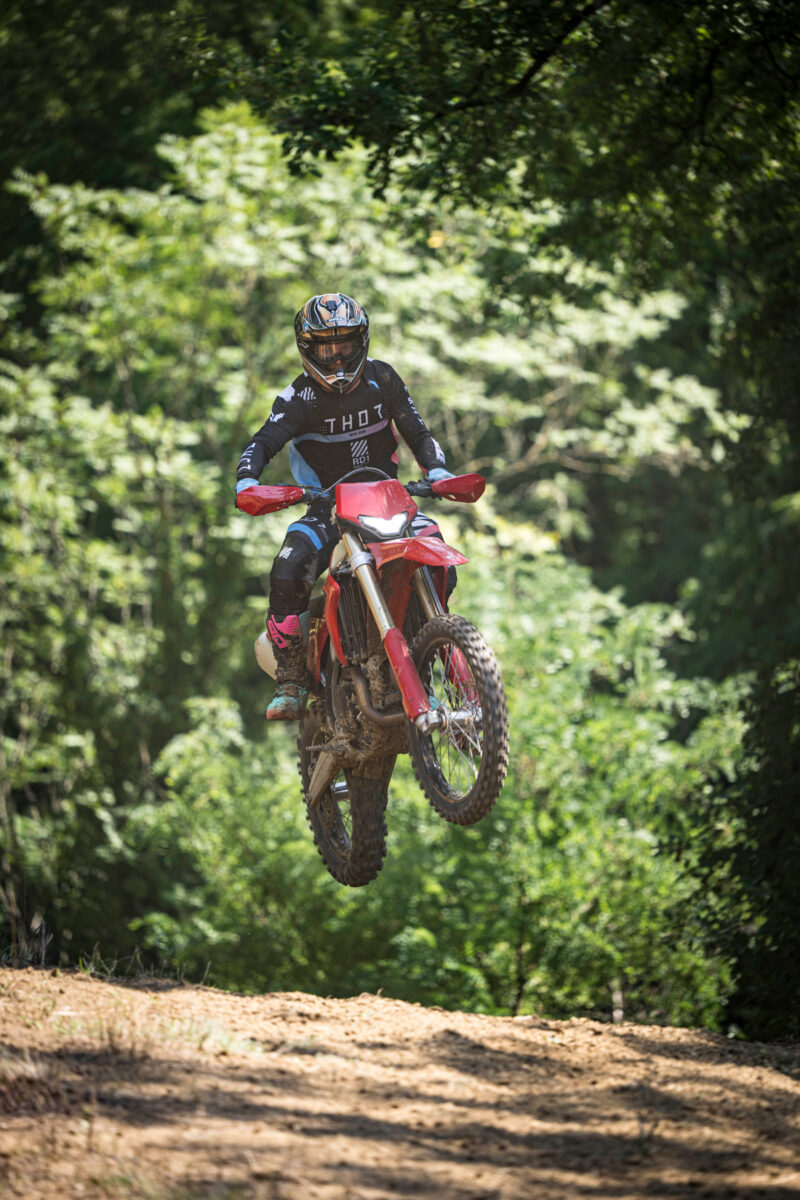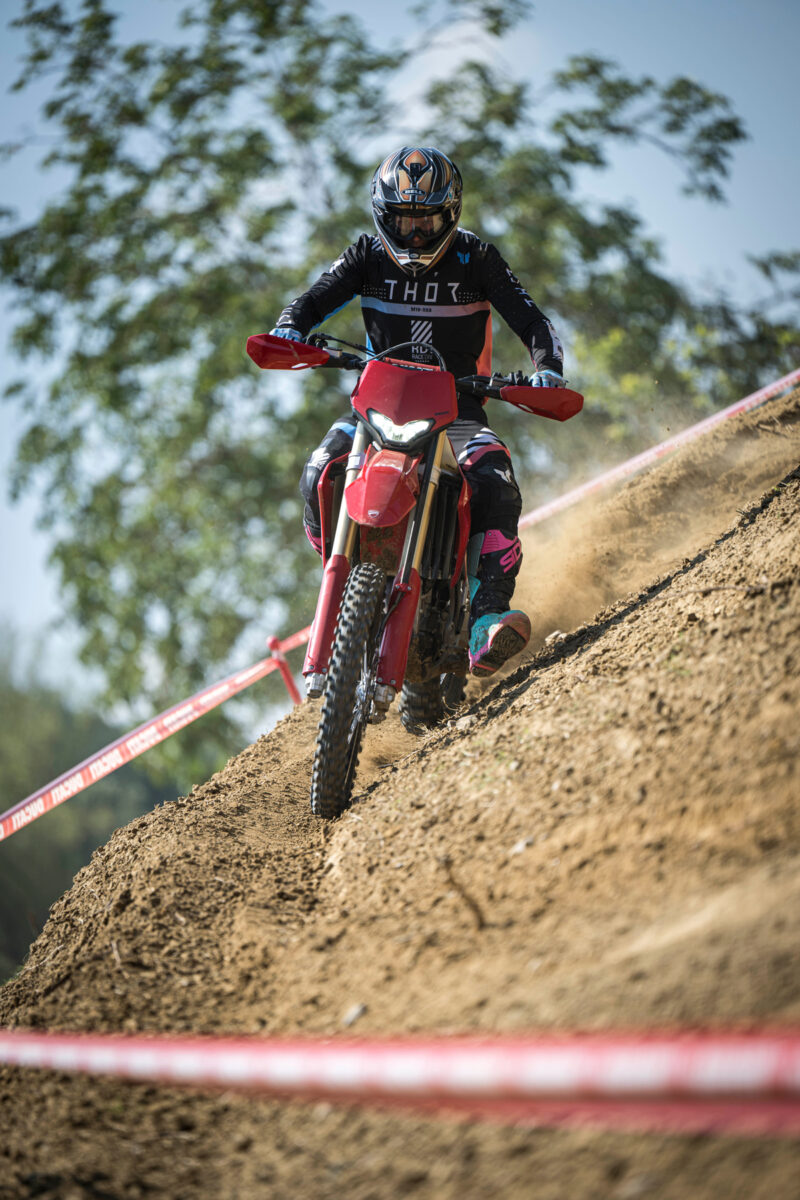





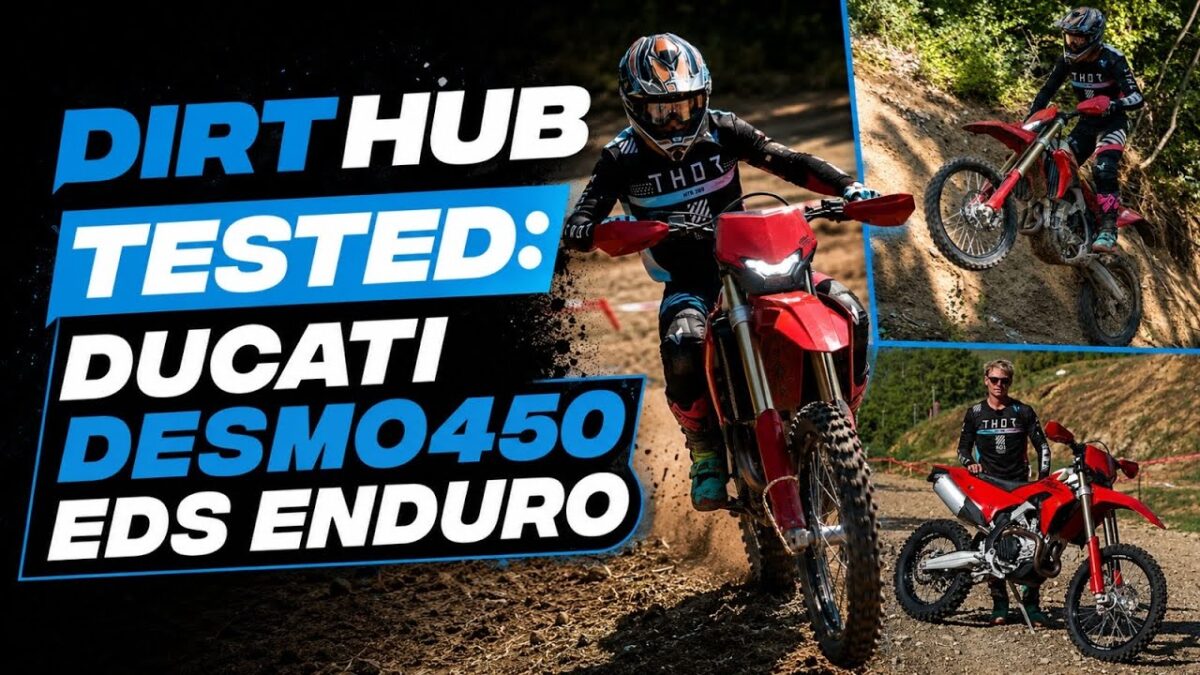
Ducati has already made a huge statement in motocross with the Desmo450 MX. Now the Italian manufacturer has turned its attention to enduro with the launch of the Desmo450 EDS – its first production enduro bike.
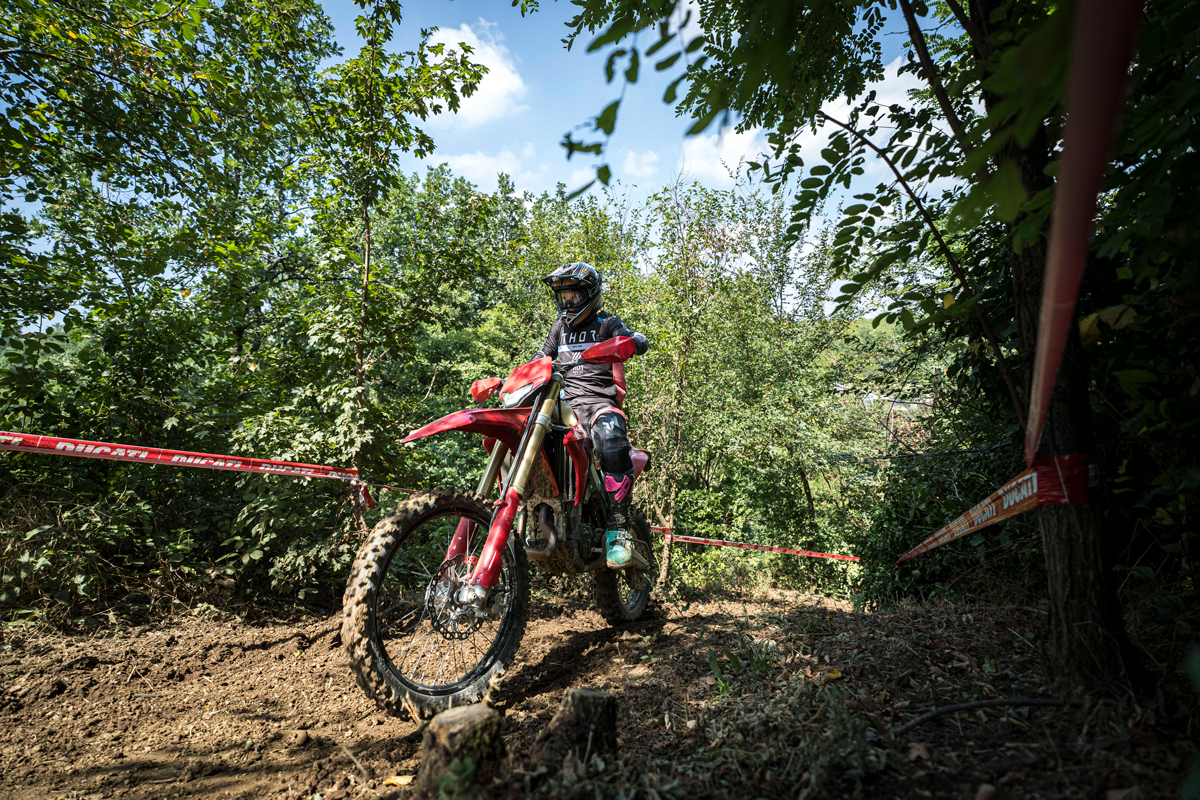
Dirt Hub travelled to Faenza, Italy, where our test rider and British motocross racer Callum Gordon spent a full day putting the Desmo450 EDS through its paces. Guided by multiple Enduro World Champion David Knight MBE, the test covered everything from flowing cross tests and tight woodland trails to rocky climbs and technical enduro sections
Although Callum’s background is firmly in motocross rather than enduro, that made him an ideal rider for this test.
Bike: Ducati Desmo450 EDS
Test Rider: Callum Gordon
Test Location: Faenza, Italy
Test Duration: One full day
First Impressions
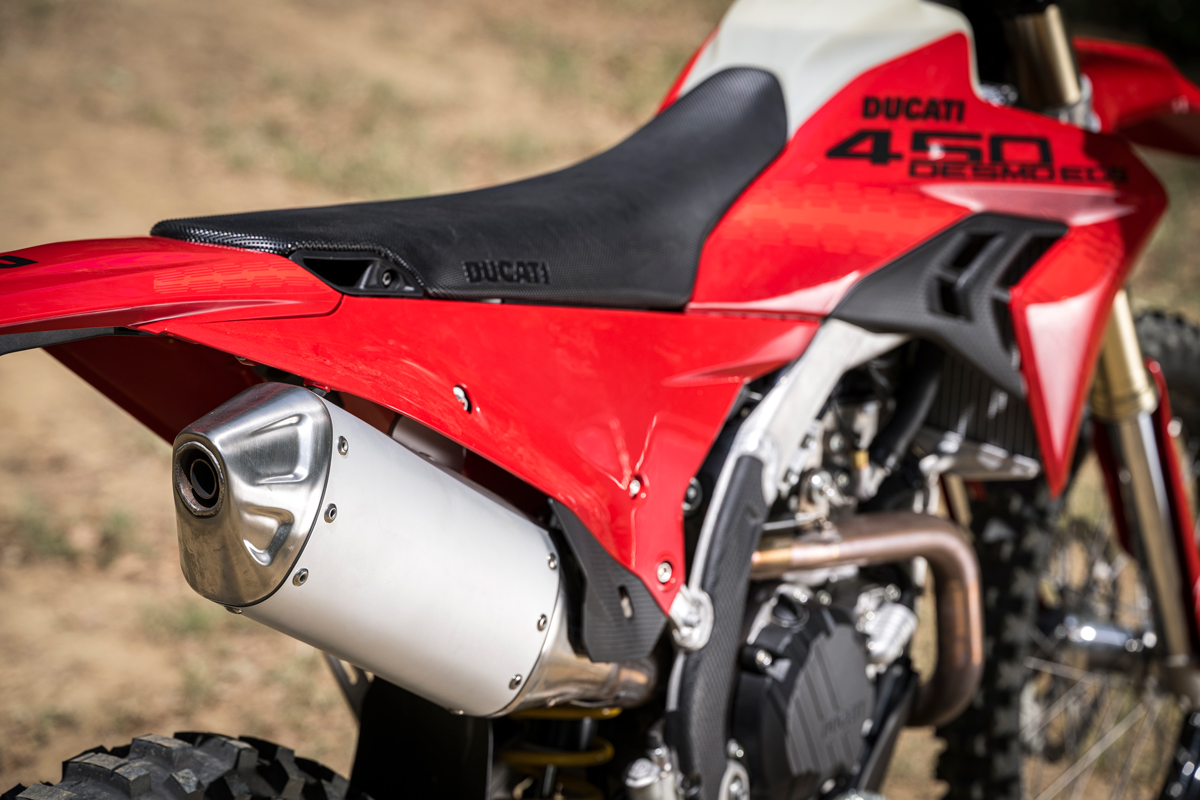
The first thing Callum noticed was how clean the bike looked. There are no over-the-top graphics, just Ducati’s trademark red bodywork.
“When you think Ducati, you think premium. For me, it’s almost like the Ferrari of motorcycles. It’s just a little notch above. My first initial thought was just how smart it looked. I think the fact it’s got that red Ducati look to it just makes it stand out, and because it’s a Desmo model you expect it to be a good bit of kit. I also like that it’s quite subtle. It’s not covered in loads of graphics, it just looks really clean and really well built.”
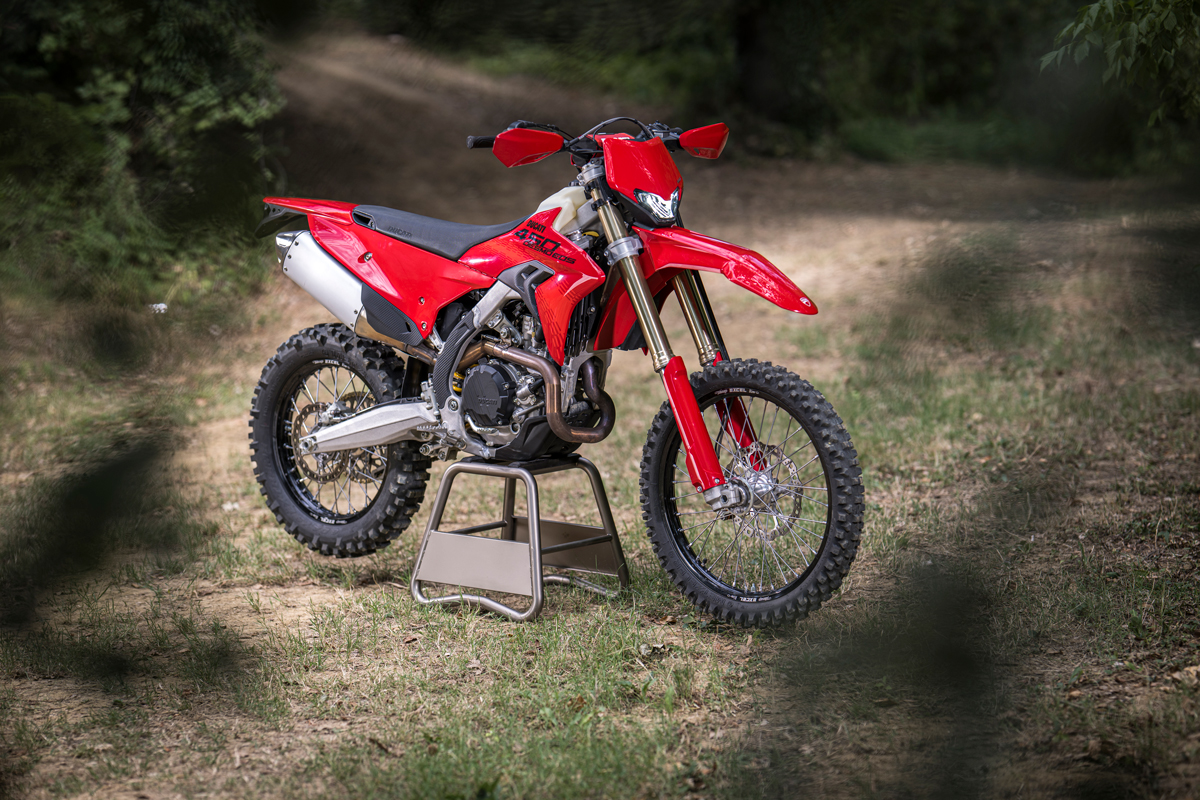
His only question before riding was whether the larger 8.5-litre tank would make the front end feel heavy. Compared to the Desmo450 MX, the enduro model naturally carries more fuel, and he wondered whether that extra capacity would be noticeable in the tighter, more technical terrain.
“Before I rode it I was thinking, with the bigger tank, is it going to feel heavy? Is it going to feel heavy on the front? But as soon as I got going it just felt like a really smooth 450. I was a bit concerned because of the extra weight from the fuel, but it really didn’t feel as heavy as I was imagining. It never felt heavy on the front – it just felt really balanced. We were riding in quite slick and technical conditions, so it was the perfect place to test how the motor reacted. You could accelerate hard exiting the corners and it would just drive. It was so torquey and smooth that it really gave you confidence in the bike.”
Watch Callum Gordon’s full Dirt Hub Tested first ride of the Ducati Desmo450 below:
Engine & Gearbox
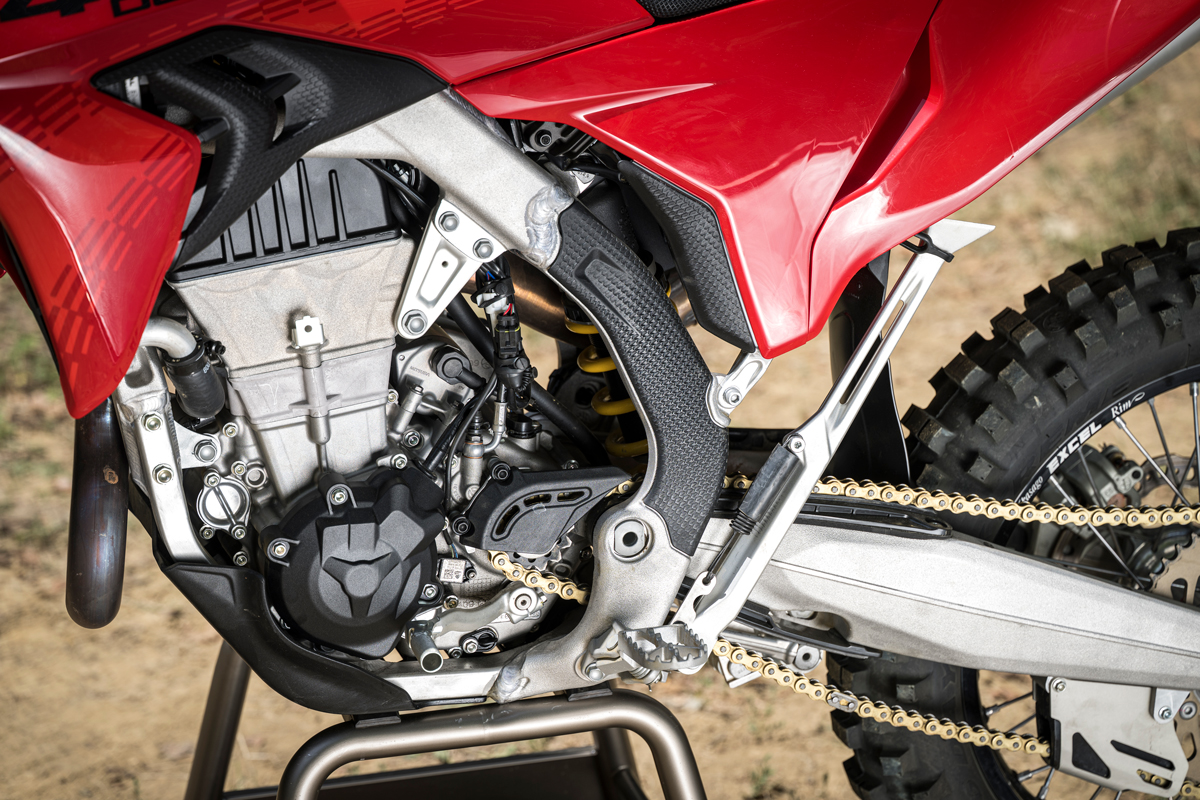
Although the engine is based on the Desmo450 MX, Ducati has made several changes for enduro, reworking the 449.6cc Desmodromic single-cylinder engine with revised mapping, increased flywheel inertia and enduro-specific gearbox ratios, all aimed at producing a smoother, more controllable power delivery. The development centred around four key objectives: strong low and mid-range torque, maximum traction, controllable power delivery and long maintenance intervals.
“The biggest thing for me was just how smooth the power was. We were riding in really slick and technical conditions, so it was the perfect place to test how the motor reacted. You could accelerate hard exiting the corners and it would just drive. It was so torquey and smooth that it really gave you confidence in the bike.
Strong low-end and mid-range torque is crucial in enduro because you need it riding over logs, rocks and slippery hill climbs. The power delivery is really controllable, which makes the bike smoother and easier to ride. I think that’s something riders of all abilities would appreciate.”
“Compared to my bike, where you open the throttle and it’s ready to go, the Ducati was just so smooth and torquey. It still had plenty of power, but it was much more manageable. In enduro that’s exactly what you want because you’re riding through the woods and technical sections – you don’t want something that’s going to rip your arms off, especially if you’re riding for a few hours.”
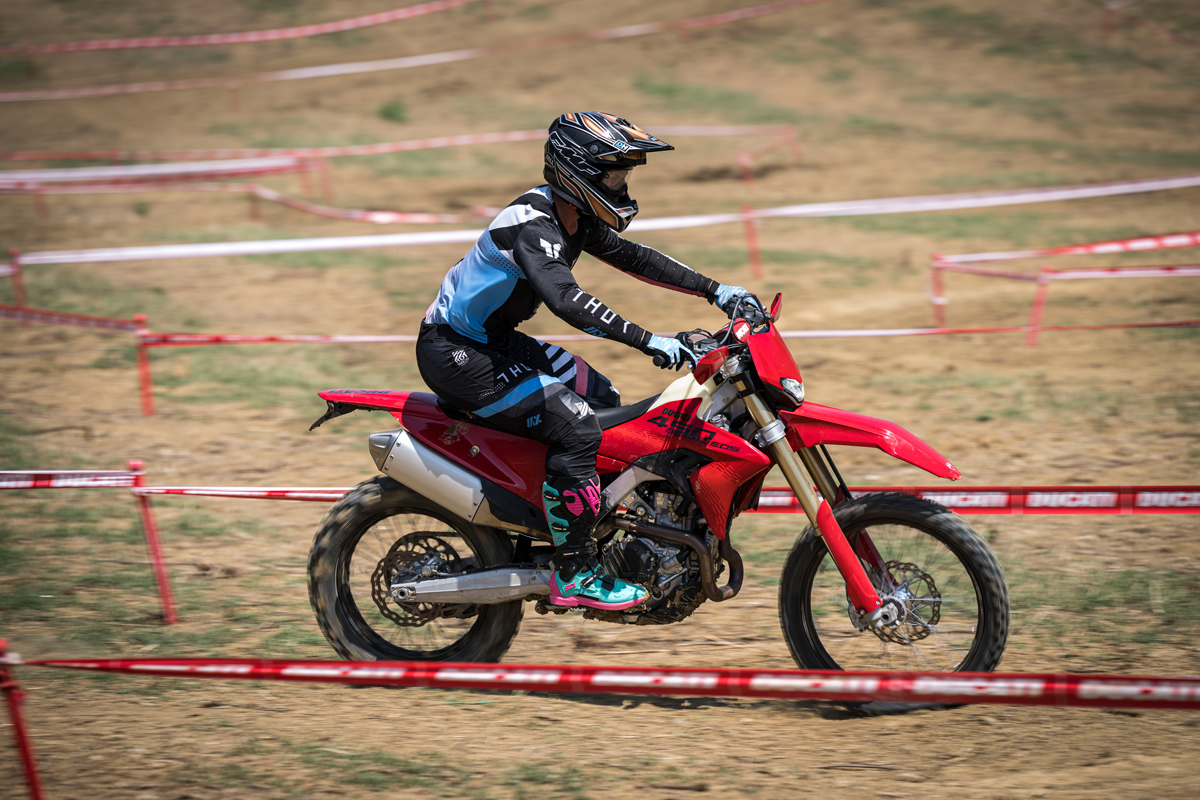
The six-speed gearbox made the most of that broad spread of torque. Rather than constantly searching for another gear, the Desmo450 EDS was happy to sit in one gear and keep pulling.
“The 450 EDS has a really long low to mid-range in the gears. You can stay in each gear much longer because the engine just keeps pulling. You’re not constantly changing gear, which is exactly what you want in enduro. It gives you one less thing to think about because you’re concentrating on the section instead of worrying whether you’re in the right gear.”
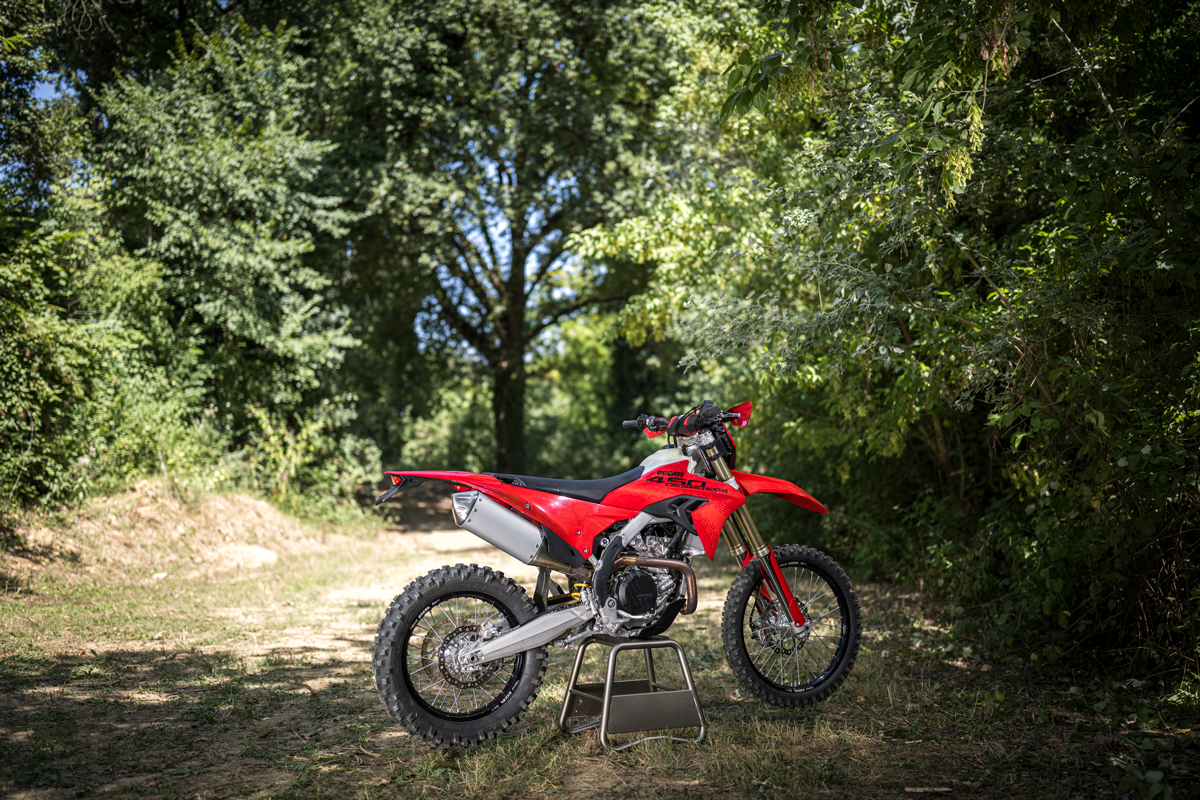
Callum also spent time riding with the different engine maps, switching between the smoother setting and the more aggressive option.
“The smoother map was really easy to ride and gave loads of confidence. Then I tried the more aggressive map and it reminded me a little bit more of some of the other bikes I’d ridden before. It still had that instant response when you needed to lift the front over logs or rocks, but it never felt aggressive for the sake of it. It just delivered the power in a much more controllable way.”
The fourth objective for Ducati was reliability. Enduro bikes spend long hours on the trails, so service intervals were a major focus during development. Valve clearance inspections are scheduled at 90 hours, with a full engine overhaul recommended at 180 hours for amateur riders.
“They’ve also concentrated on making it a really reliable, low-maintenance bike. That’s important because enduro riders put a lot of hours on these bikes, so longer service intervals are always a big plus.”
Chassis & Handling
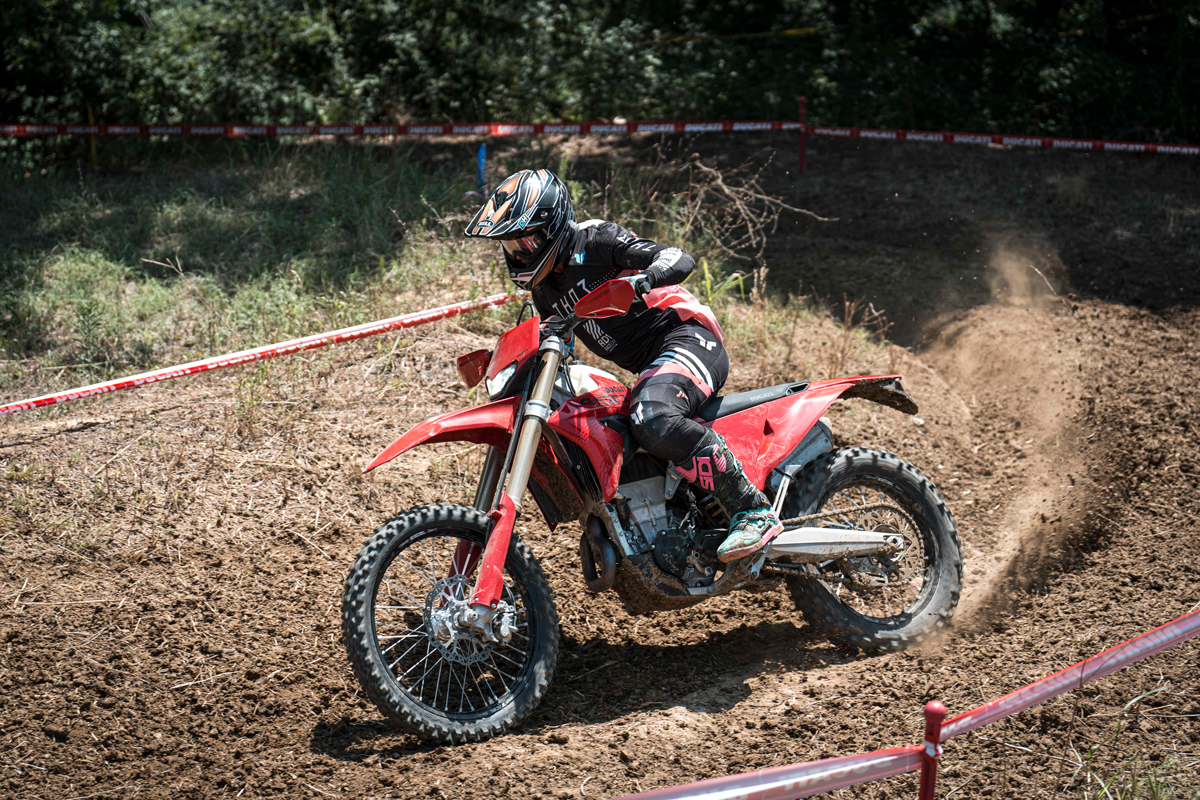
The Desmo450 EDS uses a lightweight aluminium perimeter frame developed specifically for enduro, with Ducati also revising the geometry to suit the larger 8.5-litre fuel tank. On paper, that extra fuel could have made the front end feel heavier, but out on the trail it was something Callum simply didn’t notice.
“The chassis and geometry of the bike worked really well. It cornered really well without having to fight the bike when entering and exiting turns. Ducati have obviously thought about the extra weight from the 8.5-litre fuel tank because when you’re riding, you don’t notice the extra weight on the front end at all.”
Following David Knight into sections he’d never normally ride also gave Callum a chance to see how the bike behaved when the terrain became more technical.
“Following David through some of those sections, they weren’t things I’d normally ride on a motocross bike. But because the Ducati felt so balanced and predictable, it just gave me the confidence to have a go. The more I rode it, the more comfortable I became.”
“You’re not fighting the bike. It just goes where you want it to go. It turns really well and feels really natural underneath you, so you’re concentrating on what’s coming next rather than trying to wrestle the bike around.”
Suspension
The Desmo450 EDS comes fitted with fully adjustable Showa suspension, with a 49mm closed-cartridge fork and rear shock developed specifically for enduro. Unlike many standard bikes that often need money spending on the suspension straight away, Callum was impressed with how close the Ducati felt from the outset.
“I was really impressed with the suspension. I was pretty comfy with it straight from the get-go. The Showa forks were really plush and smooth, which helped give you confidence in the bike. The forks worked really well with the chassis and it cornered really easily.”
There was one area he wanted to change, though.
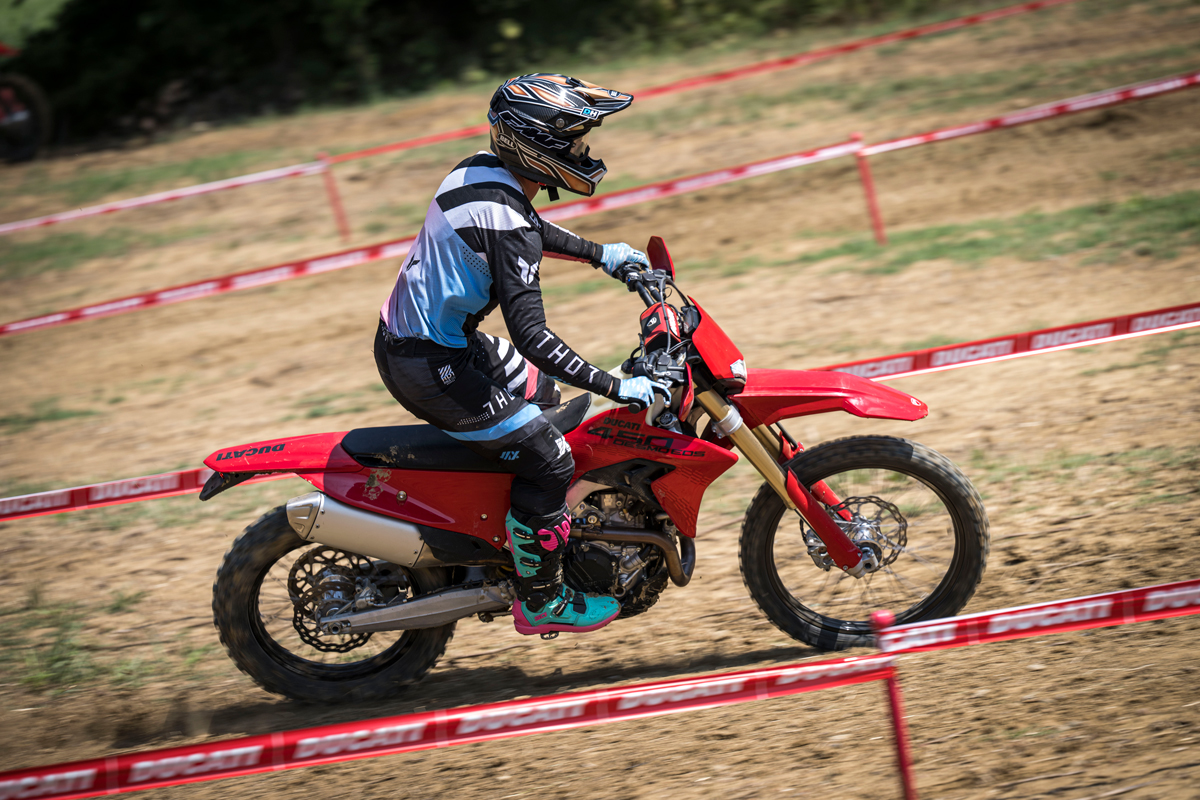
The rear of the bike initially sat a little high for his liking, so the Ducati technicians reduced the sag before he headed back out.
“The rear shock started off a little high for me, so I got the guys to play with the sag a little bit and bring the back down. After we made that small change, the bike was riding so well and the handling was unreal.”
“As standard bikes go, this was really impressive. I honestly don’t think I’d have to change the springs or get it re-valved, and that’s a big thing because you’re not spending money on it before you’ve even ridden it properly.”
Traction Control
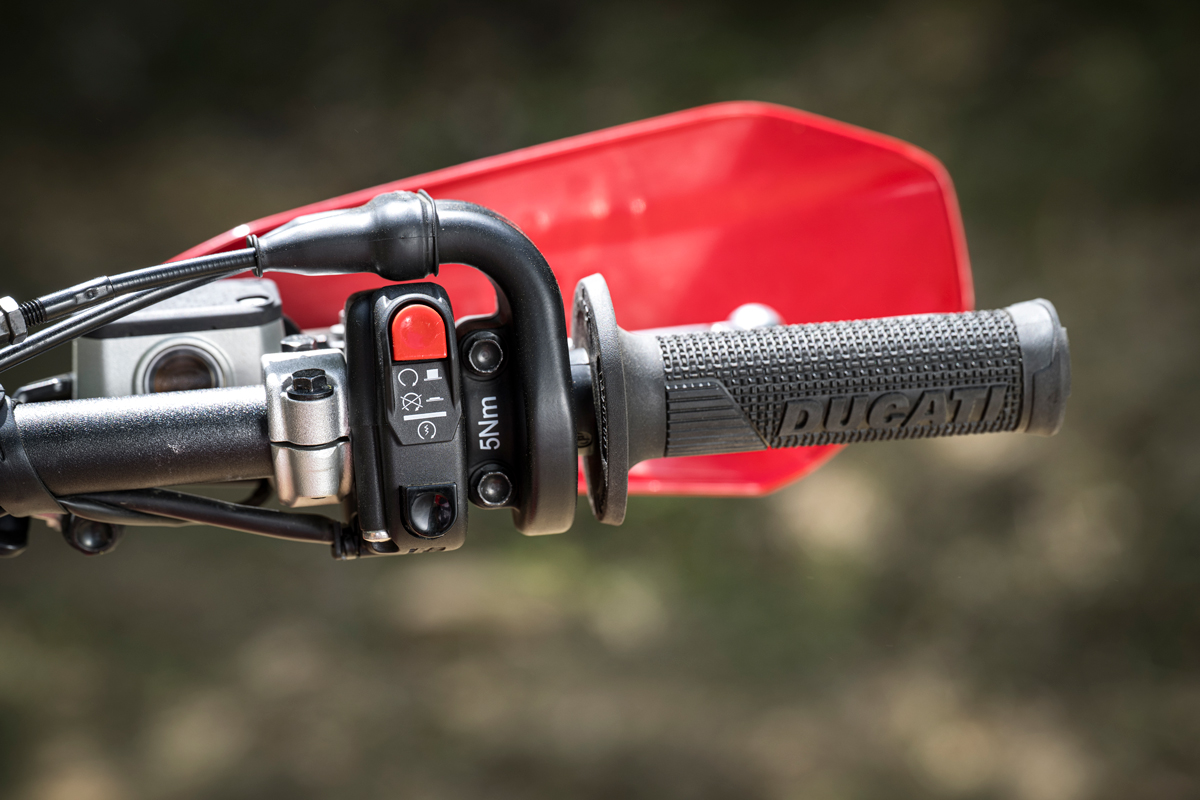
The Desmo450 EDS uses a four-level traction control system with Ducati’s clutch override function. Pulling the clutch temporarily overrides the traction control, allowing the rider to spin the rear wheel or lift the front wheel over obstacles before the system automatically comes back into play.
“The traction control was unreal. It worked really well, allowing the bike to find maximum grip when you accelerated. It kept the bike driving forward without really stepping out, especially in the slippery sections.”
The clutch override took a little getting used to.
“At first it feels a bit strange because you’re not used to it. You dab the clutch and it overrides the traction control, then it comes back in again. Once you understand how it works, it’s actually really clever because you can still get the front wheel up over logs or obstacles without the traction control getting in the way.”
“There are four levels of traction control, so you can set it up to suit yourself and the conditions you’re riding in. That’s a big plus because one setting isn’t going to suit everyone or every track.”
X-Link App
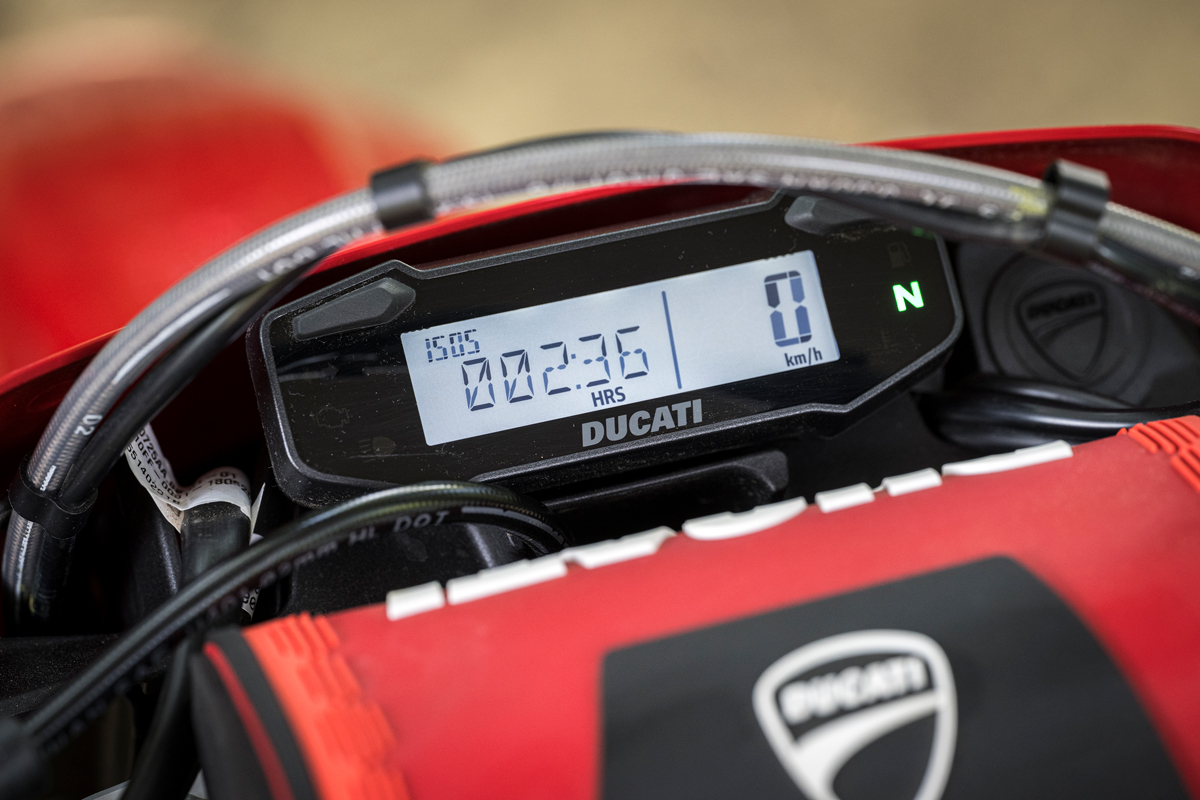
Alongside the riding modes and electronics, the Desmo450 EDS can be paired with Ducati’s X-Link app, allowing riders to adjust settings such as traction control, engine braking and power delivery, while also recording bike data and offering maintenance information.
Callum didn’t spend hours playing with the app, but he liked how straightforward it was to use with Ducati’s technicians on hand throughout the test.
“There was a guy from Ducati looking after the app. He’d come round, show you what he was changing and if I wanted to try something I’d tell him, he’d do it for me, I’d go out, try it, then come back and give him some feedback. That worked really well.”
One feature that stood out was its ability to recommend suspension settings based on riding conditions.
“It’s really clever because it reads everything. If you put in what track you’re riding, it can give you advice on suspension settings – where to run your rebound and things like that. It’s a pretty cool bit of kit.”
Standard Equipment
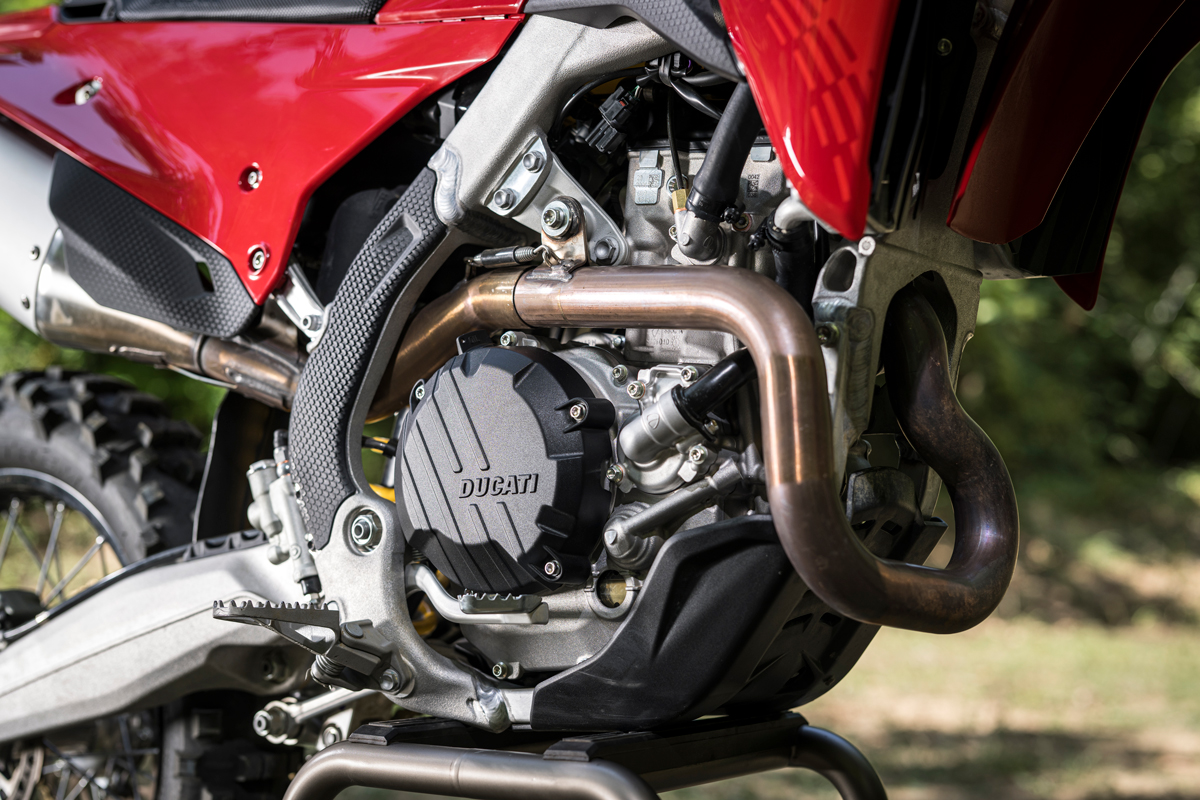
The Desmo450 EDS comes well equipped as standard, with an 8.5-litre fuel tank, radiator fan, sump guard and engine case protectors already fitted.
“The Desmo450 EDS comes fully equipped with everything you need for enduro. You’ve got the 8.5-litre fuel tank, engine casing covers, a sump guard and a radiator fan as standard, which is a great thing on an enduro bike because it helps stop it overheating in the slower, more technical sections.”
“There are loads of add-ons you can buy for it, but for your average rider I honestly don’t think you’d need to spend any more money on it. It already comes with everything you need.”
Verdict
“The biggest thing for me was how easy it was to ride. When you hear 450, you expect a bike that’s going to be aggressive, but this wasn’t like that at all. It had plenty of power, but it was so smooth and manageable that it just gave you confidence all day.”
“I think Ducati have done a really good job. It’s their first proper enduro bike and they’ve got a lot right. There wasn’t anything that made me think, ‘I’d have to change that straight away.’ Once we’d adjusted the rear sag, I was happy to ride it exactly as it was.”
“If I was looking to get into enduro, I’d definitely consider one. It’s got everything you need, it’s easy to ride and it gives you confidence straight away. I think riders of all abilities would enjoy it.”
Ducati Desmo450 EDS – Technical Specifications
| Item | Specification |
|---|---|
| Engine | 449.6cc liquid-cooled Desmodromic single-cylinder |
| Gearbox | 6-speed |
| Frame | Aluminium perimeter frame |
| Front Suspension | 49mm Showa closed-cartridge USD forks, fully adjustable |
| Rear Suspension | Fully adjustable Showa rear shock |
| Brakes | Brembo hydraulic disc brakes |
| Fuel Capacity | 8.5 litres |
| Electronics | Four-level traction control, Ride Modes, adjustable engine braking, launch control* |
| Standard Equipment | Radiator fan, sump guard, engine protection covers |
| Valve Inspection | Every 90 hours |
| Engine Overhaul (Amateur Use) | Every 180 hours |