

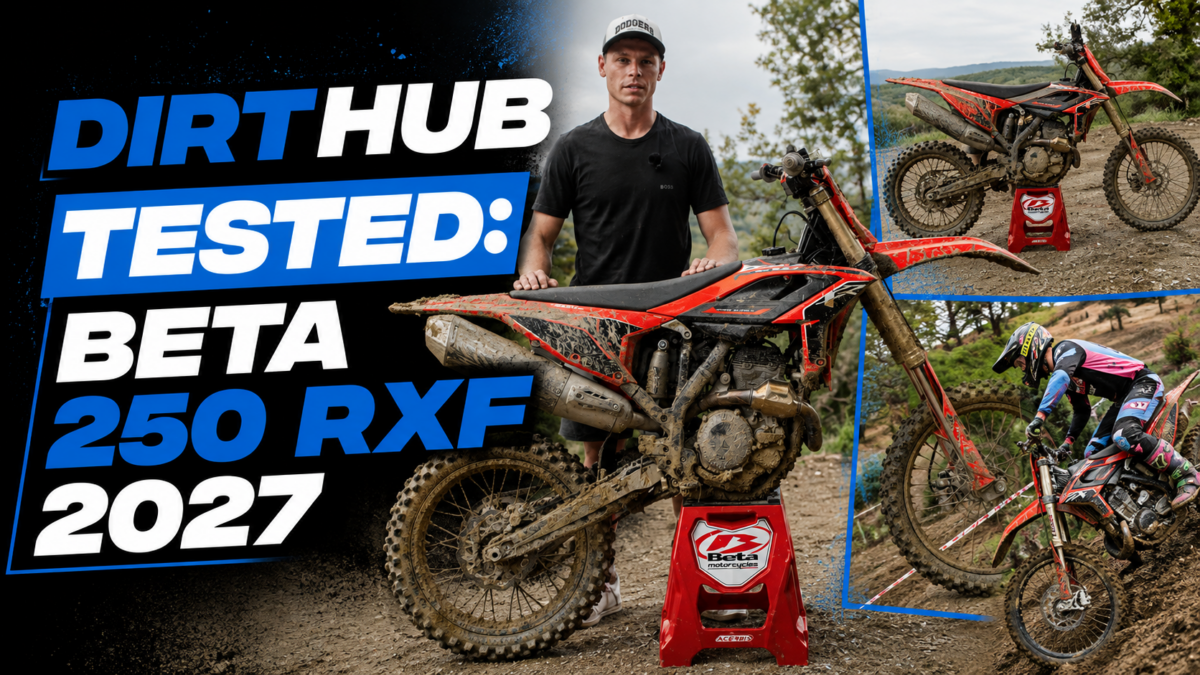
Beta has entered new territory for 2027 with the launch of the 250 RXF, the Italian manufacturer’s first 250cc four-stroke motocross machine and a bike powered by an all-new engine designed and manufactured in-house at its Florence factory.
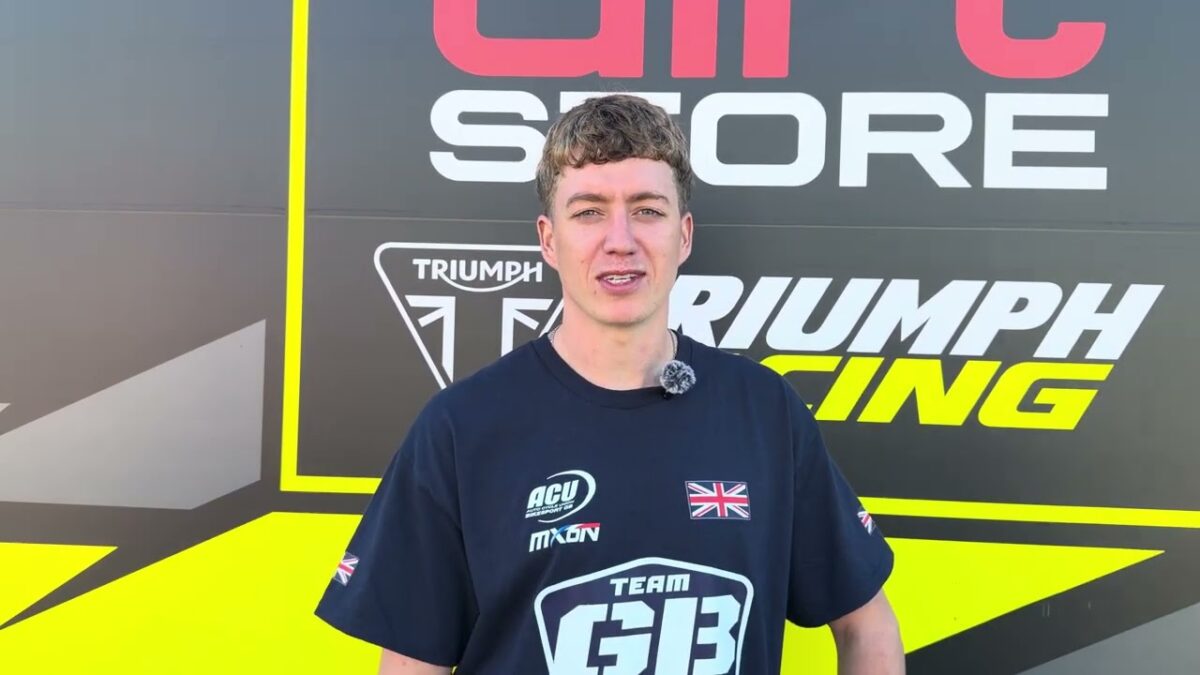
Dirt Hub headed to Italy, where our test rider and British motocross racer Callum Gordon got the opportunity to put Beta’s newest motocrosser through its paces at Montevarchi.
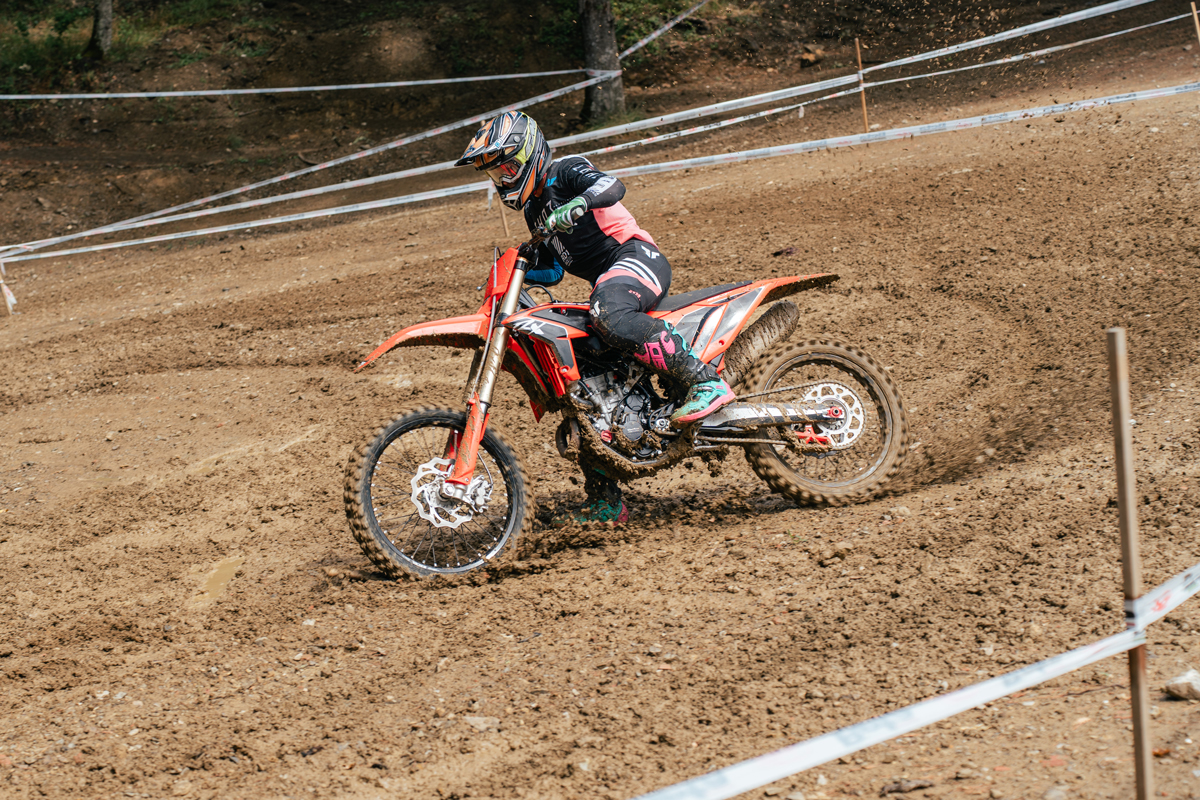
Mother Nature had other ideas about how that test would play out, though. A huge thunderstorm left the main motocross circuit flooded, forcing Beta to create a shortened test course using part of the venue’s enduro loop. Far from ideal for discovering how far a 250F will pull through the gears, but with slick turns, deep ruts, rocky climbs and technical descents, it provided a fascinating test of the RXF’s handling, traction and low-down usability.
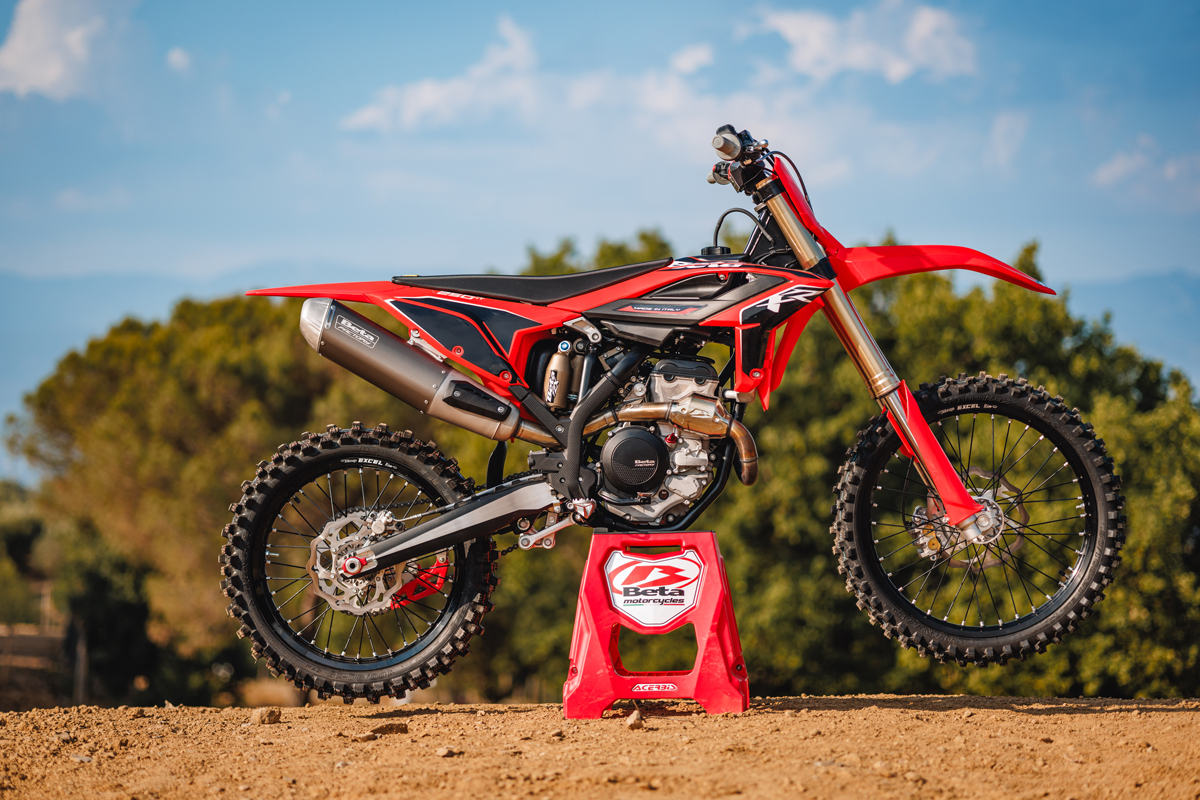
Bike: Beta 250 RXF
Test Rider: Callum Gordon
Test Location: Montevarchi, Italy
Test Conditions: Wet, slick and technical
First Impressions
Before Callum had even fired the 250 RXF into life, one thing immediately stood out – just how small it looked.
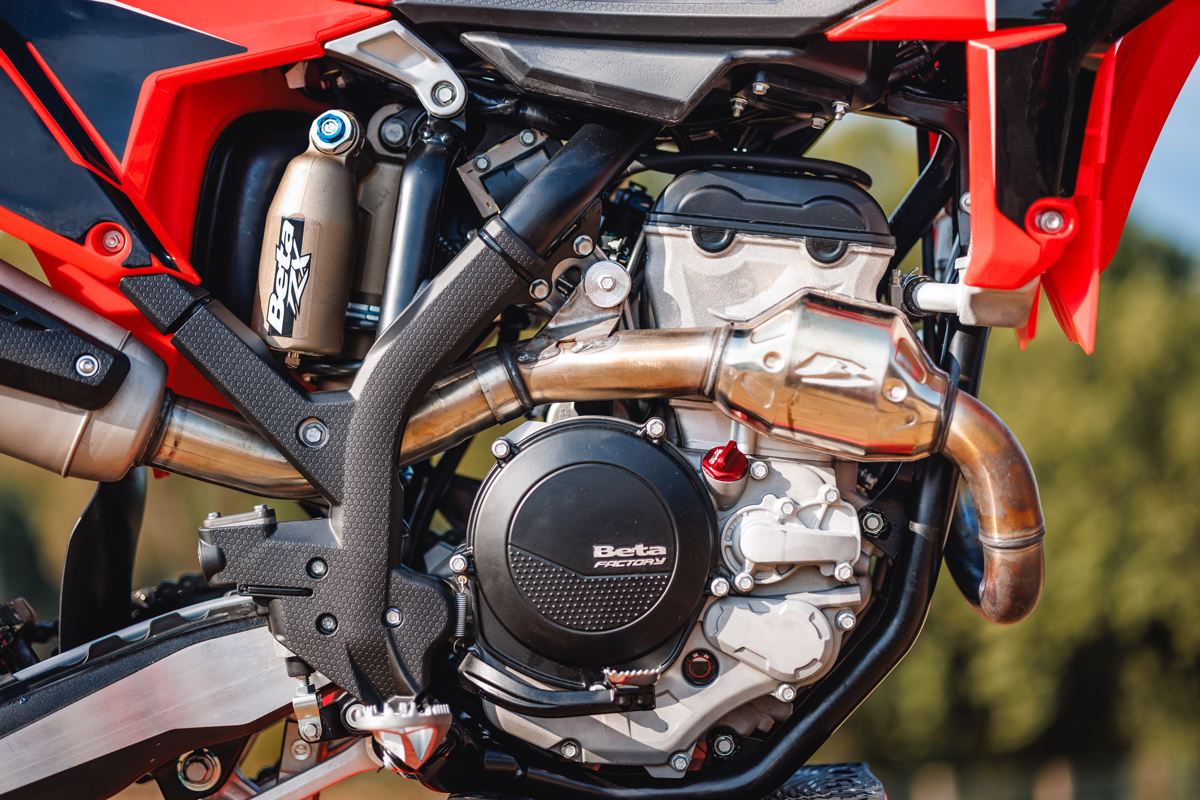
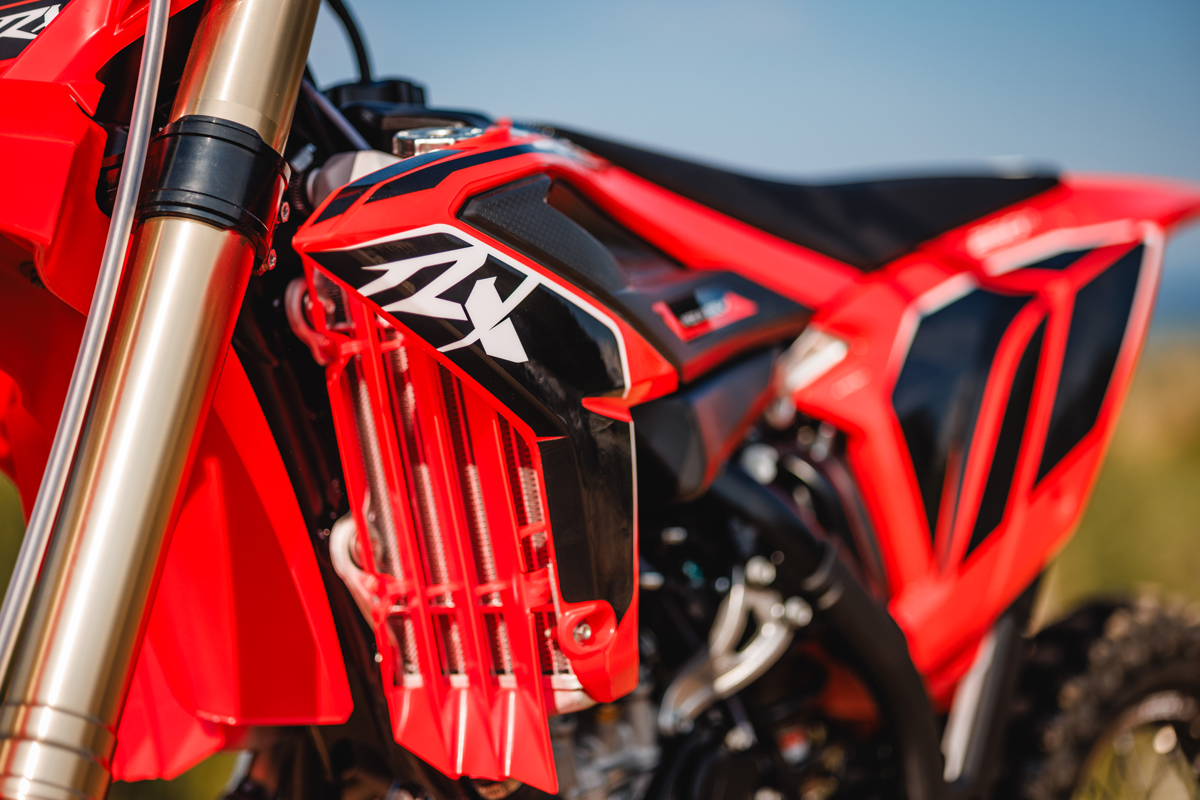
Beta has worked hard to keep its new four-stroke compact, with the engine packaged tightly enough to sit within a chassis comparable in size to its 125. Combined with slim bodywork and relatively little plastic surrounding the rear of the machine, the result is a distinctly lightweight-looking motocross bike.
“It was tiny! That was the first thing I noticed. It was so narrow and it almost seemed quite short – compact is probably the right word. Compared to other bikes, it just looked really small.”
“The engine itself is really compact and they’ve basically managed to fit a 250 four-stroke engine into something around the size of their 125 frame. You don’t often hear someone say they’ve got a 250 engine in a 125-sized chassis.”
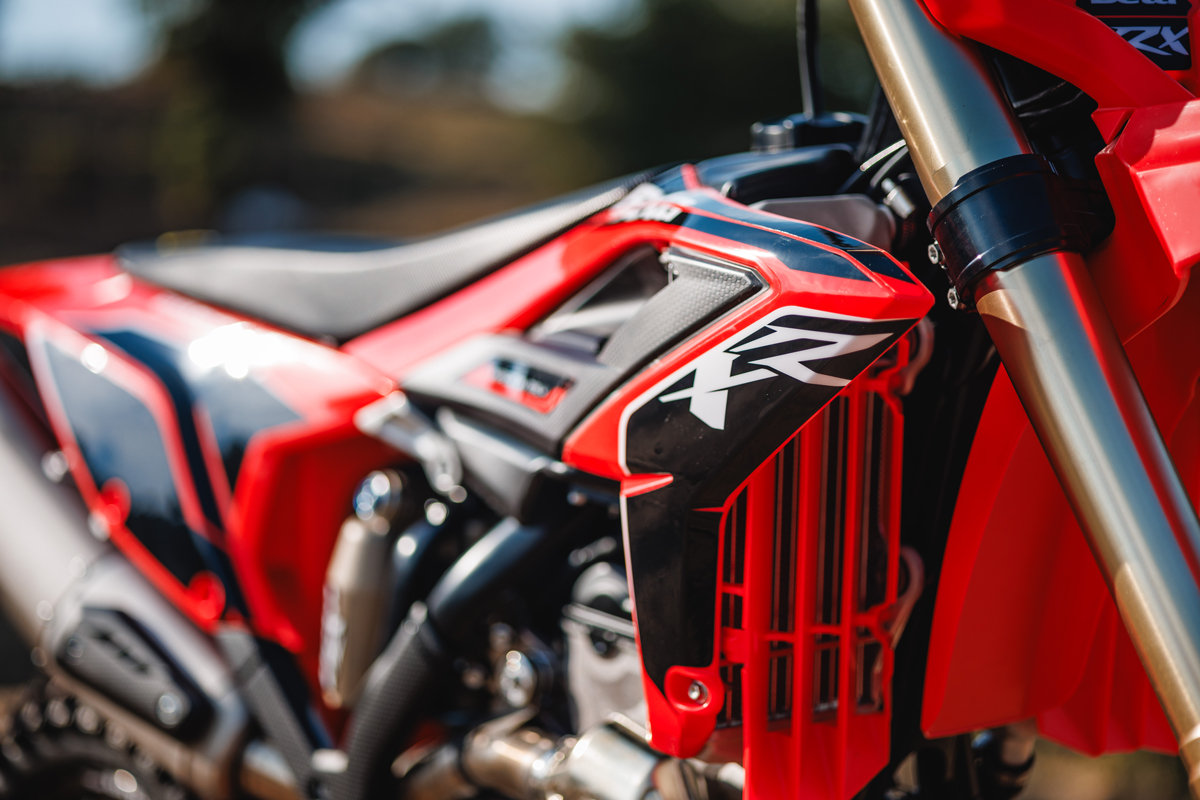
The stripped-back bodywork also caught his attention.
“The plastics are really sleek and there doesn’t seem to be loads of plastic on it. You can see quite a lot of the frame compared with some other bikes. I really like the black and red as well. I think you could make this bike look really trick.”
A Very Different First Ride
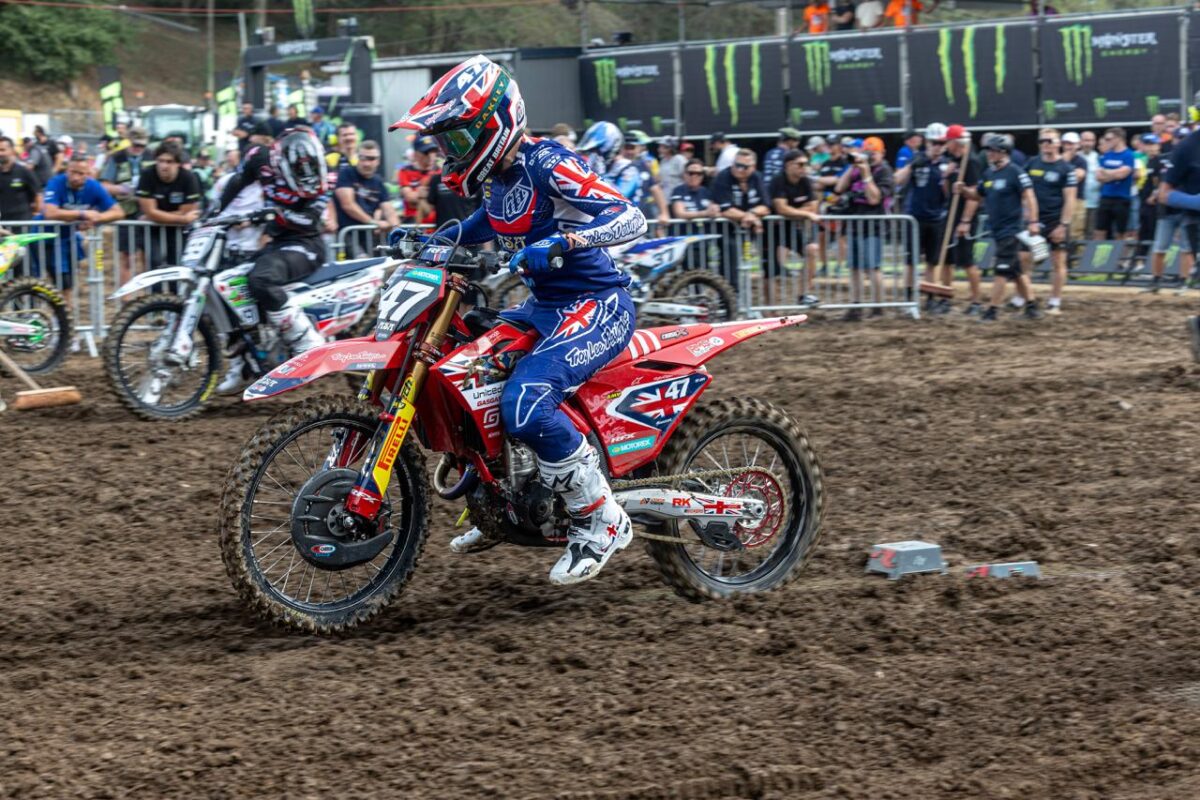
Conditions at Montevarchi ensured Callum’s first experience of the RXF was anything but conventional.
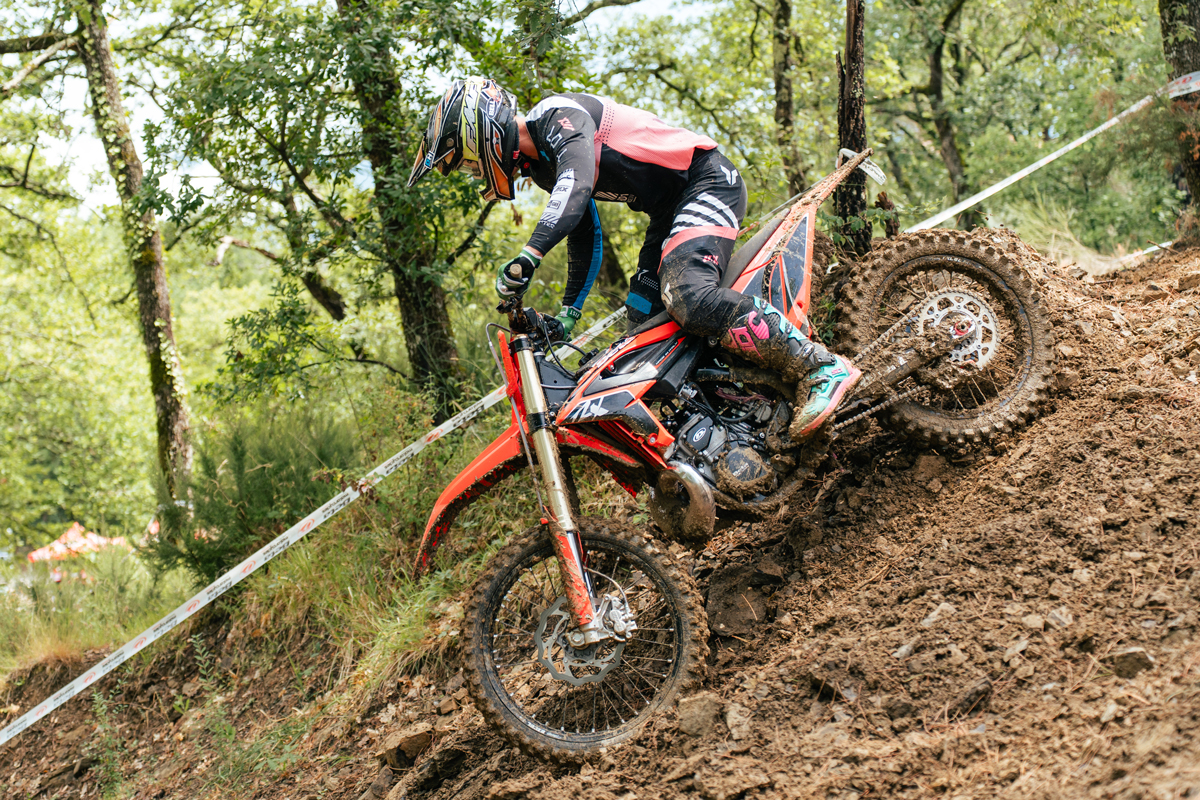
With the motocross circuit effectively taken out of play by the weather, the revised course incorporated sections of the enduro loop – including rocky climbs that initially had him wondering whether a 250F motocross bike was going to make it to the top.
“At first I was a bit apprehensive about riding a motocross bike around what was pretty much an enduro track. We were following a guy on a 250 two-stroke enduro bike and he was spinning like mad going up one of these climbs. I was thinking, ‘Are we seriously getting up there on this?’”
“But I was pleasantly surprised. It felt small and light and, even riding it through rocky corners and really slick, deep conditions just after a thunderstorm, it handled really well.”
There was a downside. The tight course meant Callum wasn’t able to fully stretch the RXF’s legs.
“It wasn’t really somewhere you could test the top-end power properly because everything was such a short burst. We were probably only just getting into fourth gear before you were straight back down again. But for testing how manageable the bike was, it was actually really interesting.”
Engine
At the heart of the RXF is Beta’s new 249.3cc DOHC four-stroke engine, developed and manufactured in-house in Italy. It uses titanium intake and exhaust valves, dual fuel injectors, a forged crankshaft and Box-in-Box piston, with a five-speed transmission and hydraulic clutch.
Despite the RXF’s diminutive appearance, Callum quickly discovered there was plenty going on underneath it.
“I’d describe it as a bit of a dark horse. Because it’s so small, you almost don’t expect it, but it was really nifty and it definitely had some bottom-end grunt to it.”
“Power-wise, it reminded me a little bit of a Honda. Hondas are known for having that smooth, usable sort of power rather than being really aggressive. That’s what the Beta felt like to me – particularly off the bottom.”
Given the conditions, that smoothness proved far more useful than an explosive power delivery would have been.
“You could control it really well. With how slick it was, you didn’t want something that was just lighting the rear wheel up everywhere. The power was smooth but it still had the grunt to get you where you needed to go.”
Chassis & Handling
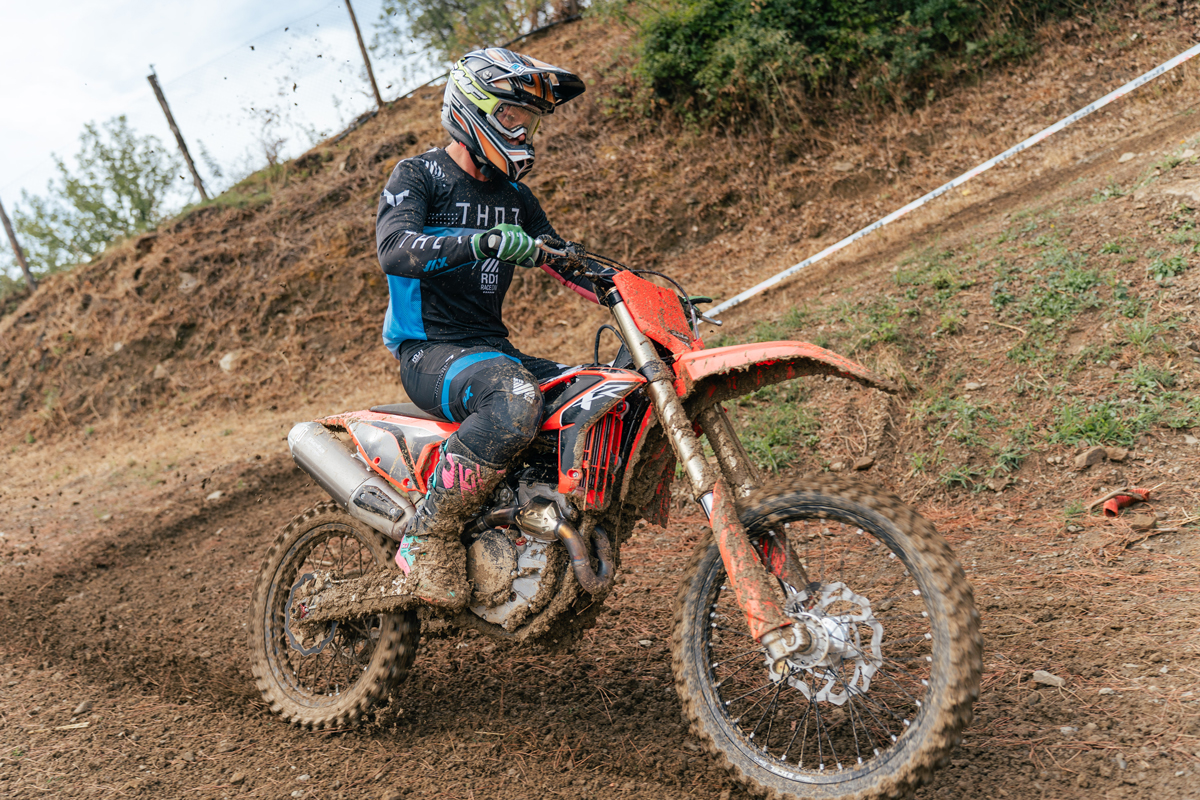
The RXF uses a molybdenum-steel double-cradle frame, but it was the bike’s unusually compact dimensions that really stood out to Callum.
“Because I already knew how compact the chassis was, when I started riding it I immediately thought it felt almost like cornering a 125, but you’ve got a 250 four-stroke engine underneath you.”
“Anyone who’s ridden a 125 knows how well they corner because they’re light and nimble. This genuinely had some of that feeling. I was surprised by how well it cornered.”
Its narrowness helped too.
“The first initial feel was how slim the bike was. That helps make it feel lighter when you’re riding it, but it also makes it really easy to grip with your legs and control.”
Callum also felt the shape and geometry of the chassis contributed to the front-end behaviour.
“The chassis feels more rounded than some other bikes and the frame itself is quite small. It finishes quite high at the front where the handlebars meet, which changes the angle through the front of the bike. For me, I think that’s part of why it cornered so well.”
Suspension
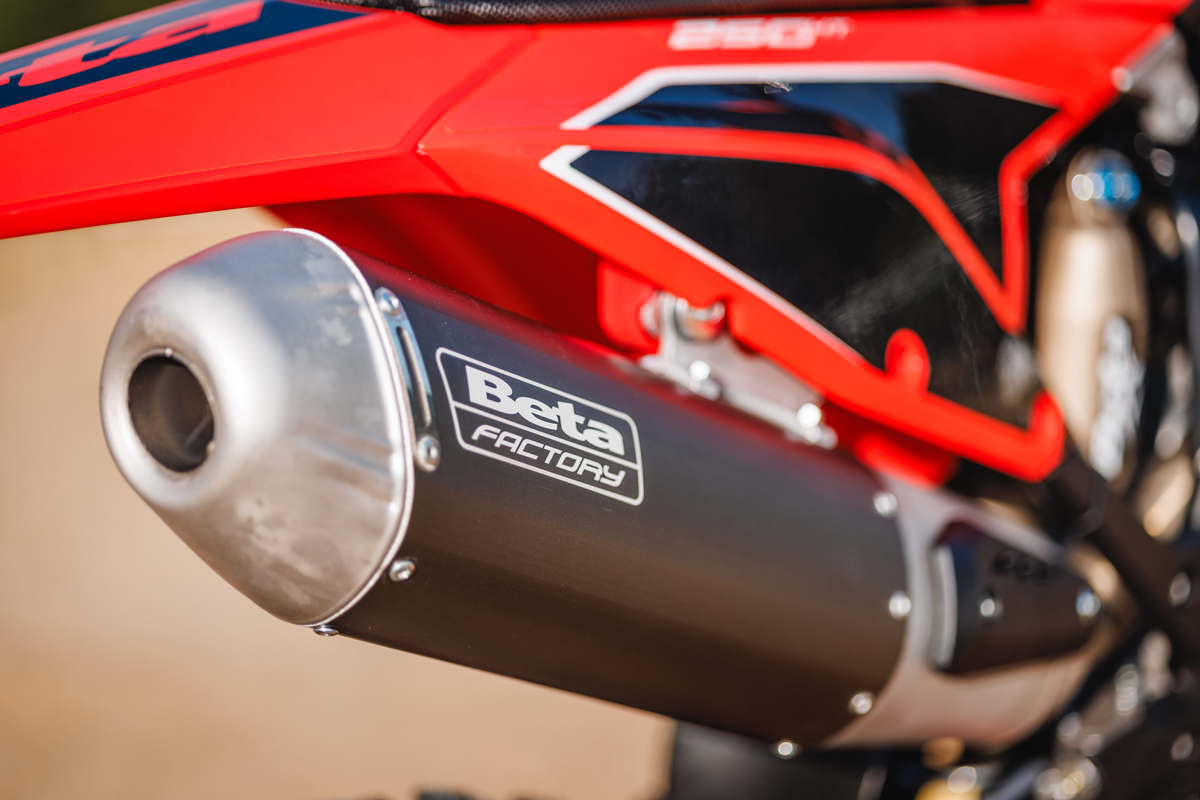
Beta has equipped the RXF with KYB suspension at both ends, comprising 48mm AOS closed-cartridge forks and a 50mm linkage-equipped KYB rear shock.
“In my opinion, KYB is one of the best suspension packages you can have. It always seems really durable and rideable, even when it hasn’t specifically been set up for your weight.”
The unusual test course arguably gave the suspension an even harder workout than a freshly prepared motocross circuit would have done.
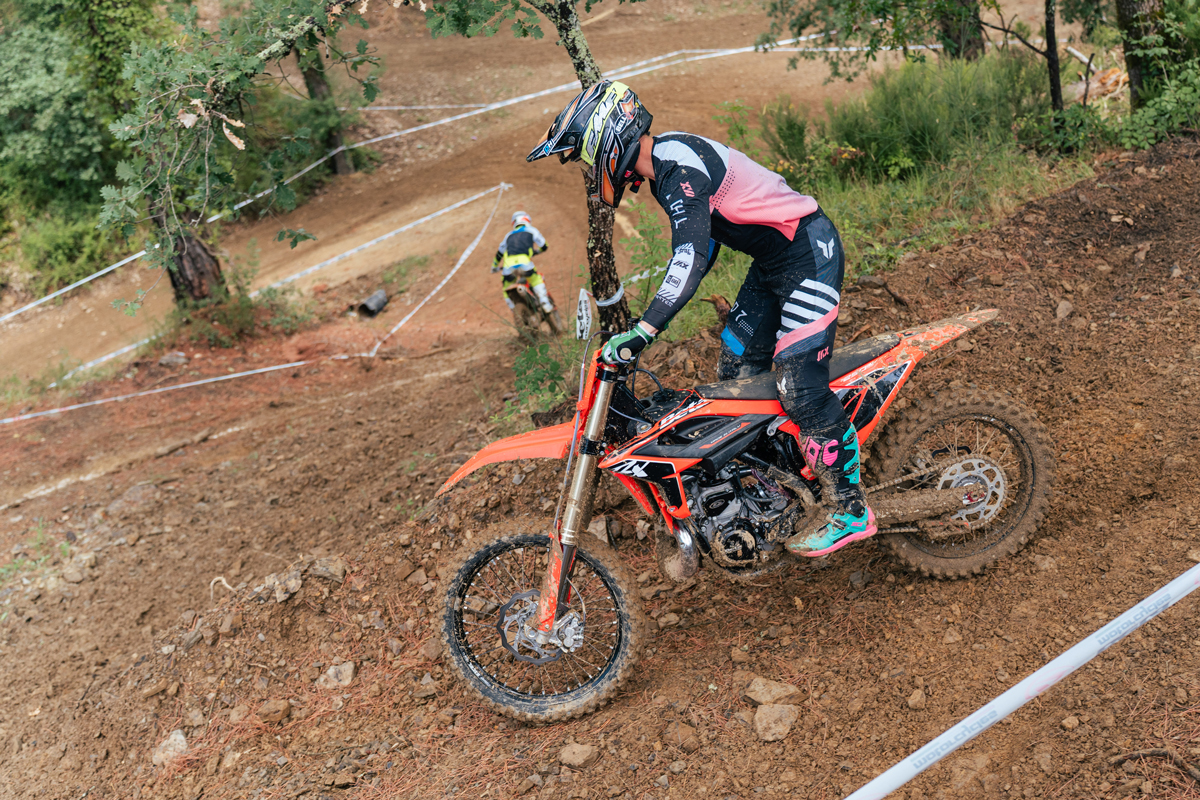
“We were doing rocky hill climbs that went straight into deep 90-degree ruts, then coming back down the other side over really rough, rocky ground. It was manageable and easy to control, and I felt comfortable on it.”
“The suspension was definitely more plush and forgiving than some standard bikes I’ve ridden. It suited someone around my weight pretty well straight away.”
There was one change Callum would have explored with more testing time.
“The rear felt like it sat slightly higher than the front. For an average-weight rider I think the front could probably have been a little stiffer, but that’s something you’d be able to adjust. As a standard package, though, it was really comfortable.”
Maps & Electronics
For such a compact machine, there’s a surprising amount of technology packed into the RXF.
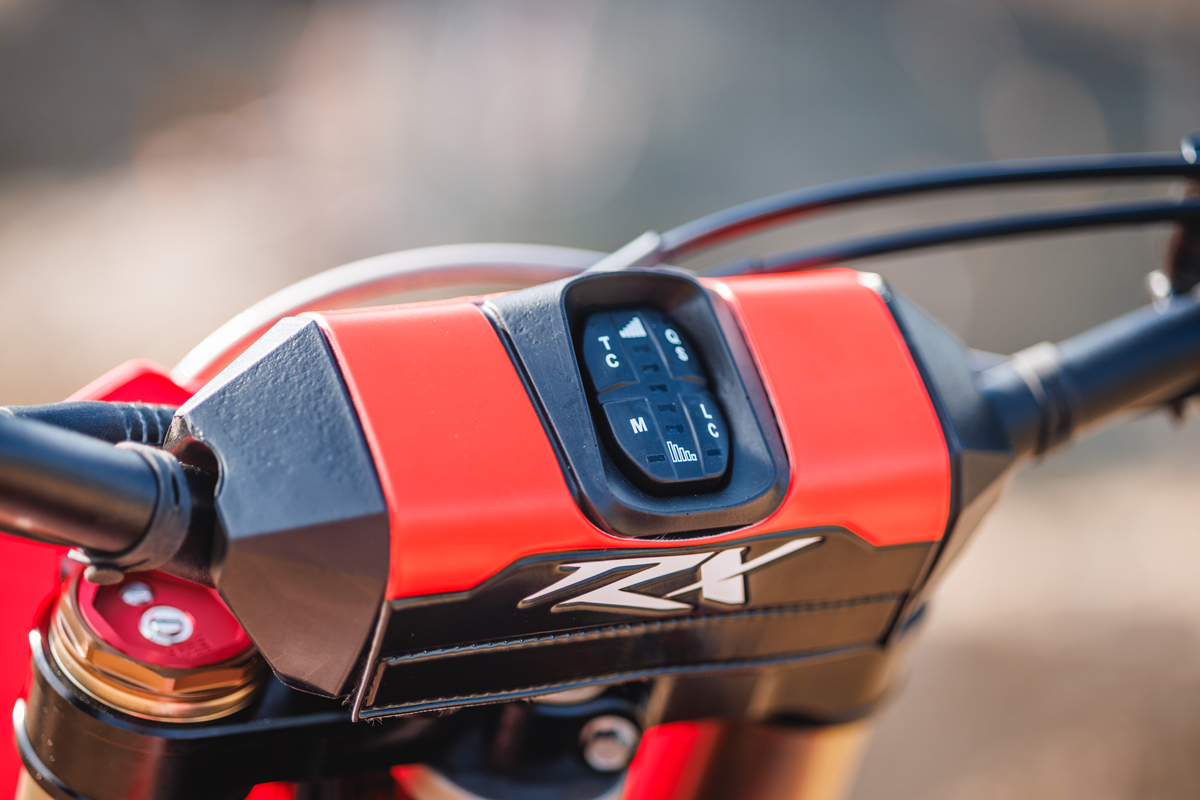
Two engine maps, multi-level traction control, five-level launch control and quickshifter functionality are controlled through the electronics incorporated into the handlebar pad.
“There’s actually a lot to it. The bar pad is almost like a little computer. You’ve got the two maps, traction control with different levels, launch control with different levels and the quickshifter.”
Callum was able to switch between the two engine maps during the test and found the difference immediately noticeable.
“One map is more suited to hard-pack, so it’s a little less aggressive off the bottom and gives you really smooth acceleration. Then you’ve got the other map for softer ground, ruts or sand, where you want more grunt.”
“Changing the map almost made it feel like a completely different bike. There was noticeably more grunt throughout the engine range, but the important thing was that the power still felt smooth and controllable.”
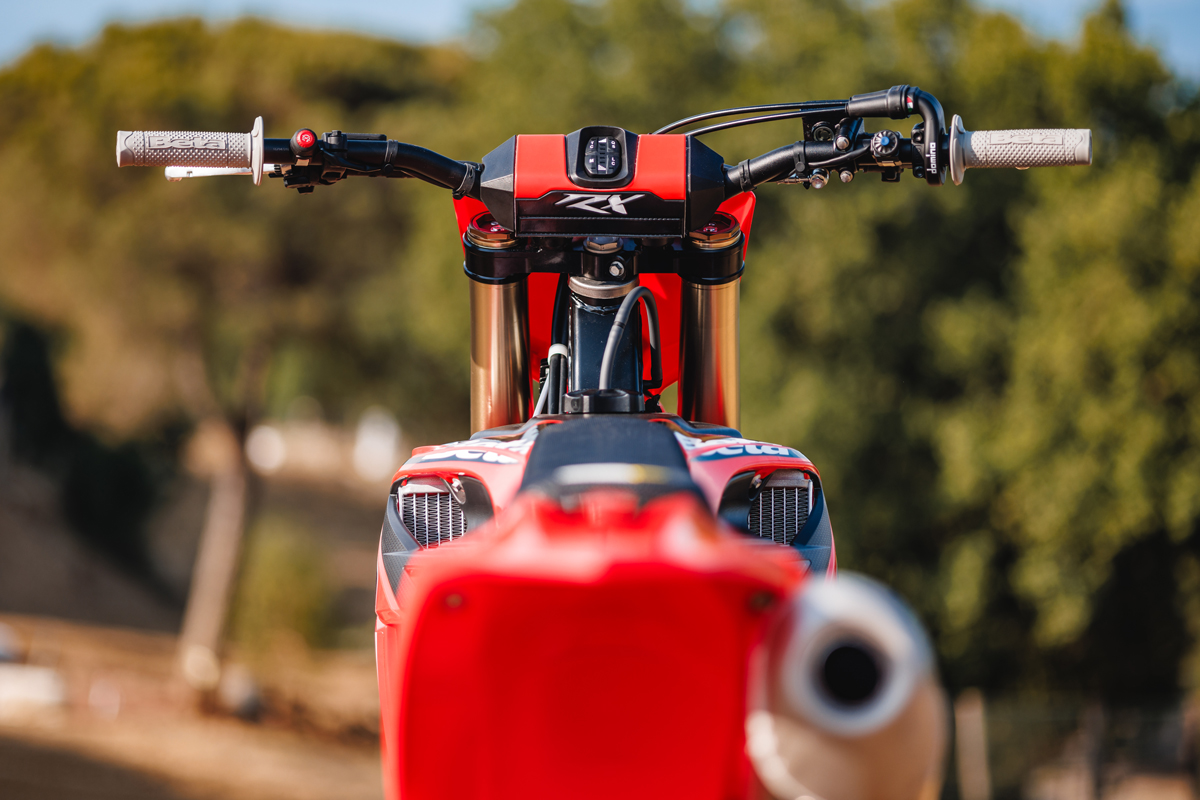
Quickshifter
One of the more interesting additions is Beta’s quickshifter.
It’s technology Callum hadn’t previously spent much time using on a motocross bike, but even around the shortened course he could see where it could become useful.
“The quickshifter was something new to me on a motocross bike. It lets the bike change up a gear quicker, and I can see that being really useful when you come out of a tight corner and you’re immediately going into a jump but need to grab the next gear.”
Again, the conditions meant this was something Callum would like to explore further on a full motocross circuit.
“We did use it, but because the track was so compact you couldn’t really test it to its full potential. I’d like to try that again somewhere you can really run through the gears.”
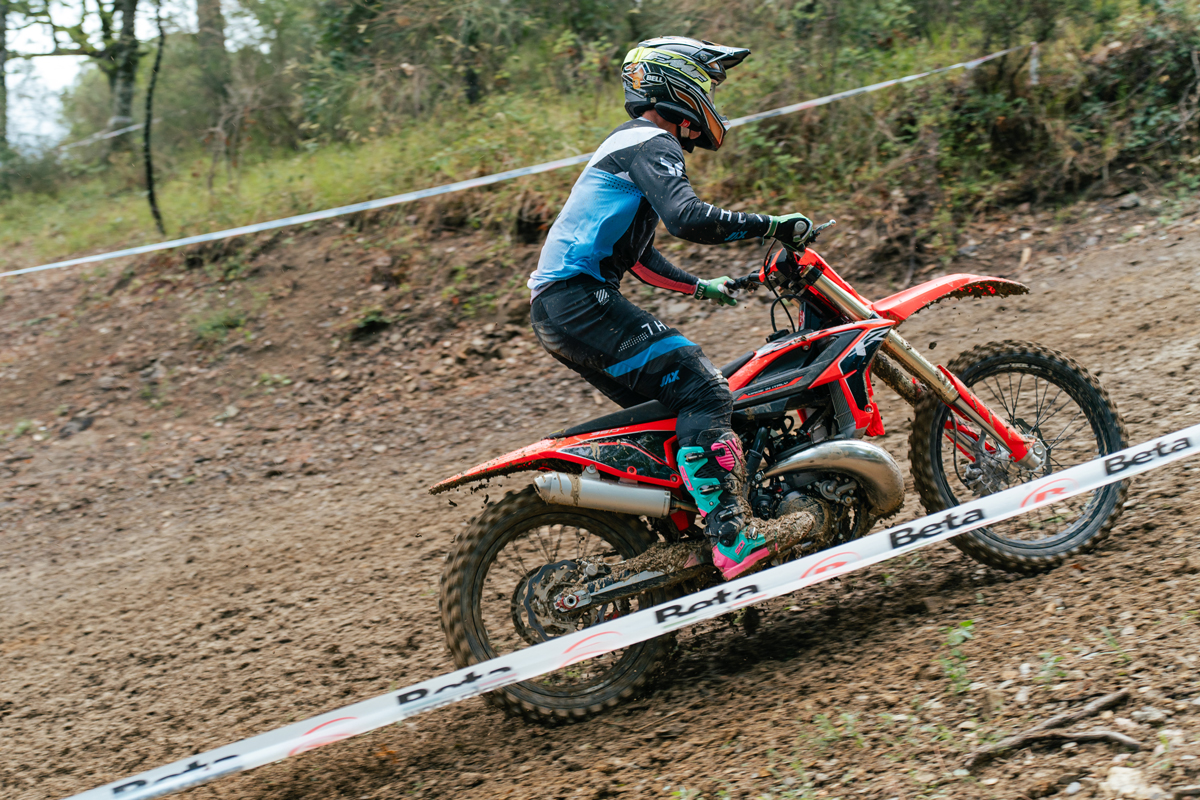
Traction & Launch Control
Traction control also proved particularly relevant given just how slippery Montevarchi had become.
The RXF allows the rider to choose between different intervention levels, with the LED display making it easy to see the selected setting.
“The traction control has different levels, which is cool. Basically, the more lights you’ve got showing, the more traction control you’ve got dialled in.”
Launch control offers five levels, allowing different engine RPM limits to be selected depending on the start surface.
“The launch control works on different levels as well, so you’re changing the RPM limit depending on the surface. To engage it you hold the launch-control and mapping buttons together for five seconds, then all the lights flash to tell you it’s active.”
It wasn’t something Callum could meaningfully test on the improvised course, so we’d leave judgement on its effectiveness for another day.
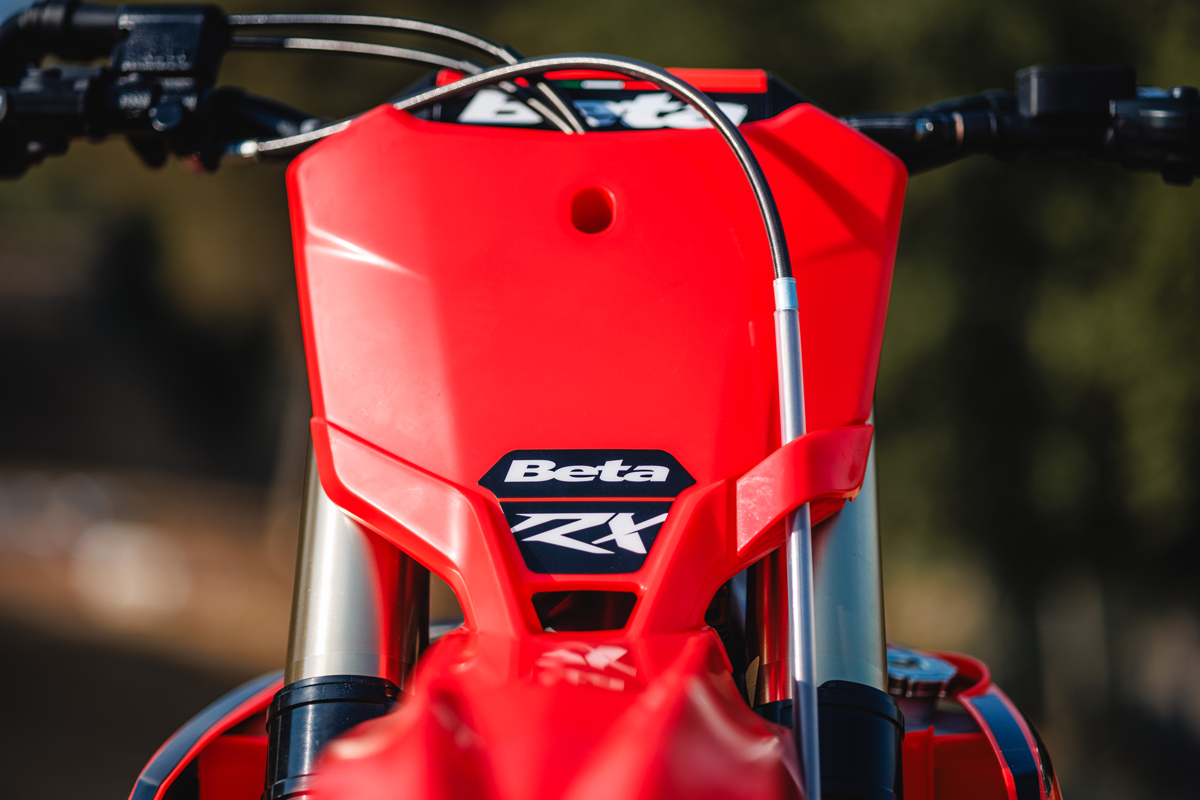
Built in Italy
Beta remains a comparatively small manufacturer, and after spending time around the people responsible for developing and building the RXF, the passion behind the project was obvious.
Weight has clearly been a major consideration, with materials including titanium, aluminium alloy and magnesium used throughout the machine.
“You can see that they’re passionate about the bikes. Beta is still quite a small manufacturer compared with some of the others, and they really seem to pride themselves on how the bikes are built.”
“There are different materials being used throughout the bike to keep the weight down, and you can feel that when you’re riding it. Everything about it feels compact.”
Verdict
Despite the weather preventing Callum from testing the RXF in the environment Beta had originally intended, his first encounter with the Italian manufacturer’s new 250F left a strong impression.
And perhaps the most telling question was a simple one: would he be happy lining it up behind a start gate?
“Yeah, definitely. I feel like I could ride a Beta tomorrow and feel pretty comfortable on it and ride it well.”
“The thing that stood out was how small and light it felt. You’ve basically got that nimble, easy-to-corner feeling you associate with a 125, but with the usable power of a 250 four-stroke. It just went together really well.”
There is still more of the RXF that we’d like to discover. The conditions meant there wasn’t enough room to properly assess its top-end performance, high-speed handling or launch control, and those are important parts of any 250F motocross test.
But what Montevarchi did expose was arguably just as interesting. On terrain a motocross bike was never really designed for, the Beta remained manageable, found traction and gave Callum the confidence to attack some surprisingly technical sections.
For a completely new four-stroke motocross platform from Beta, that’s a promising place to start.
2027 Beta 250 RXF – Technical Specifications
| Specification | Details |
|---|---|
| Engine Type | Single cylinder, 4-stroke, liquid cooled, 4-valve (Titanium intake and exhaust), electric start |
| Bore | 78mm |
| Stroke | 52.3mm |
| Displacement | 249.3cc |
| Compression Ratio | 14.4:1 |
| Valve Train | DOHC finger follower / 4-valve Titanium |
| Ignition | Mitsuba |
| Spark Plug | NGK LMAR9AI-8 |
| Lubrication | Twin Oil Pumps w/ Cartridge Filter & Separate Compartments For Engine & Transmission |
| Fuel System | EFI & Dual Injectors |
| Electronics | Launch Control, Traction Control & Quick Shift |
| Clutch | Wet Diaphragm Style |
| Transmission | 5 Speed |
| Final Drive | O-ring chain |
| Frame | Molybdenum steel / Double Cradle w/ quick air filter access |
| Wheelbase | 58.0″ |
| Seat Height | 37.2″ |
| Ground Clearance | 13.4″ |
| Footrest Height | 16.6″ |
| Dry Weight | 222.7 lbs (dry weight, no fuel) |
| Fuel Tank Capacity | 1.85 US Gallons |
| Front Suspension | 48mm KYB AOS closed cartridge fork, adjustable compression & rebound |
| Rear Suspension | KYB 50mm body with linkage, adjustable rebound, and high/low speed compression adjustment |
| Front Wheel Travel | 12.0″ |
| Rear Wheel Travel | 11.8″ |
| Front Brake | 260mm floating rotor |
| Rear Brake | 240mm rotor |
| Front Rim/Tyre Size | 80/100-21″ |
| Rear Rim/Tyre Size | 110/90-19″ |
| Tyres | Dunlop Geomax MX34 |